

Skip Navigation
Skip to contents

Korean J Community Nutr : Korean Journal of Community Nutrition

OPEN ACCESS

Articles

Page Path
HOME > Korean J Community Nutr > Volume 31(2); 2026 > Article
Review
The transition of nutritional status in infants, young children, and school-aged children in Korea and future-oriented nutritional strategies: a narrative review
Yoonna Leeorcid
Korean Journal of Community Nutrition 2026;31(2):115-126.
DOI: https://doi.org/10.5720/kjcn.2026.00115
Published online: April 30, 2026

Associate Professor, Department of Food and Nutrition, Shingu College, Seongnam, Korea

†Corresponding author: Yoonna Lee Department of Food and Nutrition, Shingu College, 377 Gwangmyeong-ro, Jungwon-gu, Seongnam 13174, Korea Tel: +82-31-740-1528 Fax: +82-31-740-1590 Email: ynlee@shingu.ac.kr
• Received: March 18, 2026   • Revised: April 12, 2026   • Accepted: April 15, 2026

© 2026 The Korean Society of Community Nutrition

This is an Open-Access article distributed under the terms of the Creative Commons Attribution Non-Commercial License (https://creativecommons.org/licenses/by-nc/4.0) which permits unrestricted non-commercial use, distribution, and reproduction in any medium, provided the original work is properly cited.

  • 42 Views
  • 2 Download
next
  • Objectives
    This study examined the secular trends in anthropometric changes and the nutritional transition among Korean infants and school-aged children, while evaluating the efficacy and constraints of existing state-led nutritional policies. Ultimately, it proposes a “systems-centered” nutrition strategy, aligned with the United Nations Children’s Fund (UNICEF) Nutrition Strategy 2020–2030, to ensure health equity for future generations.
  • Methods
    We reexamined comprehensive national health statistics, including school health examination data (1965–2024) and the Korea National Health and Nutrition Examination Survey (1998–2023). Additionally, Dietary Screening Test results from 126,768 young children (2021–2024) were reviewed. These quantitative findings were synthesized through a narrative review of South Korean pediatric nutrition policies and UNICEF’s global strategic frameworks.
  • Results
    While Korean children have historically experienced rapid secular growth, this has decelerated in the 2000s. Conversely, the prevalence of obesity has surged along with stagnant underweight rates. Dietary problems such as insufficient vegetable intake and frequent consumption of sweet snacks were also found, accelerating the “triple burden” of malnutrition. Policies such as school lunches, NutriPlus program, and Center for Children’s Foodservice Management have demonstrated great success in reducing nutritional risks and improving dietary habits. However, existing fragmented programs face limitations in comprehensively addressing regional disparities or blind spots and in providing tailored nutritional management. Conclusion: A paradigm shift is imperative to fundamentally resolve these multidimensional nutritional crises. Moving beyond fragmented programs, we need to adopt a “systems-centered” approach integrating health, education, and welfare ecosystems. Key policy recommendations include establishing a continuous life-cycle health database, introducing artificial intelligence and FoodTech-driven precision nutrition coaching, and fostering a healthy food environment through public-private partnerships within a community integrated care network.
Infancy, early childhood, and school-age represent critical windows of rapid physical and cognitive development, during which nutritional status constitutes a pivotal determinant of lifelong health and quality of life. Historically, the Republic of Korea emerged from a post-war emergency relief phase and, in tandem with remarkable economic growth, has achieved substantial improvements in children’s physical development. However, the nation is now confronted with a new and complex juncture—quantitative dietary abundance coexisting with nutritional imbalance—amid the structural demographic crisis of severely low birth rates and population aging. While the primary public health objectives of the past centered on alleviating poverty and preventing skipped meals, contemporary society faces the “triple burden” of malnutrition, wherein stunting, micronutrient deficiencies, and overweight/obesity coexist simultaneously [1]. Addressing this multifaceted nutritional challenge necessitates a departure from the fragmented, piecemeal policies of the past toward a sophisticated, life cycle-tailored nutrition strategy that encompasses the entire national system. The present study reviews the secular trends in physical growth and nutritional status among Korean infants and school-aged children from the past to the present, examines the achievements and limitations of major nutrition policies implemented to date, and, building upon the paradigm shift articulated in United Nations Children’s Fund’s (UNICEF’s) “Nutrition Strategy 2020–2030,” proposes directions for the advancement of a Korea-specific nutrition strategy [2].
Ethics statement
As this study is a narrative review, it did not require institutional review board approval or individual consent.
Study design
This study was a non-systematic, narrative review designed to comprehensively examine secular changes in physical growth, nutritional status, dietary behavior, and related nutritional policies among Korean infants and school-aged children. Drawing on long-term accumulated national statistics, policy documents, and academic literature, its purpose was to discuss the achievements and limitations of domestic child nutrition policy and explore future directions.
A literature search was conducted using PubMed, DBpia, KISS, and Google Scholar. Official statistics and policy documents were retrieved from the websites of the Ministry of Education, School Health Information Center, Korea Disease Control and Prevention Agency, Korea National Health and Nutrition Examination Survey (KNHANES), National Health Insurance Service, Ministry of Health and Welfare, Ministry of Food and Drug Safety, and UNICEF. Search terms included combinations of “Korea,” “infants,” “preschool children,” “school-aged children,” “obesity,” “underweight,” “growth,” “school meals,” “NutriPlus,” “Center for Children’s Foodservice Management (CCFSM),” and “nutrition policy,” along with their Korean-language equivalents. The search period extended from the inception of relevant programs to the present to capture long-term trends; however, literature pertaining to policy outcomes and recent dietary changes was primarily drawn from publications issued after 2000. The inclusion criteria were as follows: (1) official reports, nationally representative statistics, and academic papers addressing the nutritional status and dietary behavior of Korean infants and children; (2) official reports, policy documents, and academic papers concerning child-targeted nutrition policies; and (3) strategic documents from international organizations, such as UNICEF. Selected literature was synthesized according to the target age group, policy type, key outcomes, limitations, and policy implications.
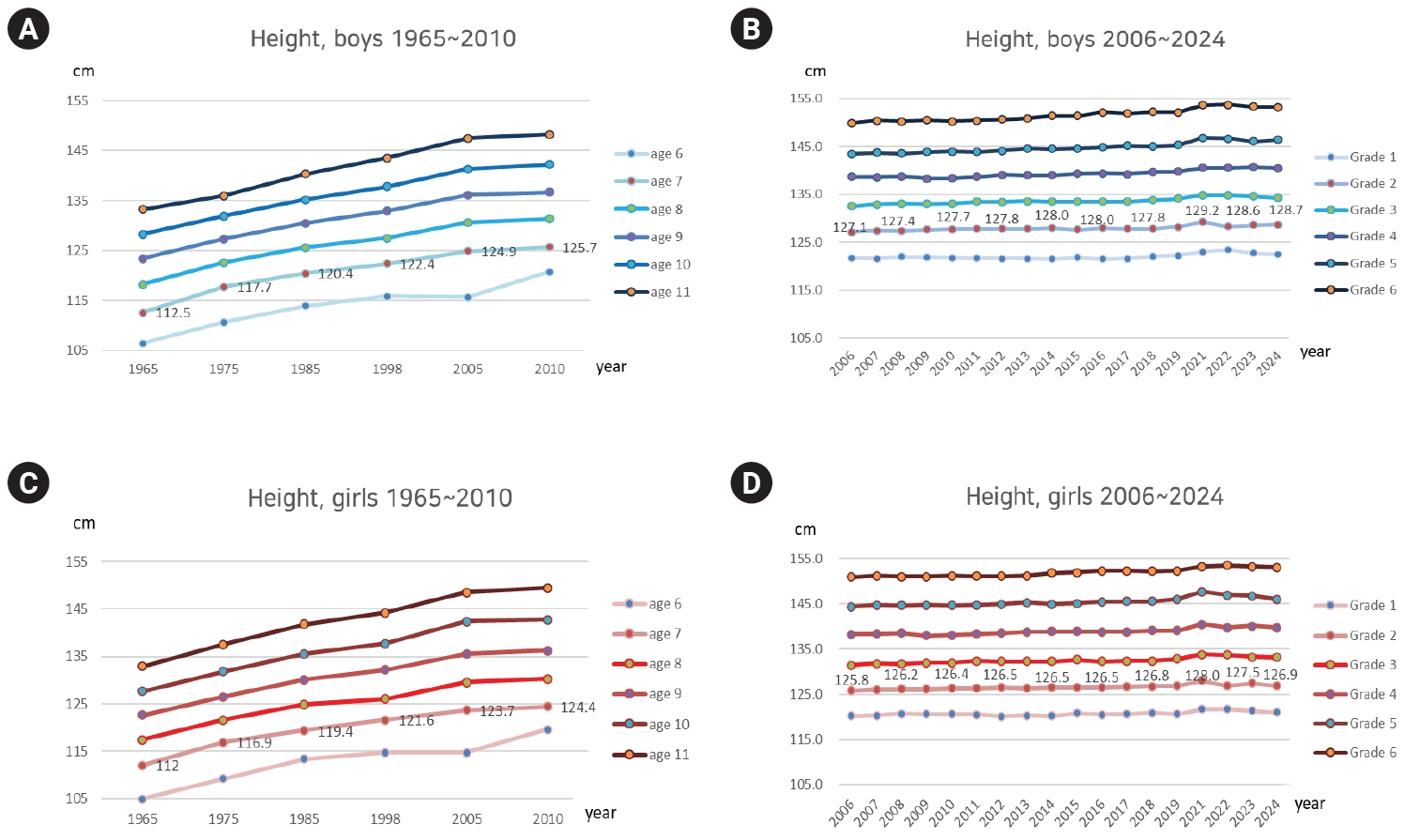
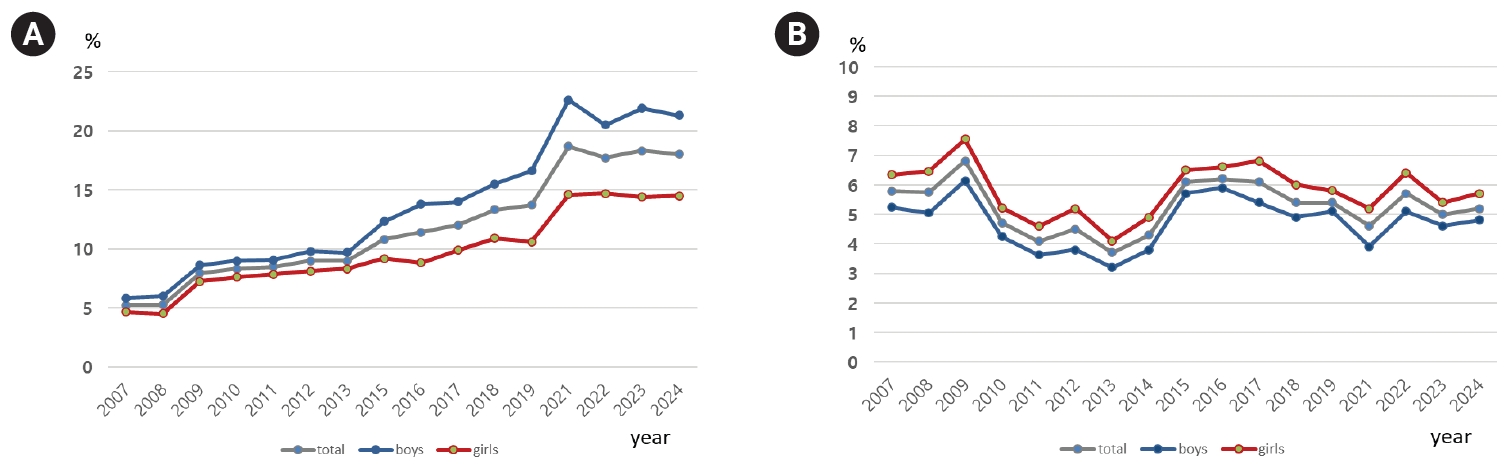
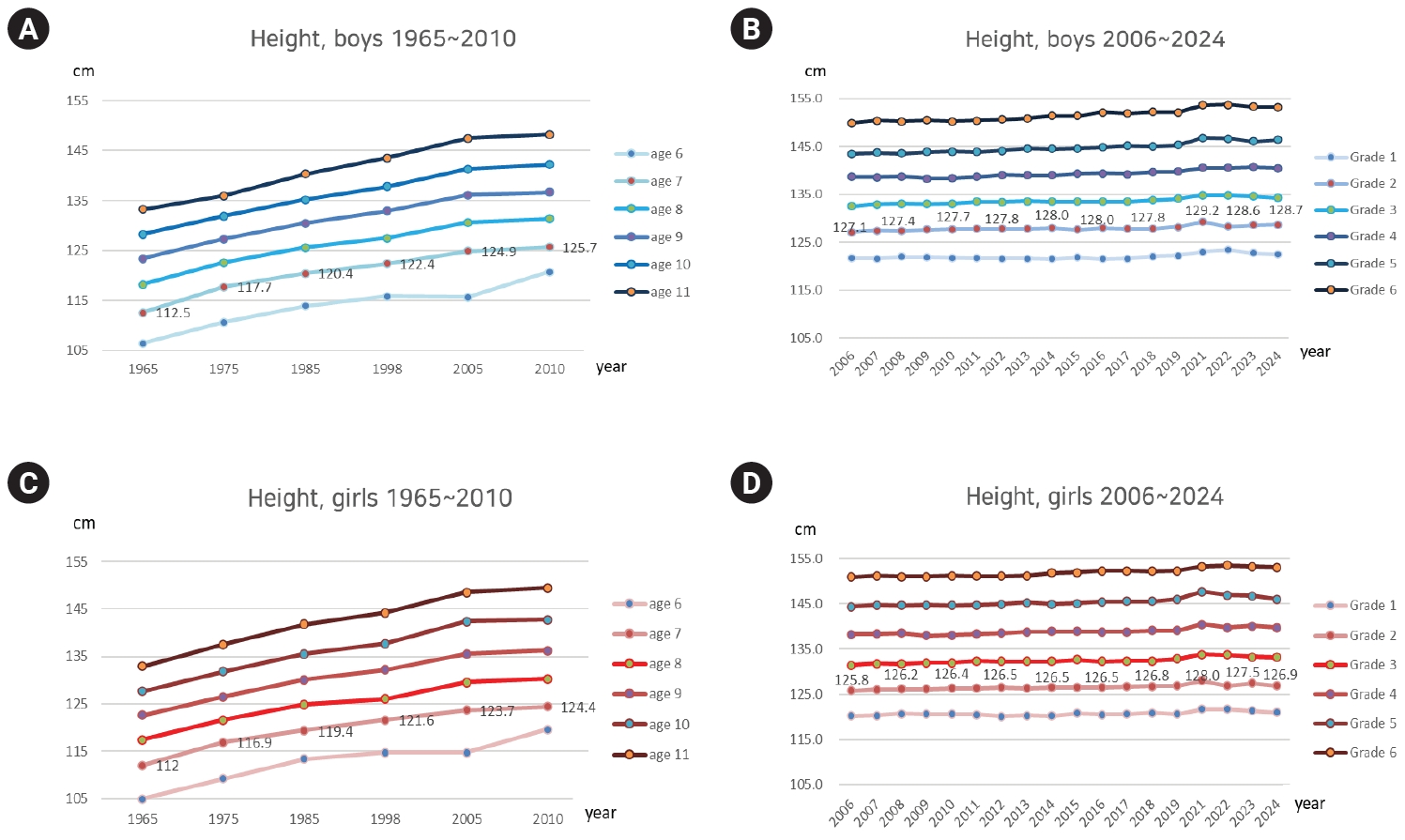
The height and weight of Korean children and adolescents have undergone pronounced generational changes over the past several decades. According to anthropometric data from the Korean Pediatric Society, between 1965 and 2005, the mean height of 7-year-old children increased by 12.4 cm in boys and 11.7 cm in girls, while mean weight increased by 7.7 kg in boys and 6.4 kg in girls—representing a period of remarkable physical growth. Generational changes were even more pronounced during puberty, a period of accelerated growth. Among 13-year-old boys, height increased by 18.6 cm over the same interval, while among girls, the greatest increase of 15.5 cm was observed at age 12 years, suggesting a progressive advancement in the age of pubertal onset [3-9] (Fig. 1). However, since the 2000s, the rate of increase in mean height and weight has visibly decelerated, whereas the prevalence of overweight and obesity has increased sharply [5-9]. Based on a sample analysis of national school health examination data using the body mass index (BMI) percentile criteria, the combined prevalence of overweight and obesity among elementary school students increased from 14.6% in 2007 to 33.3% in 2024, whereas the obesity rate alone rose markedly from 5.2% to 18.0%. Notably, the obesity rate among boys has increased steeply, widening the sex gap in obesity prevalence [5-9]. In contrast, the underweight rate among elementary school students during the same period fluctuated within a range of approximately 4%–6%, with no clear directional trend [5-9] (Fig. 2). The definition of obesity as BMI ≥ 95th percentile and overweight as BMI 85th to 95th percentile has been maintained since 2007, preserving basic year-to-year comparability. Nevertheless, it should be noted that the national pediatric growth charts were revised in 2017, at which time the 95th percentile BMI-for-age threshold was adjusted downward and the criterion of BMI ≥ 25 kg/m2 was removed from the definition of obesity; therefore, caution is warranted in interpretation [10]. Despite this caveat, the upward trend in elementary school obesity rates observed within the same national statistical framework is difficult to attribute solely to changes in measurement criteria and is therefore interpreted as reflecting a genuine increase.
Studies analyzing data from the National Health Screening Program for Infants and Children have reported somewhat divergent patterns in the younger age group. Between 2007 and 2017, the prevalence of overweight and obesity among children aged 50–60 months remained stable or declined, while the proportion classified as suspected underweight among those aged 30–36 months trended upward, vividly illustrating the coexistence of obesity and underweight [11].
Structural differences in the care environment and food context may underlie the divergent obesity trends between infancy and school age. During infancy and early childhood, meals are relatively more controlled by caregivers in home, day care, and preschool settings; moreover, caregivers’ dietary competency and social support reportedly exert a significant influence on the nutritional status of preschool-aged children [12]. More recently, institutional feeding at childcare facilities under the guidance of registered dietitians or the CCFSM has been reported to partially compensate for poor dietary quality. Indeed, analysis of KNHANES data from 2016 to 2019 found that children aged 3–5 years utilizing daycare center meals had higher intakes of protein, thiamine, niacin, potassium, and iron at lunch and lower intakes of sugars and fat than that of non-users [13]. In contrast, from the school-age period onward, children are increasingly exposed to food environments of their own choosing—including convenience stores and snack bars near schools, food delivery services, processed snacks, demanding after-school academy schedules, and rising use of smart devices—all of which may be associated with higher consumption of high-calorie snacks and convenience foods, as well as reduced physical activity [14]. This suggests that in infancy and early childhood, caregiver dietary competency and childcare facility meal management have relatively greater explanatory power for nutritional status, whereas in the school-age period, school and community food environments become comparatively more influential.
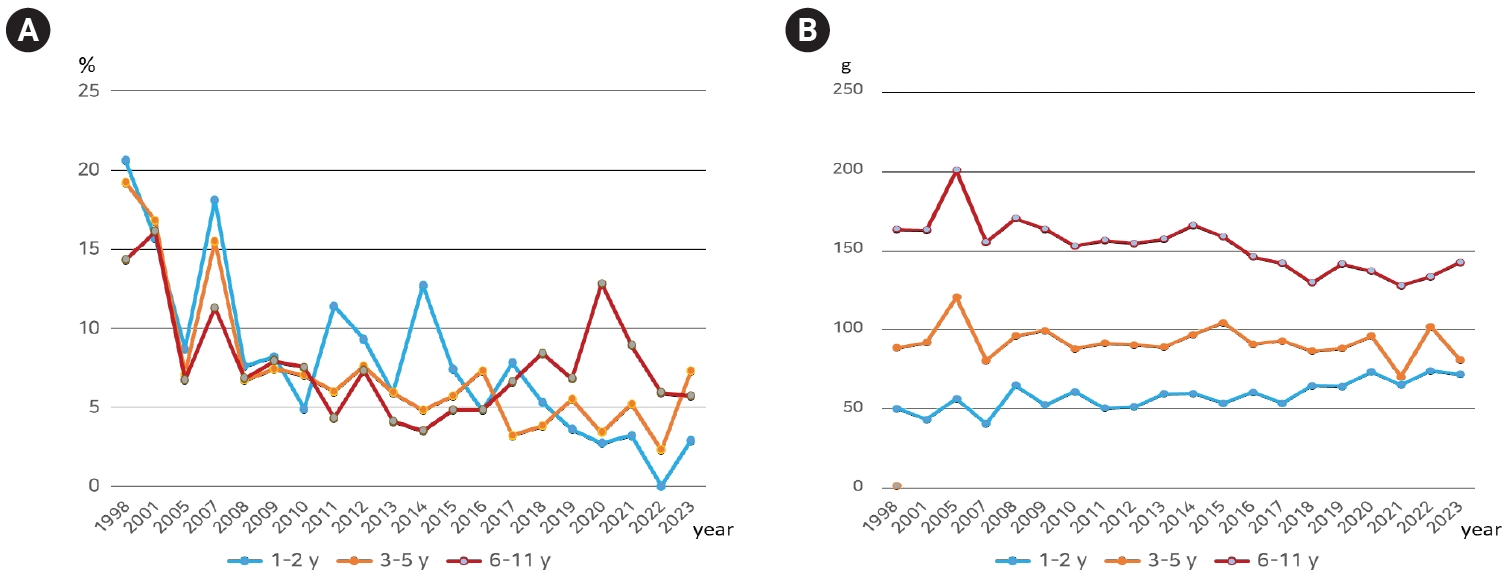
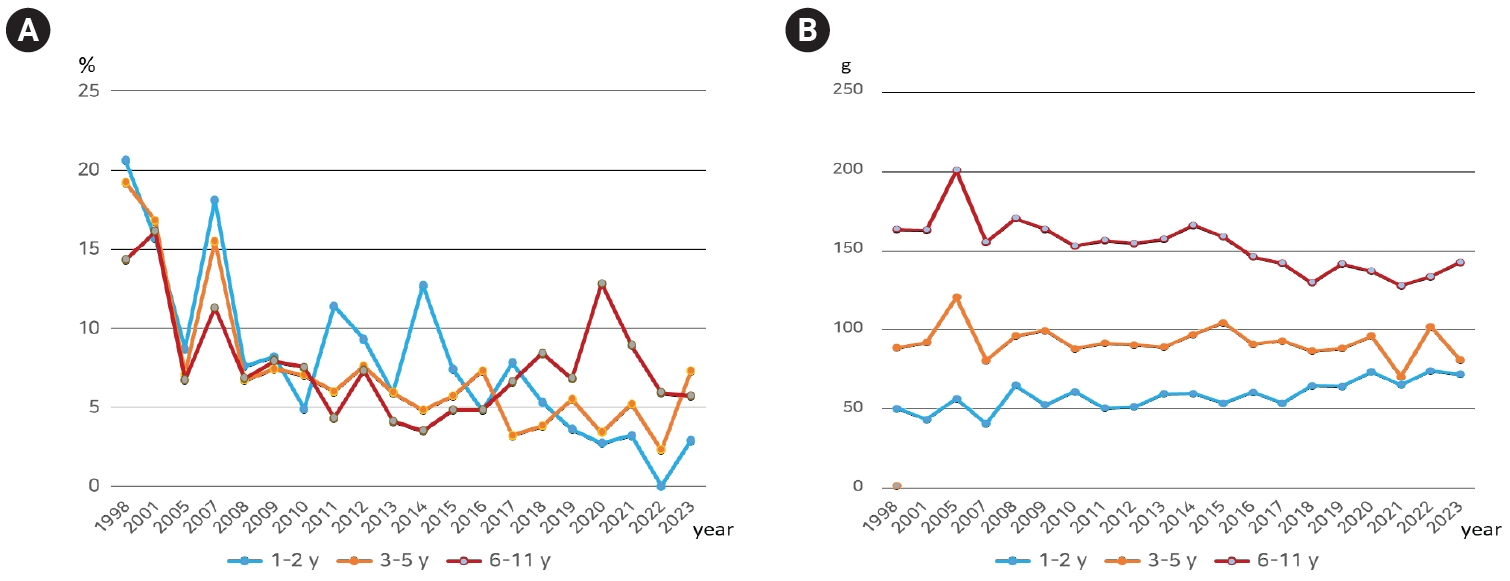
Nevertheless, the coexistence of obesity/overweight and underweight was evident in both age groups, and the underlying cause of this nutritional imbalance can be traced to dietary behavior. According to national health statistics, the proportion of young children classified as having inadequate nutrient intake—defined as energy intake below 75% of the estimated energy requirement combined with intake of calcium, iron, vitamin A, and riboflavin below the estimated average requirement—has generally trended downward; however, among elementary school students, this proportion has shown a tendency to increase in recent years, while vegetable intake among elementary school students has declined [15] (Fig. 3). Furthermore, analysis of Dietary Screening Test data collected through the CCFSM from 126,768 children, aged 1–5 years, between 2021 and 2024 revealed that 44% consumed vegetables once daily or less and 33.2% consumed dairy products four times per week or less. Conversely, 40% consumed sweet snacks five or more times per week, reflecting widespread dietary problems [16]. Particularly noteworthy is the evidence of regional disparities in health and dietary problems as well as a direct association between lifestyle factors, including late bedtime, meal frequency, smartphone use during meals, and dietary intake patterns [16]. Children who went to bed late consumed ramen noodles, fast food, and sweet snacks significantly more frequently; moreover, those eating two or fewer meals per day were also more likely to consume ramen, noodle dishes, and sweet snacks at higher frequencies [16]. This underscores the urgent need for multidimensional management that moves beyond fragmented approaches to comprehensively consider the environment and individual characteristics of each child.
Nutrition policy for Korean children has evolved gradually in response to the demands of each era. For school-aged children, the post-war period of the 1950s–1960s involved relief feeding supported by foreign aid; beginning in 1972, an experimental phase of school self-reliant meals was initiated through on-site school cooking. Following the enactment of the School Meals Act in 1981, school meals became institutionalized and fully expanded between the 1990s and 2002 [17, 18]. This development of the school meal system is credited with contributing substantially to the prevention of meal skipping and the improvement of children’s physical development. From 2003 onward, a modernization phase restructured the school meal management framework: hygiene standards were strengthened, nutrition teachers were deployed, school health promotion programs were expanded beyond mere meal management, and nutrition and dietary education was reinforced [17, 18].
In addition to school-related legislation, the Special Act on Safety Management of Children’s Dietary Lifestyle and Support for Diet Education Act were enacted to implement policies aimed at creating a healthy food environment. Since 2010, free school meals have been expanded incrementally; efforts to achieve detailed improvements in school meal management, such as comprehensive school meal safety measures, have been pursued in parallel with policies targeting sodium and sugar reduction, contributing to broader health management goals [17, 18]. These efforts have resulted in improvements in the food environment within and around schools: implementation of the sodium reduction policy from 2010 onward, resulted in a measurable decrease in sodium intake among school-aged children [15].
In this manner, the school meal program has been developed both quantitatively and qualitatively, and has become established as a universal system operating in most elementary, middle, high, and special schools nationwide. Reportedly, students attending schools with meal programs demonstrate higher nutritional knowledge, consume a greater variety of side dishes at lunch, and exhibit better dietary balance [19]. Furthermore, consuming school meals at lunch is associated with higher nutrient intake and dietary quality [20, 21]. However, recent studies have documented dietary problems including meal skipping and declining vegetable intake, indicating that school meals alone have limited capacity to change overall dietary behavior; moreover, the proportion of schools meeting all nutritional standards remains low, and that actual meal consumption rates require improvement [22-25]. Accordingly, it has been argued that continuous improvement is needed—not only in providing high-quality meals, but also in monitoring actual student intake, reducing food waste, improving the dining environment, considering menu choice options, and strengthening nutrition education [19, 23-27].
For infants and young children, UNICEF child relief programs providing powdered milk and nutritional supplementation were implemented in the 1950s, maternal and child health services were stipulated in the Public Health Center Act, and regional maternal and child health centers were established in the 1980s [28, 29]. However, the role of maternal and child health programs primarily focused on normal delivery assistance, general health management, and registration management of pregnant women and infants, making it difficult to characterize this period as systematic infant nutritional management [29]. Breastfeeding promotion programs, including the designation of baby-friendly hospitals, were implemented in the 1990s [29]. A pivotal national policy shift toward the systematic nutritional management of infants and young children occurred after 2000, when sophisticated institutional mechanisms were established to address nutritional inequities among vulnerable populations and ensure dietary safety.
Most notably, the NutriPlus program—targeting pregnant women, infants, and young children whose nutritional status is compromised by physiological and environmental factors—was piloted over 3 years from 2005 to 2007 before being expanded nationwide [30]. This program, which provides nutritional education and tailored supplementary foods, has been consistently evaluated as a successful initiative, with annual performance assessments documenting substantive effects, including reductions in anemia prevalence and a decrease in the proportion of infants classified as nutritionally at-risk based on anthropometric measures, such as underweight and stunting. In the 2024 performance analysis, a 66.9% reduction in anemia prevalence was reported among participants following program enrollment, and the proportion of infants with total nutritional risk based on anthropometric assessment decreased by 48.5%. Marked improvements in dietary adequacy, nutritional knowledge, and attitudes were also observed [30]. The effectiveness of the NutriPlus program has been corroborated not only in program reports, but also in select external academic studies based on regional public health center evaluations [31-35]. However, some studies have reported a tendency for anemia prevalence and rates of inadequate nutrient intake to increase over time following program completion, suggesting that post-program follow-up and long-term tracking are essential to sustain program effects. In recent years, the program has adapted to contemporary changes by including overweight and obesity as new nutritional risk factors for participant eligibility and introducing online education modules [30]. Nevertheless, the most significant limitation identified for this national program is that only a small fraction of eligible participants actually enroll owing to insufficient budgetary and human resources. Outstanding challenges include enhancing the supplementary food delivery system, establishing a framework for strengthening individualized nutritional management, improving the professional competency of program staff, and identifying strategies to ensure the continuity of program effects.
In 2008, the Special Act on Safety Management of Children’s Dietary Lifestyle was enacted, and the CCFSM was established at the local government level and progressively expanded. With the mandatory registration of facilities without on-site dietitians taking effect in 2020, the nationwide establishment was completed in 2022, with centers now operating in every local government [36]. The centers systematically support hygiene and nutritional management at small-scale childcare facilities, such as daycare centers and preschools that lack registered dietitians; conduct regular on-site visits; and conduct educational programs tailored to children, food service staff, facility directors, and teachers. The establishment of these centers is of considerable significance in that it has created a bidirectional nutritional management network the NutriPlus program provides support and management at the household and individual levels, while the CCFSM provides management at the institutional level [36]. Satisfaction with center support has been reported to be above 90%, and outcomes, including improvements in hygiene scores and children’s dietary habits, such as handwashing, have been documented [16, 37]. Previous studies have also reported improvements in the degree to which institutional menus meet recommended nutrient intakes, dietary diversity, and nutrient intake following center support [16, 38, 39]. The fact that systematic dietary education targeting young children has been implemented in earnest through these centers is also of considerable significance. However, there is need to develop a comprehensive outcome evaluation framework [13].
As described above, each program implemented to improve the nutritional status and dietary behavior of infants and children has been successfully operated, with substantive outcomes reported. Nevertheless, concerns have been raised regarding the need to secure employment stability and improve working conditions for program staff. In addition, these programs face the imperative of advancing from the concept of fragmented program operations and universal support to a more sophisticated, person-centered, customized service that reflects the multidimensional characteristics of the target population (Table 1).
Against the backdrop of the current crisis, in which more than one-third of children worldwide face the double or triple burden of malnutrition—encompassing stunting, micronutrient deficiencies, and overweight/obesity—the global nutrition paradigm is undergoing a fundamental transformation. Through its Nutrition Strategy 2020–2030, UNICEF has expanded its vision toward a world in which all children, adolescents, and women fully realize their right to nutrition, transitioning from a past emphasis on a single “program-centered approach” to a multi-sectoral “systems-centered approach,” and extending its goal from mere “survival” achieved through the treatment of deficiency to ensuring that children can “thrive” with healthy diets [2]. The Republic of Korea, where the importance of the health of each child of the next generation is growing in the context of severely low birth rates and population aging, is also at a juncture where existing fragmented and siloed public health policies must be reorganized. Drawing on the core transition strategies proposed by UNICEF and considering Korea’s specific context, we propose the following strategies for constructing a person-centered system.
First, a system-based approach is required, rather than one centered on individual programs. UNICEF emphasizes that the five core systems—food, healthcare, education, water and sanitation, and social protection—must work in an interconnected manner to achieve nutritional improvement [2]. Mapping Korea’s major policies for infants and school-aged children onto UNICEF’s five-system framework, the school meal program and the CCFSM correspond to the food, education, and sanitation systems; the NutriPlus program, infant and child health checkups, and other health promotion programs at public health centers correspond to the food, health care, and social protection systems; and nutritional support and food access programs targeting vulnerable populations correspond to the social protection system. However, these systems currently tend to operate in fragmentation as separate program units, and a framework for continuously managing a child’s nutritional risk across the life course and living space has not been sufficiently established. Therefore, future policies must move beyond the expansion of individual programs toward a transformation in which food, health, education, sanitation, and social protection systems share information and coordinate roles with a single child at the center. Just as has been done for older adults, children too should be served within a local government–centered “community integrated care” ecosystem, in which health care, welfare, and educational services are organically linked with nutritional services, so as to build the infrastructure necessary for the integrated delivery of services needed by each individual.
Second, continuous monitoring and management across the life course is required rather than management segmented by individual developmental periods. UNICEF’s nutrition strategy emphasizes a “whole-of-life-cycle approach” extending beyond the previous focus on the first 1,000 days of infancy to encompass the school-age and adolescent periods [2]. In Korea, information management for participants in individual programs, health screening, and statistical data for each age group are currently disconnected and unlinked, thereby making it difficult to provide person-centered customized services in such a context and limiting the early identification of children facing nutritional risks during life-course transitions. Therefore, it is necessary to explore mechanisms for establishing a “life transition-linked nutrition database”, connecting data from maternal and lactation period checkups, infant and toddler checkups, school-age and adolescent checkups, and adult health and nutrition surveys. The National Bio-Big Data Integration Project currently underway in Korea should be leveraged by reorganizing dietary and health-related surveys conducted on children and examining the feasibility of linkages with the bio-big data platform. It is essential that diet-related information, a critical element of bio-big data, be accumulated in a thorough and systematic manner. Realizing this requires careful consideration of the concurrent legal and institutional constraints. The current National Integrated Bio-Big Data initiative operates under the joint directive of four government ministries and is designed to link data based on participant consent [40, 41]. However, linking child nutritional data entails numerous practical challenges, including differences in consent scope across datasets, inter-ministerial governance issues, and procedures for pseudonymized data linkage and release [40-43]. Future policy must, therefore, be developed as a phased implementation strategy that goes beyond simple data linkage to address the reorganization of the consent framework, establishment of standardized data structures, development of pseudonymized data linkage procedures, and clarification of interministerial responsibilities and collaborative mechanisms.
Third, a context-specific rather than a uniform approach must be adopted. As discussed above, the analysis of dietary behavior among Korean infants and school-aged children revealed differences in nutritional status and dietary problems according to region and local government type (based on population size and fiscal self-reliance), and the characteristics of dietary problems varied according to factors such as lifestyle patterns and temperament [16]. For instance, even when a child exhibits a pattern of high sweet snack consumption and nutritionally imbalanced meals, the underlying causes and appropriate approaches differ among individuals. Therefore, it is necessary to move beyond universal education and standardized services toward nutritional support that analyzes the characteristics and root causes specific to each region and individual, enabling truly tailored interventions.
Fourth, public-private partnerships must be established to ensure that nutritional management is both sustainable and effective. This is not only an essential element for the quantitative and qualitative expansion of services, but may also be a critical factor in shaping public awareness and creating environments that support healthy dietary behavior. Government efforts alone are insufficient to control the vast food environment to which children are exposed daily, including the pervasive influence of the media. In line with UNICEF’s trend toward expanded private sector collaboration, Korea must strengthen its partnerships with the food industry, educational technology companies, and other private sector actors.
Fifth, investment in and research on the realization of “hyper-personalized precision nutrition” utilizing cutting-edge technological innovation and artificial intelligence (AI) are necessary. Advanced healthcare technologies must be integrated to address the increasingly diverse characteristics and nutritional challenges faced by children. Technologies for measuring dietary intake and food exposure—including AI-based monitoring of food waste and vegetable and fruit consumption in children’s meal settings—are currently being piloted [44-46]. AI technologies are expected to contribute to personalized services in multiple ways. Given that individual lifestyle characteristics such as eating speed, sleep duration, and smartphone use during meals exert a profound influence on dietary behavior [16], the development of technologies capable of acquiring granular real-time behavioral data for the early identification of nutritional risk is imperative. AI-based hyperpersonalized nutrition coaching holds considerable potential in its capacity to precisely characterize children’s dietary behavior and lifestyle patterns; however, the use of children’s data requires a higher level of ethical protection than that applicable to adults. Korea’s Personal Information Protection Act requires the consent of a legal representative and notification in an easily comprehensible format for the processing of personal information of children under 14 years of age [47], whereas the National AI Ethics Standards identify privacy protection, minimization of bias and discrimination, data governance, accountability, safety, and transparency as the core requirements [48]. Similarly, the World Health Organization emphasizes human oversight, risk management, and transparency in the application of AI in health care [49], and the Convention on the Rights of the Child enshrines the “best interests of the child” as the paramount principle in policies and services affecting children [50]. Accordingly, AI-based nutritional services targeting children must be designed to incorporate the principles of data minimization, restriction of use beyond the original purpose, algorithmic bias auditing, interpretable feedback, and human oversight systems that allow expert intervention. Through research on the resolution of current technological limitations, potential personal information, and ethical concerns, it is imperative to advance toward an intelligent management system capable of providing children and their caregivers with hyperpersonalized, tailored assessment, and coaching.
Nutrition during infancy and the school-age period constitutes a core driver that determines not only individual health outcomes but also the future potential of the nation as a whole. The Republic of Korea has achieved remarkable generational improvements in physical growth since the 1960s and developed successful state-led programs, including school meals and NutriPlus program. However, in the face of the complex triple burden of malnutrition characterizing contemporary society, a structural leap that transcends the mere expansion of fragmented programs is required. The values of a “systems-centered framework” and the “guarantee of life-cycle continuity” articulated in UNICEF’s 2020–2030 Strategy align precisely with the future direction of Korea’s child nutrition policy. Moving forward, it is imperative to build an environment in which children can readily make healthy choices—through the construction of an integrated big-data health platform that connects fragmented information; the delivery of hyperpersonalized and tailored services incorporating innovative technologies such as AI; organic multi-ministerial collaboration; and active partnerships with the private sector, including the food industry. Building on the accumulated achievements of public health and nutrition policy, the time has come to achieve a second and third leap forward through the construction of a precise, person-centered system. This study drew on UNICEF’s global strategy as a reference; however, it did not incorporate a cross-national comparative analysis or systematic literature review. As a narrative review aimed at proposing future nutrition policy directions based on past achievements, the policy recommendations presented may have limitations with respect to generalizability.

CONFLICT OF INTEREST

There are no financial or other issues that might lead to conflict of interest.

FUNDING

None.

ACKNOWLEDGEMENTS

This study was based on a presentation delivered at the 2025 Fall Conference of the Korean Society of Community Nutrition.

DATA AVAILABILITY

The data that support the findings of this study are openly available in “School Health Information Center” at https://www.schoolhealth.kr/web/srs/selectPublicDataList.do and in “KNHANES” at https://knhanes.kdca.go.kr/knhanes/archive/wsiStatsClct.do.

Fig. 1.
Secular trends in the height of Korean children. (A, C) Anthropometric survey data by the Korean Pediatric Society and the Ministry of Health and Welfare [3,4]. (B, D) National school health examination data by the Ministry of Education [5-9].
kjcn-2026-00115f1.jpg
Fig. 2.
Long-term trends in the prevalence of obesity and underweight among Korean elementary school children. (A) Prevalence of obesity (BMI ≥ 95th percentile) (data by the Ministry of Education) [5-9]. (B) Prevalence of underweight (BMI < 5th percentile) (data by the Ministry of Education) [5-9]. BMI, body mass index.
kjcn-2026-00115f2.jpg
Fig. 3.
Long-term trends in the prevalence of inadequate nutrient and vegetable intake in Korean children. (A) Prevalence of inadequate nutrient intake: the proportion of the population whose energy intake is less than 75% of the estimated energy requirement and whose intake of calcium, iron, vitamin A, and riboflavin is less than the estimated average requirement, as reported in Korea Health Statistics 2023 [15]. (B) Vegetable intake as reported in Korea Health Statistics 2023 [15].
kjcn-2026-00115f3.jpg
Table 1.
Historical overview of nutrition policies for school-aged children and infants/young children in Korea
Period Nutrition policies for school-aged children Nutrition policies for infants and young children
1950–1970 -Foreign aid-supported school feeding programs -UNICEF milk powder and nutritional supplementation programs
-Maternal and child health services stipulated in the Public Health Center Act
1970–1980 -Transition to school-operated meal services and on-site meal preparation
1980–1990 -Enactment of the School Meals Act -Establishment of regional maternal and child health centers
1990–2000 -Nationwide expansion of school meal services -Breastfeeding promotion programs, including the designation of baby-friendly hospitals
2000–2010 -Deployment of school nutrition teachers -Introduction and nationwide expansion of the NutriPlus program
-Introduction of the school health promotion concept -Enactment of the Special Act on Safety Management of Children’s Dietary Lifestyle
-Enactment of the Special Act on Safety Management of Children’s Dietary Lifestyle
-Enactment of the Support for Diet Education Act
Since 2010 -Expansion of free school meals -Establishment and gradual expansion of the Center for Children’s Foodservice Management
-Comprehensive school meal safety measures
-Sodium reduction initiative
-Sugar reduction initiative

UNICEF, United Nations Children’s Fund.

  • 1. United Nations Children’s Fund (UNICEF). The state of the world’s children 2019: children, food and nutrition: growing well in a changing world. UNICEF; 2019.
  • 2. United Nations Children’s Fund (UNICEF). Nutrition, for every child: UNICEF nutrition strategy 2020–2030. UNICEF; 2020.
  • 3. Lee CG. Anthropometric changes in Korean children and adolescents. J Korean Med Assoc 2008; 51(12): 1068-1071. Article
  • 4. Moon JS. Secular trends of body sizes in Korean children and adolescents: from 1965 to 2010. Korean J Pediatr 2011; 54(11): 436-442. ArticlePubMedPMC
  • 5. Yoo WS, Moon JS, Lee KO, Hwang SS, Koh JS, Lee HK, et al. 2009 National school health examination survey and analysis. Korean Educational Development Institute; 2010. Report No. CR 2010-38-1.
  • 6. Yoo WS, Park SW, Kim JY, Park JH, Lee HS, Lee DH. 2011 National school health examination survey and analysis. Korean Educational Development Institute; 2011. Report No. CR2011-81.
  • 7. Park SW, Hwang JH. Analysis of results and sampling study for the 2014 national school health examination of elementary, middle, and high school students. Korean Educational Development Institute; 2014. Report No. CR 2014-68.
  • 8. Park SW, Moon JS, Hwang JH, Ryu DH. Analysis of results for the 2019 national school health examination of elementary, middle, and high school students. Ministry of Education, Korean Educational Environments Protection Agency; 2020. Report No. 2020 TR-11.
  • 9. Kim DS, Shin HR, Chung DY, Moon JS, Lee KJ, Park SH, et al. Analysis of results for the 2024 national school health examination of elementary, middle, and high school students. Ministry of Education, Korean Educational Environments Protection Agency; 2025. Report No. 2025 TR-21.
  • 10. Kim JH, Yun S, Hwang SS, Shim JO, Chae HW, Lee YJ, et al. The 2017 Korean National Growth Charts for children and adolescents: development, improvement, and prospects. Korean J Pediatr 2018; 61(5): 135-149. ArticlePubMedPMCLink
  • 11. Bae JH, Lee SM, Kang HR. A study on the effectiveness evaluation of national health examinations for infants and children. National Health Insurance Service Health Insurance Policy Research Institute; 2018. Report No. 2018-1-0005.
  • 12. Gwon D, Hwang JY, Oh J. Nutrition quotient for preschoolers and key impacting factors in Korea: a cross-sectional study on food literacy, social support, and the food environment of primary caregivers. Korean J Community Nutr 2025; 30(1): 16-26. ArticlePubMedPMCPDF
  • 13. Han YH, Hyun T. Nutrient intake and food consumption of Korean preschool children: a comparison between a daycare meal group and non-daycare meal group using the data from the 2016-2019 Korea National Health and Nutrition Examination Survey. Nutr Res Pract 2025; 19(2): 225-240. ArticlePubMedPMCLink
  • 14. Park E, Lee HY. Environment factors affecting childhood obesity: voices from students, parents, and teachers with photograph. J Korean Acad Nurs 2019; 49(3): 254-262. ArticlePubMedLink
  • 15. Korea Disease Control and Prevention Agency (KDCA). Korea Health Statistics 2023: Korea National Health and Nutrition Examination Survey (KNHANES IX-2). KDCA; 2024 Dec. Report No. 11-1790387-000796-10.
  • 16. Shingu College Industry-Academic Cooperation Foundation, National Institute of Food and Nutrition Service (NIFNS). Research on the dietary behavior survey of children and development of a dietary survey system by age group. National Institute of Food and Nutrition Service; 2023. Report No. 2024-01-030. 2023.
  • 17. Yoon JH, Cho HY. A study on the historical development of school foodservice systems. Korean Educational Development Institute; 2016. Report No. CRM 2017-14.
  • 18. Ministry of Education (MOE), Korean Educational Environments Protection Agency (KEEPA). A journey through time: school meals in photos and news. KEEPA; 2020.
  • 19. Oh YM, Kim MH, Sung CJ. Effects of school lunch program on nutritional knowledge and attitude, and dietary behavior of Korean middle school students. Korean J Community Nutr 2005; 10(2): 163-173.
  • 20. Kim Y, Son K, Kim J, Lee M, Park KH, Lim H. Associations between school lunch and obesity in Korean children and adolescents based on the Korea National Health and Nutrition Examination Survey 2017-2019 data: a cross-sectional study. Nutrients 2023; 15(3): 698.ArticlePubMedPMC
  • 21. Kim S, Kim J, Chang H. Do types of snacks, sleep hours, and eating places affect nutritional intakes and its adequacy in adolescents? Nutr Res Pract 2021; 15(3): 396-410. ArticlePubMedPMCLink
  • 22. Shim JS, Lee JM, Kim Y, Choi S, Oh K. Trends in dietary behavior of Korean adolescents: Korea youth risk behavior survey 2013-2022. Public Health Wkly Rep 2024; 17(37): 1563-1590. Article
  • 23. Nam Y, Yoon J, Kim M. Application of draft nutritional standards for school lunches in the Republic of Korea: a feasibility study from the supplier perspective. Nutr Res Pract 2023; 17(1): 149-163. ArticlePubMedPMCLink
  • 24. Park S, Um M, Kye S. Evaluation of nutrient intake and leftover food during school meal service among middle school students. J Learner Centered Curric Instruct 2022; 22(4): 13-26. Article
  • 25. Lee KE. Students’ dietary habits, food service satisfaction, and attitude toward school meals enhance meal consumption in school food service. Nutr Res Pract 2019; 13(6): 555-563. ArticlePubMedPMCLink
  • 26. Kang M, Park J, Kim Y, Son K, Park KH, Lim H. The BUDS (Balanced nUtrition through Daily School meals) program improved school meal intake and promoted healthy growth and eating behaviors in elementary school children. Nutr Res 2026; 148: 15-25. ArticlePubMed
  • 27. Kim M, Kwon S, Hong SK, Koo Y, Lee Y. Development and application of an evaluation tool for school food culture in elementary, middle, and high schools in Gyeonggi Province, South Korea. Nutr Res Pract 2024; 18(5): 746-759. ArticlePubMedPMCLink
  • 28. United Nations Economy and Social Council. Final report of the first executive board of the United Nations International Children’s Emergency Fund 11 December 1946-31 December 1950. United Nations International Children's Fund; 1951.
  • 29. Jeong D. A historical analysis of maternal and child health programs in 1980s South Korea: insights from maternal and child health centers. Korean J Med Hist 2025; 34(1): 171-208. ArticlePubMedPMCPDF
  • 30. Ministry of Health and Welfare (MOHW), Korea Health Promotion Institute (KHEPi). 20th Anniversary white paper of the NutriPlus program: with heart for twenty years, for the health of all. KHEPi; 2026.
  • 31. Park OJ, Lee MJ, Kim JY, Min SH, Lee HS. The effect of nutrition plus program among 0~5 year children in the Yeojoo area: the improvement in nutritional status of children after nutrition supplement of children and nutrition education in parents/guardians. Korean J Community Nutr 2009; 14(6): 767-776.
  • 32. Kang JH, Ryu HK. A study of the sustainability of NutriPlus program effect - in Pohang area -. Korean J Community Nutr 2011; 16(2): 206-214. Article
  • 33. Park SA, Yoon EY. The effect of NutriPlus program among 1-5 year children in Daejeon area - the improvement in nutritional status of children and nutrition knowledge and attitude of parents -. Korean J Community Nutr 2013; 18(1): 1-10. Article
  • 34. Kim YS, Kim SR, Jang YH, Kim DS, Kwon KH. A case study on effects of Nutrition-Plus program - based on infants and children under age 6 and their mothers in Naju region-. J Reg Stud 2011; 19(3): 143-163.
  • 35. Kim HJ, Kim SH. The cost-benefit analysis of the NutriPlus program in Daejeon Dong-gu health center. Korean J Food Nutr 2015; 28(4): 717-727. Article
  • 36. Ministry of Food and Drug Safety (MFDS). The 6th master plan for children’s dietary safety management (2025-2027) [Internet]. MFDS; 2024 [cited 2025 Nov 7]. Available from: https://www.mfds.go.kr/brd/m_218/view.do?seq=33617
  • 37. Woo EY. Achievements and challenges of the center for children's foodservice management. Proceedings of 2020 Annual Conference of the Korean Society of Community Nutrition; 2020 Oct 16; Seoul: p. 307-330.
  • 38. Kim HY, Yang IS, Chae IS, Yi BS, Park MK, Kim HY, et al. Effectiveness of center for child-care foodservice management for menu management and dietary variety. Korean J Community Nutr 2013; 18(3): 243-256. Article
  • 39. Kim J, Han D, Oh J, Ryou HJ, Hwang JY, Kim K, et al. A study on the improvement of evaluation scheme for the installation and operation of center for children’s and social welfare foodservice management: utilizing interviews with center stakeholders and external experts. J Nutr Health 2024; 57(6): 685-698. ArticleLink
  • 40. Ministry of Health and Welfare (MOHW), Ministry of Science and ICT, Ministry of Trade, Industry and Energy, Korea Disease Control and Prevention Agency. Operational management regulation for the national integrated bio big data project [Internet]. MOHW; 2024 [cited 2026 Mar 10]. Available from: https://www.mohw.go.kr/board.es?act=view&bid=0026&list_no=1480891&mid=a10409020000&nPage=4&tag=
  • 41. BioBigData.Korea (BIKO). Project overview [Internet]. BIKO; n.d [cited 2026 Mar 10], Available from: https://www.biobigdata.kr/board?menuId=MENU002010100000000&siteId=SITE00002
  • 42. Korean Law Information Center. Personal information protection act. Article 28-3 (restriction on combination of pseudonymous data) [Internet]. Ministry of Government Legislation; 2025 [cited 2026 Mar 10]. Available from: https://www.law.go.kr/DRF/lawService.do?OC=dl_lawinfosearch&target=law&MST=270351&type=HTML&mobileYn=&efYd=20251002
  • 43. Korean Law Information Center. Enforcement decree of the personal information protection act. Article 29-3 (combination and release of pseudonymized information processed by different personal information controllers) [Internet]. Ministry of Government Legislation; 2025 [cited 2026 Mar 11]. Available from: https://www.law.go.kr/LSW/lsLinkCommonInfo.do?lspttninfSeq=159007&chrClsCd=010202
  • 44. Park J, Son K, Woo S, Park KH, Lim H. A study on the relationship between the eating habits of elementary school students and the school meal intake measured by an artificial intelligence food scanner. J Korean Diet Assoc 2022; 28(4): 281-292. Article
  • 45. Kim KY. AI food scanners for young children’s eating habits show high performance [Internet]. Daehan Foodservice News; 2024 Dec 16 [cited 2026 Mar 10]. Available from: http://www.fsnews.co.kr/news/articleView.html?idxno=55063
  • 46. Choi YJ, Park SH. Korean food industry embraces AI to meet post-pandemic challenges [Internet]. The Chosun Daily; 2024 Apr 5 [cited 2026 Mar 11]. Available from: https://www.chosun.com/english/industry-en/2024/04/05/VQG6IKWAQ5GYBDNWJV5JJRYX5A/
  • 47. Korean Law Information Center. Personal information protection act. Article 22-2 (protection of children’s personal information) [Internet]. Ministry of Government Legislation; 2025 [cited 2026 Mar 11]. Available from: https://www.law.go.kr/DRF/lawService.do?OC=dl_lawinfosearch&target=law&MST=270351&type=HTML&mobileYn=&efYd=20251002
  • 48. Ministry of Science and ICT, Korea Information Society Development Institute. Human-centered “artificial intelligence (AI) ethical standards” [Internet]. Ministry of Science and ICT; 2020 [cited 2026 Mar 11]. Available from: https://nsp.nanet.go.kr/plan/subject/detail.do?nationalPlanControlNo=PLAN0000037532
  • 49. World Health Organization (WHO). Ethics and governance of artificial intelligence for health. WHO; 2021.
  • 50. United Nations (UN). Convention on the rights of the child. UN; 1989.

Figure & Data

REFERENCES

    Citations

    Citations to this article as recorded by  

      • Cite
        CITE
        export Copy Download
        Close
        Download Citation
        Download a citation file in RIS format that can be imported by all major citation management software, including EndNote, ProCite, RefWorks, and Reference Manager.

        Format:
        • RIS — For EndNote, ProCite, RefWorks, and most other reference management software
        • BibTeX — For JabRef, BibDesk, and other BibTeX-specific software
        Include:
        • Citation for the content below
        The transition of nutritional status in infants, young children, and school-aged children in Korea and future-oriented nutritional strategies: a narrative review
        Korean J Community Nutr. 2026;31(2):115-126.   Published online April 30, 2026
        Close
      • XML DownloadXML Download
      Figure
      • 0
      • 1
      • 2
      We recommend
      The transition of nutritional status in infants, young children, and school-aged children in Korea and future-oriented nutritional strategies: a narrative review
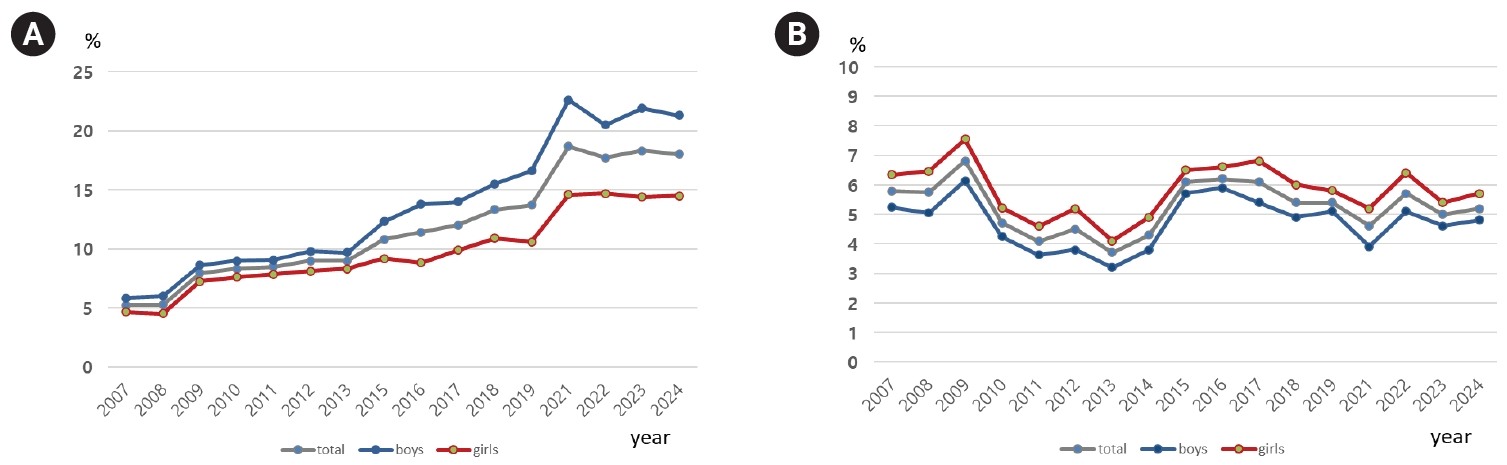
      Image Image Image
      Fig. 1. Secular trends in the height of Korean children. (A, C) Anthropometric survey data by the Korean Pediatric Society and the Ministry of Health and Welfare [3,4]. (B, D) National school health examination data by the Ministry of Education [5-9].
      Fig. 2. Long-term trends in the prevalence of obesity and underweight among Korean elementary school children. (A) Prevalence of obesity (BMI ≥ 95th percentile) (data by the Ministry of Education) [5-9]. (B) Prevalence of underweight (BMI < 5th percentile) (data by the Ministry of Education) [5-9]. BMI, body mass index.
      Fig. 3. Long-term trends in the prevalence of inadequate nutrient and vegetable intake in Korean children. (A) Prevalence of inadequate nutrient intake: the proportion of the population whose energy intake is less than 75% of the estimated energy requirement and whose intake of calcium, iron, vitamin A, and riboflavin is less than the estimated average requirement, as reported in Korea Health Statistics 2023 [15]. (B) Vegetable intake as reported in Korea Health Statistics 2023 [15].
      The transition of nutritional status in infants, young children, and school-aged children in Korea and future-oriented nutritional strategies: a narrative review
      Period Nutrition policies for school-aged children Nutrition policies for infants and young children
      1950–1970 -Foreign aid-supported school feeding programs -UNICEF milk powder and nutritional supplementation programs
      -Maternal and child health services stipulated in the Public Health Center Act
      1970–1980 -Transition to school-operated meal services and on-site meal preparation
      1980–1990 -Enactment of the School Meals Act -Establishment of regional maternal and child health centers
      1990–2000 -Nationwide expansion of school meal services -Breastfeeding promotion programs, including the designation of baby-friendly hospitals
      2000–2010 -Deployment of school nutrition teachers -Introduction and nationwide expansion of the NutriPlus program
      -Introduction of the school health promotion concept -Enactment of the Special Act on Safety Management of Children’s Dietary Lifestyle
      -Enactment of the Special Act on Safety Management of Children’s Dietary Lifestyle
      -Enactment of the Support for Diet Education Act
      Since 2010 -Expansion of free school meals -Establishment and gradual expansion of the Center for Children’s Foodservice Management
      -Comprehensive school meal safety measures
      -Sodium reduction initiative
      -Sugar reduction initiative
      Table 1. Historical overview of nutrition policies for school-aged children and infants/young children in Korea

      UNICEF, United Nations Children’s Fund.


      Korean J Community Nutr : Korean Journal of Community Nutrition
      Close layer
      TOP