

Skip Navigation
Skip to contents

Korean J Community Nutr : Korean Journal of Community Nutrition

OPEN ACCESS

Articles

Page Path
HOME > Korean J Community Nutr > Volume 31(3); 2026 > Article
Review
Life-course nutrition strategies for Korean middle-aged adults across biological transitions, nutritional burdens, and a community-linked precision nutrition model: a narrative review
Yoo Kyoung Parkorcid
Korean Journal of Community Nutrition 2026;31(3):215-228.
DOI: https://doi.org/10.5720/kjcn.2026.00206
Published online: June 30, 2026

Professor, Department of Medical Nutrition, AgeTech-Service Convergence Major, Kyung Hee University, Yongin, Korea

†Corresponding author: Yoo Kyoung Park Department of Medical Nutrition, AgeTech-Service Convergence Major, Kyung Hee University, 1732 Deokyeong-daero, Giheung-gu, Yongin 17104, Korea Tel: +82-31-201-3816 Fax: +82-31-203-3816 Email: ypark@khu.ac.kr
• Received: June 15, 2026   • Revised: June 25, 2026   • Accepted: June 26, 2026

© 2026 The Korean Society of Community Nutrition

This is an Open-Access article distributed under the terms of the Creative Commons Attribution Non-Commercial License (https://creativecommons.org/licenses/by-nc/4.0) which permits unrestricted non-commercial use, distribution, and reproduction in any medium, provided the original work is properly cited.

  • 63 Views
  • 3 Download
next
  • Objectives
    To describe the nutritional challenges faced by Korean middle‑aged adults (40–64 years) from a life‑course and biological transition perspective and to propose systems‑based precision nutrition strategies for this critical stage of the lifespan.
  • Methods
    In this narrative review, PubMed, Medline, and Web of Science were searched for articles published between January 2010 and November 2025 using terms such as “middle aged nutrition,” “healthy aging,” “life course nutrition,” “sarcopenia,” “precision nutrition,” and “chronic diseases.” Policy documents and major national cohort and intervention studies were also reviewed.
  • Results
    Middle-aged adults in Korea have a high prevalence of chronic disease beginning in their 40s, showing “the triple burden of malnutrition:” obesity, insufficient micronutrients, and sarcopenia onset, along with excessive sodium and sugar consumption combined with socioeconomic factors like living alone. Nutrient and dietary approaches, such as high protein (1.2–1.5 g/kg/d), leucine, dairy products and fruits, anti-inflammatory foods intake, Dietary Approaches to Stop Hypertension (DASH) or Mediterranean diets plus lifestyle modification at public health centers (Korean Diabetes Prevention Study) for cardiometabolic risks, Mediterranean-DASH Intervention for Neurodegenerative Delay diet for cognition maintenance, could greatly impact health trajectories.
  • Conclusion
    Korean middle‑aged adults experience a triple burden of malnutrition on top of nonlinear biological aging shifts, which together accelerate cardiometabolic, musculoskeletal, and cognitive risks. Implementing targeted dietary strategies within a systems‑based, community‑linked precision nutrition model is essential to reshape health trajectories and promote healthy longevity in this population.
Modern society is facing unprecedented demographic shifts and rapid aging, which fundamentally reshapes public health and nutritional priorities. With increasing life expectancy, narrowing the gap between “life expectancy” and “healthy life expectancy” (without disease or disability) has become a health imperative. The World Health Organization defines “healthy aging” not simply as the absence of disease but developing and maintaining the functional ability that enables well-being in older age [1]. Similarly, the National Academy of Medicine defines healthy longevity as a state with maintained physical, cognitive, and social functioning, and a time lived in good health approaching the biological life span [2]. Within this paradigm, middle adulthood (aged 40–64 years) is considered the most critical life transition that determines a lifelong health trajectory [3].
According to previous reviews targeting children and adolescents, early life stages are a plasticity window where dietary behaviors are formed and fixed; nutritional imbalances during this period can lead to intergenerational health inequalities [4]. However, recent life-course epidemiology and multi-omics studies suggest that middle adulthood is not just progressive aging but a “a potentially critical window of plasticity” where existing health trajectories can be actively reshaped [5, 6].
Traditional aging biology assumed that over time cellular function and metabolic efficiency decrease gradually and linearly. However, recent studies using advanced multi-omics profiling have revealed that human aging does not occur at a constant rate but follows a nonlinear trajectory accompanied by explosive molecular biological fluctuations at specific ages [7]. During middle adulthood, the basal metabolic rate decreases, drastic endocrine changes such as menopause occur, and musculoskeletal degeneration begins. Simultaneously, continuous exposure to the modern obesogenic environment can result in a triple burden of malnutrition, where obesity due to energy overconsumption, micronutrient deficiencies, and age-related sarcopenia appear concurrently during this life stage [8]. According to epidemiological modeling studies, modifiable lifestyle factors such as diet, physical activity, and weight management have the strongest impact on healthspan extension.
Therefore, this narrative review aims to analyze the key nutritional challenges faced by Korean middle-aged adults by synthesizing recent epidemiological data, biological multi-omics research, and behavioral science frameworks. It examines disease-specific dietary strategies, such as the Mediterranean diet, Dietary Approaches to Stop Hypertension (DASH) diet, and Mediterranean-DASH Intervention for Neurodegenerative Delay (MIND) diet, as well as the results of large-scale clinical interventions, such as the Korean Diabetes Prevention Study (KDPS). Accordingly, it proposes a “systems-centered, community-linked precision nutrition model” to successfully improve health outcomes during this life transition.
Ethics statement
As this study is a narrative review, it did not require institutional review board approval or individual consent.
Study design
This narrative review draws together current evidence on the nutrition of Korean middle-aged adults through three complementary lenses: life-course epidemiology, the biology of nonlinear aging, and behavioral and community-based nutrition science. Rather than following a systematic protocol, sources were selected and organized to follow the conceptual progression of the review. The biological basis of midlife transition was addressed first, drawing on recent multi-omics and life-course studies. The epidemiology and nutritional status of Korean middle-aged adults were then examined using national health and nutrition data and disease-specific dietary studies, followed by disease-targeted dietary strategies for musculoskeletal, bone, cognitive, and cardiometabolic health and by large-scale Korean lifestyle-intervention trials. Throughout, peer-reviewed research was complemented by policy documents and major national cohort and intervention studies so that the resulting framework reflects both the scientific evidence and the policy context relevant to this life stage.
Although the primary focus of this review relies on Korean focused data, the following findings derived from a single, international longitudinal multi-omics cohort provide an essential hypothesis-generating framework [7]. This specific overseas study is introduced because comparable cutting-edge multi-omics research tracking non-linear biological aging transitions is currently unavailable in domestic cohorts. A recent longitudinal study identified two pronounced “biological crests” of molecular change clustering around 44 and 60 years old [7]. This suggests that middle adulthood is not merely a stage of advancing chronological age but a biological transition period when metabolic pathways and disease risks fundamentally change. The findings were obtained after tracking 108 adults aged 25–75 for up to 6.8 years, analyzing tens of thousands of molecular markers—including transcriptomic, proteomic, metabolomic, lipidomic, and microbiome data—from blood, stool, skin, oral, and nasal samples (Table 1) [7].
These nonlinear dynamics provide a key biological rationale for age-appropriate nutritional intervention strategies in middle-aged adults. At the first inflection point, around age 44, molecular pathways governing lipid and alcohol metabolism undergo marked changes, coinciding with an accelerated risk of cardiovascular conditions such as hyperlipidemia, atherosclerosis, and coronary artery disease. Accordingly, nutritional strategies at the early-to-mid-40s should prioritize restoring the energy balance, improving lipid profiles through increased unsaturated fatty acid intake, restricting alcohol, and ensuring adequate antioxidant supply. At the second inflection point, around age 60, biomarkers related to immune regulation, carbohydrate metabolism, and kidney function are extensively restructured. This period marks the peak incidence of type 2 diabetes and a clinical turning point for immunosenescence and musculoskeletal degeneration, including sarcopenia and osteoporosis. Nutritional strategies in the late 50s to early 60s should therefore emphasize high-quality protein intake to counter anabolic resistance, immunonutrition to dampen low-grade inflammation, and dietary patterns that enhance insulin sensitivity and limit rapid glycemic fluctuations.
Importantly, these implications should not be interpreted as definitive age-specific clinical guidelines, but as a translational framework that requires validation in larger, more diverse, and intervention-based studies. Nevertheless, the findings support a shift from a reactive model that treats diseases pharmacologically only after manifestation, toward a preventive model that seeks to maximize metabolic resilience before or during periods of pronounced biological change.
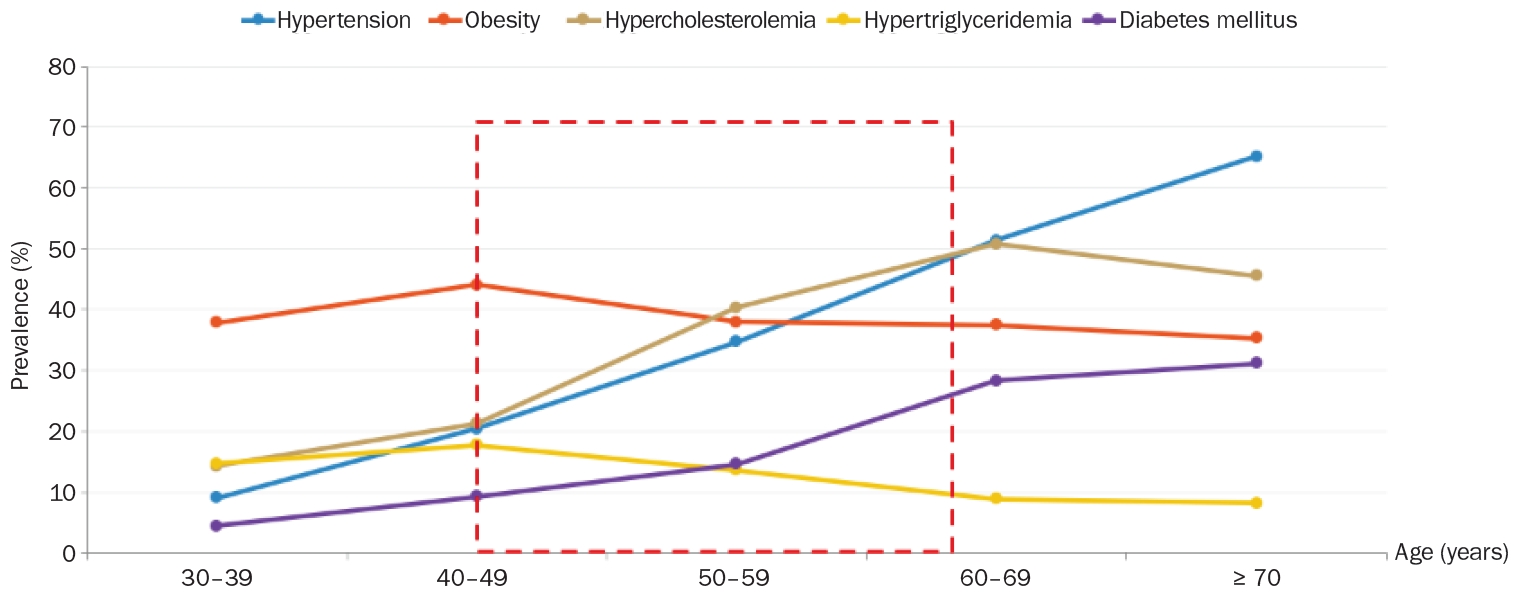
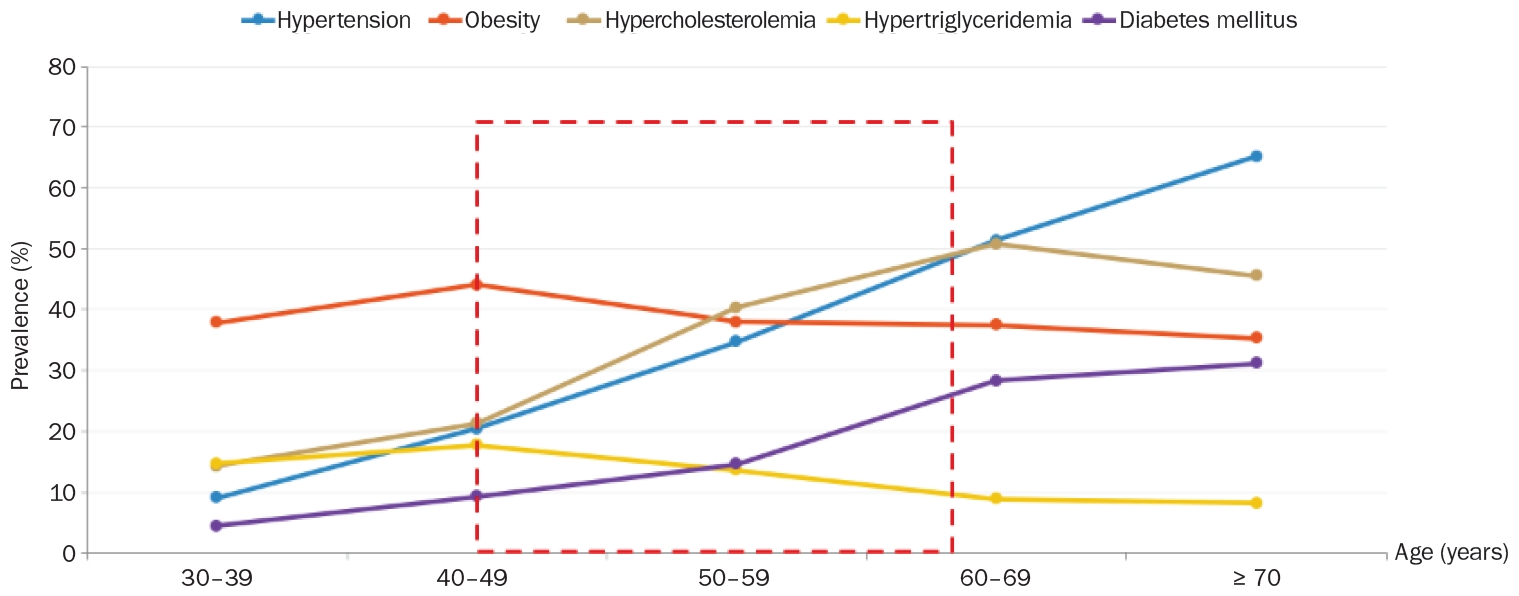
The 2024 Korea National Health and Nutrition Examination Survey (KNHANES IX-3) showed a strong age-dependency in the prevalence of major chronic conditions among Korean adults; however, individual conditions follow two distinct age trajectories (Fig. 1) [8]. Hypertension, hypercholesterolemia, and diabetes increase progressively, accumulating with advancing age, whereas obesity and hypertriglyceridemia peak in early midlife and decreases thereafter [8]. This divergence is most pronounced across the 40s–50s transition as shown in Fig. 1 [8].
Hypertension exhibits the steepest, most consistent age gradient. Prevalence climbs from 9.1% among adults in their 30s to 20.4% in their 40s, 34.7% in their 50s, and 51.4% in their 60s—about a six-fold increase across the adult range. A marked inflection occurs between 40s–50s, when prevalence rises by 14.3 percentage points (%p), a relative increase of more than 70% within a single decade. Hypercholesterolemia follows a comparable but more front-loaded pattern. It increases modestly from 14.3% in the 30s to 21.3% in the 40s, then nearly doubles to 40.3% in the 50s (+ 19.0%p)—the single largest decade-to-decade increment for any condition in the survey. Then, prevalence peaks at 50.8% in the 60s before easing slightly to 45.6% at ≥ 70 years, a late-life plateau plausibly reflecting the combined effects of widespread lipid-lowering treatment and selective survival. Diabetes mellitus is uncommon in early adulthood (4.5% in the 30s) but accelerates from midlife onward, reaching 9.3% in the 40s and 14.6% in the 50s before sharply rising between the 50s and 60s (14.6% to 28.3%, a near-doubling).
In contrast, obesity is most prevalent in early-to-mid-adulthood, not increasing with age. Already high at 37.9% in the 30s, peaks at 44.1% in the 40s—the highest prevalence for this condition in any age group—gradually declining to 38.0%, 37.5%, and 35.3% across the 50s, 60s, and ≥ 70 groups. Hypertriglyceridemia displays the same early-peak on a lower scale, rising from 14.7% in the 30s to a maximum of 17.8% in the 40s before falling to 8.2% by ≥ 70 years. Across the life course, these patterns in the relative disease burden cross over. Obesity is the dominant metabolic abnormality in the 30s and 40s, when hypertension and diabetes remain comparatively low; by the 50s, hypertension and hypercholesterolemia overtake it; and from the 60s onward, hypertension is the single, most prevalent condition. Thus, the 40s and 50s are a decisive transition window, during which the predominantly metabolic risk profile of younger adults translates into the cardiovascular and metabolic disease burden of later life. Accordingly, middle age is a critical period for screening and preventive intervention.
Comparing the habitual intake of Korean middle-aged adults (KNHANES 2013–2022) with 2025 Korean Dietary Reference Intakes (KDRI) reveals a consistent paradox: energy and protein levels are adequate to high but micronutrient intake is widely insufficient; moreover, several of these patterns differ markedly between men and women [8, 9] (Tables 2 and 3).
Energy and macronutrient intake
In men, mean energy intake closely tracks the estimated energy requirement (EER), approximating 2,500 kcal/d at 30–49 years and 2,100–2,200 kcal/d at 50–64 years. Protein intake is high—88.8 and 80.6 g/d, respectively—exceeding the recommended nutrient intake (RNI) of 60–65 g/d; nevertheless, 13.8% of men aged 30–49 and 21.1% of those aged 50–64 were below the reference, a nontrivial minority of concern given the anabolic resistance and accelerating sarcopenia risk observed at this life stage [9]. Fat contributes 16.7%–20.7% of the total energy, within the acceptable macronutrient distribution range (AMDR, 15%–30%) but drifting toward its lower edge with age, whereas saturated fat levels are generally under the chronic disease risk reduction (CDRR) threshold of 7% of energy. Total sugar intake (60.8–63.3 g/d) was below the goal of 20% of total energy.
In women, the energy intake is slightly below the EER at 30–49 years (≈1,800–1,900 kcal/d), falls short at 50–64 years (≈1,500–1,600 kcal/d against an EER of 1,700 kcal/d). Mean protein intake (≈59 g/d) exceeds the RNI, but the prevalence of shortfall is higher than in men—24.2% at 30–49 years and 22.6% at 50–64 years—pointing to an issue with protein quality and per-meal distribution rather than gross deficiency. Fat levels (17.5%–21.1% of energy) fall within the AMDR. Notably, sugar intake increases with age, from 50.8 to 61.5 g/d; although still within the 20% energy goal.
Mineral and micronutrient status
The most striking and clinically consequential concern is micronutrients intakes. Calcium intake is severely inadequate in both genders: median intakes of 496–517 mg/d in men and 397–437 mg/d in women were under the 700–800 mg/d RNI, leaving 65%–71% of men and 73%–74% of women below the reference. Vitamin D deficiency was even more striking—mean of 3.5–4.0 µg/d and 2.6–3.1 µg/d intake in man and women, respectively against an adequate intake of 10 µg/d mean that > 90% of men and around 95% of women fail to meet the standard. This concurrent calcium–vitamin D insufficiency is especially alarming for women approaching and beyond menopause, in whom it compounds with declining estrogen levels, accelerating bone loss. Vitamin A is likewise inadequate, with 71%–79% of adults below the RNI; riboflavin is the least problematic: mean intakes exceed the RNI, although around 30% of adults still do not meet daily requirements.
Sodium shows the opposite direction. Men consume 4,026 mg/d, and 79%–83% exceed the CDRR of 2,300 mg/d; women consume less (≈2,700–2,770 mg/d) but still surpass the CDRR in 55% of cases. This pronounced gender difference reflects men’s heavier reliance on soups, stews, and eating out.
Together, these data delineate the “triple burden” of mid–life nutrition—adequate-to-excess energy and protein, widespread deficits in bone- and immune-related micronutrients, and excessive sodium—and indicate that intervention should prioritize calcium and vitamin D repletion, sodium reduction (particularly in men), and adequate protein levels for the minority not meeting daily requirements, rather than overall caloric restriction alone.
The Korean Healthy Eating Index (KHEI), developed by the Korea Disease Control and Prevention Agency to comprehensively evaluate diet quality, is a key indicator of the relationship between diet and chronic diseases in middle-aged adults [10]. The KHEI consists of 14 items (maximum score, 100), including eight items on the adequacy of recommended foods (mixed grains, fruits, vegetables, milk and dairy, meat/fish/eggs/legumes), three on the moderation of restricted foods (saturated fat, sodium, and sugars), and another three on energy balance.
An analysis of KNHANES data (2016–2018) involving 4,113 middle-aged adults living in single-person households (1,517 men, 2,596 women) found that higher KHEI scores were significantly associated with a lower risk of metabolic abnormalities such as obesity, hypertension, and hypertriglyceridemia [11]. Notably, this study demonstrated that household type (multi-person vs. single-person) is a strong structural factor mediating diet quality and disease risk. Men in single-person households had significantly lower total KHEI scores than those in multi-person households (P < 0.0001). Among men in single-person households, those in the lowest tertile of KHEI scores (T1) had a 4.625 times higher risk of obesity, 3.790 times higher risk of hypertension, and 4.333 times higher risk of hypertriglyceridemia than those in the highest tertile (T3). For women, the odds ratios (OR) for obesity and hypertriglyceridemia in the lowest KHEI tertile within single-person households skyrocketed to 3.223 and 7.134, respectively. Additionally, in an analysis of 9,161 adults aged 19–64 years (3,985 men, 5,176 women) from the 2022–2023 KNHANES, a higher total KHEI score was associated with a lower risk of metabolic syndrome (MetS) in men (OR, 0.658). Among the three domains, Adequacy was the strongest predictor: participants in the highest-scoring group showed significantly reduced odds of MetS in both men (OR, 0.689) and women (OR, 0.665). Within the Adequacy domain, scores for breakfast, fruit, and milk/dairy intake were lower in the MetS group, whereas the Moderation domain showed a gender-specific pattern (with women in the highest-scoring group showing an increased risk), and the Balance domain was generally not associated with MetS [12].
Consumption patterns of fermented foods also influence inflammation levels and chronic diseases. A latent profile analysis of 7,111 middle-aged adults (40–64 years) using KNHANES (2015–2018) showed that people with a fermented grain-centered pattern (FGP) and fermented dairy-centered pattern had lower levels of high-sensitivity C-reactive protein than the low fermented-food pattern group, indicating lower micro-inflammation [13]. The FGP group demonstrated significant risk reductions with an OR of 0.810 for hypertension and 0.586 for diabetes, confirming that an appropriate combination of high-quality traditional fermented foods and dairy products can help prevent metabolic diseases in middle-aged adults.
Taken together, the lower adequacy scores for breakfast, fruit, and dairy among those at higher metabolic risk—and the elevated risk observed among adults living alone—suggest that these dietary gaps reflect more than personal motivation. Rather, they indicate that nutritional management is structurally shaped by socio-environmental factors such as living arrangements, food accessibility, and cooking skills, rather than by individual choice alone.
The two biological inflection points in middle adulthood clinically manifest as four core physiological regressions: muscle mass loss, decreased bone mineral density, cognitive decline, and cardiometabolic alterations [14-17]. Purposeful dietary strategies to delay these effects and actively alter health trajectories are crucial [18]. In a recent study, nutritional recommendations were developed across several health domains—glycemic control, cardiovascular health, cognitive function, muscle function, and skin health—that represent functions commonly compromised with aging [19] some of which are presented below.
Musculoskeletal health: protein and macronutrient strategies to overcome sarcopenia
Sarcopenia is not merely a result of aging but a critical pathological starting point leading to insulin resistance and MetS [20]. Since human skeletal muscle is the body’s largest glucose reservoir (absorbing around 80% of total glucose) and a fat-burning organ, muscle mass decline leads to elevated blood sugar levels and visceral obesity [21]. In a nationally representative cross-sectional analysis of 15,586 Korean adults aged ≥ 30 years using whole-body dual-energy X-ray absorptiometry (KNHANES IV–V, 2008–2011), mean appendicular skeletal muscle mass (ASM) declined progressively with advancing age, with a markedly steeper decline in men than in women. Relative to adults aged 30–49 years, mean ASM in men decreased from 23.3 kg to 21.5 kg in the 50–69-year group (−7.7%) and to 19.1 kg in those aged ≥ 70 years (−18.0%); the corresponding values in women were 14.8 kg, 14.4 kg (−2.7%), and 13.1 kg (−11.5%) [22].
The frontline defense against sarcopenia is high-quality protein intake. Previously, the RNI for protein in adults was 0.91 g/kg/day, but recent large-scale clinical and epidemiological studies have shown that this standard may be insufficient to optimize muscle maintenance in older adults to prevent the catabolism of aging muscles [23]. Since aging causes “anabolic resistance,” larger amounts of amino acids are needed to activate muscle protein synthesis. Accordingly, an expert consensus by the Korean Geriatric Society and the Korean Nutrition Society suggested a dietary protein intake of at least 1.2 g/kg/day for Korean older adults, which is higher than the general adult RNI of 0.91 g/kg/day [24].
Furthermore, a systematic review on sarcopenia diagnostic indicators and protein intake revealed that Korean older adults with low protein intake had a significantly higher risk of decreased grip strength and muscle mass [25]. However, the foundation for preventing such severe muscle loss in older adulthood must be established much earlier. The progressive decline in skeletal muscle mass and function, which eventually leads to sarcopenia, can begin as early as the fourth or fifth decade of life. Since muscle mass typically decreases by approximately 1% per year starting around age 50, middle age serves as a critical transition phase. Therefore, relying solely on increased protein interventions after reaching old age may not be sufficient to fully counteract anabolic resistance and muscle degradation. Instead, adopting an optimal dietary protein strategy and building muscle reserves during middle age is essential to delay the onset of sarcopenia and maintain musculoskeletal health in later years (Table 4) [26-28].
Not only the absolute protein amount but also its quality and amino acid composition are important. Branched-chain amino acids (BCAAs), particularly leucine, directly stimulate the mTORC1 pathway to induce muscle synthesis [26]. Incorporating a mixed protein diet comprising high-quality plant-based proteins like soy and legumes alongside animal-based proteins provides the dual benefit of meeting essential aminoacids requirements while lowering saturated fat and cholesterol absorption, thereby reducing cardiovascular risk [27]. Moreover, combining protein with vitamins and minerals significantly amplifies musculoskeletal mass preservation compared to protein alone [28].
Osteoporosis and bone health management: nutritional buffering for the menopausal transition
Middle-aged women experience a sharp decline in estrogen after menopause, leading to the loss of defensive mechanisms that previously inhibited osteoclast activity. Consequently, the microarchitecture of the trabecular bone is destroyed and bone mass rapidly lost [29]. According to Korean statistics, the prevalence of osteopenia among women over 50 is 47.9%, and that of osteoporosis is 22.4%, with these rates doubling for every 10-year increase in age [30].
Nutritional strategies for osteoporosis prevention must extend beyond supplementing a single nutrient (calcium) to modulating overall dietary patterns and the body’s inflammatory environment. A large-scale epidemiological study on KNHANES (2008–2010) data showed a strong correlation between the dietary patterns of Korean postmenopausal women and bone health. A total of 3,735 Korean postmenopausal women found that a “dairy and fruit” dietary pattern—high in milk, dairy products, and fresh fruits—was associated with a 53% lower risk of lumbar-spine osteoporosis (OR 0.47, 95% confidence interval 0.35–0.65), whereas a traditional “white rice, kimchi and seaweed” pattern was associated with poorer bone health (OR 1.40) [31].
Furthermore, the bone metabolism is highly sensitive to the body’s inflammatory environment. A study applying the dietary inflammatory index (DII), which quantifies the inflammatory potential of a diet, found that postmenopausal women in the group with the highest DII (a pro-inflammatory diet)—characterized by high proportions of refined carbohydrates, processed meats, and saturated fats—had significantly lower bone mineral density in the femoral neck than the control group, and a 1.27 times higher OR for osteopenia/osteoporosis [32]. Conversely, a cross-sectional study of postmenopausal Korean women found that a higher intake frequency of vegetable-derived antioxidant micronutrients was positively associated with bone mass in a site-specific manner—β-carotene with the lumbar spine T-score, vitamin C with the femoral neck T-score, and zinc with the total hip T-score. Given its cross-sectional design, however, these results indicate associations rather than causal relationships [33]. This demonstrates that an antioxidant and anti-inflammatory diet is essential for collagen synthesis in the bone matrix and osteoclast inhibition.
Preventing cognitive decline and neuroprotection: the MIND diet
After the second biological inflection point, around age 60, inflammatory responses and oxidative stress in cranial nerve cells accumulate, gradually increasing the risk of developing dementia, including Alzheimer’s disease [34]. The most globally recognized nutritional intervention for preserving cognitive function is the MIND, developed by Morris et al. [35] in 2015. The MIND diet combines the cardiovascular-friendly DASH diet and the Mediterranean diet. It is intricately designed to maximize the intake of specific food groups, polyphenols, and omega-3 fatty acids, which have neuroprotective effects. Long-term epidemiological research demonstrated that groups strictly adhering to the MIND diet saw a staggering 53% reduction in Alzheimer’s risk, while even moderate adherence resulted in a 35% risk reduction [36]. Notably, the cognitive decline rate of the group in the top tertile of MIND scores showed a protective effect equivalent to being 7.5 years younger compared to the bottom tertile (Table 5).
Cardiometabolic disease prevention: DASH and mediterranean diets
To address the abnormalities in lipid metabolism and cardiovascular disease pathways that develop around the mid-40s, the overall dietary pattern needs to be adaptable and cardiovascular-friendly. The DASH diet, designed for hypertension prevention and management, focuses on increasing intake of whole grains, fruits, vegetables, and low-fat dairy products while limiting red meat, sodium, and sugar-sweetened beverages [37]. It lowers blood pressure through a complex interaction between micronutrients with excellent vasodilatory and sodium-excreting functions, such as dietary fiber, potassium, calcium, and magnesium.
The Mediterranean diet also actively recommends daily or weekly consumption of polyphenol-rich plant foods (extra virgin olive oil, nuts, seeds, and legumes) and omega-3-rich fish [38]. In large population-based studies of adults, a higher intake of dietary antioxidant nutrients—including vitamins A, C, and E, carotenoids, selenium, and zinc, commonly summarized as the composite dietary antioxidant index—has been inversely associated with atherosclerotic cardiovascular disease and its estimated 10-year risk, plausibly through antioxidant and anti-inflammatory mechanisms [39]. As these findings derive from observational data, they indicate association rather than causation. Conversely, high-fat processed meats like bacon and sausages, or excessive refined carbohydrate intake, act as a catalyst for MetS and must be limited from the diet.
Precision nutrition management for metabolic syndrome and prediabetes
Prolonged obesity and insulin resistance progress to prediabetes. This is a “warning stage” before type 2 diabetes and the final “reversible window” to return to normal blood glucose levels through intensive lifestyle modification (LSM) [40]. Compared to Westerners, Koreans have a lower insulin secretory capacity of pancreatic beta cells and a higher abdominal visceral fat ratio, leading to a sharp increase in diabetes risk even at a relatively low body mass index (BMI). Instead of blindly following Western guidelines, a precision nutritional management tailored to Korean food culture and body type is needed [41].
The KDPS, a large-scale, multicenter prevention study led by the Korean Diabetes Association, was conducted to find the optimal diabetes prevention solution for Koreans [42]. Based in university hospitals and community public health centers nationwide, the KDPS recruited overweight/obese patients with prediabetes aged 30–70 and randomly assigned them to a standard management group, an LSM group, and a metformin group and were prospectively tracked. The core goal for the LSM group was to lose ≥ 5% of their initial body weight within 6 months and maintain it through systematic nutritional management and behavioral psychological correction. The results were encouraging. The group that received the community (public health center)-based internet-linked LSM intervention for 16 weeks to 6 months showed significant reductions in body weight and BMI and dramatic improvements in fasting blood glucose and insulin resistance indicators compared to the control group. Notably, in the hospital-based H-KDPS cohort, the intensive LSM group showed a 49% higher inhibitory effect on the onset of type 2 diabetes compared to the standard management group. This suggests that a close-contact dietary and behavioral correction program led by trained experts (public health center staff, dietitians) is overwhelmingly more effective for chronic disease prevention than single nutrient prescriptions or drug administration.
While individual dietary guidelines and one-off health center education can have a significant impact, the current food environment is simply too complex to sustain lifelong healthy eating habits.
Building a community ecosystem around the workplace and local services
In Korea, public nutrition and welfare services are largely organized around older adults, and many community resources are activated only after age 65. As a result, adults in their 40s and 50s—often at the peak of their economic and caregiving responsibilities—frequently fall into a structural gap where their daily nutrition is left to individual willpower in the face of long working hours, occupational stress, company dinners, food delivery culture, and chronic sleep deprivation. By the time they become eligible for elderly-focused programs such as long-term care insurance, dementia centers, or senior meal services, sarcopenia and MetS may already have caused partly irreversible damage [43].
To address this midlife service gap, a community ecosystem that actively links the workplace, local public health centers, primary care clinics, and the home environment is essential. Rather than treating middle-aged adults as a “pre-elderly” group who will be supported later, nutrition support should be embedded where they actually spend most of their time and make food choices—at work and in their immediate communities.

Workplace and enterprise–centered environmental design

Following nutrition guidelines (sodium reduction, Mediterranean/DASH-based meal options) should be mandatory in corporate cafeterias. Company health promotion programs should evolve beyond simple health check-ups to community health center-level LSM programs, encouraging employee participation.

Expansion of preventive interventions in community health services

Building on evidence from KDPS and similar projects, digital and face-to-face interventions led by dietitians and health professionals in public health centers and primary care clinics should be scaled up and explicitly opened to middle-aged adults, not only to older seniors. Incorporating the Adult Nutrition Quotient (NQ-A) into routine check-ups could help identify high-risk individuals early and connect them to proactive nutritional coaching and community programs.
In this community-linked ecosystem, digital health tools and precision nutrition technologies can act as a continuous support layer that connects the workplace and local services to individuals’ everyday decision-making, rather than functioning as stand-alone apps.
Middle adulthood is a decisive life transition period over the life course that determines the quality of life and healthspan in old age. As shown by multi-omics research, human aging is not a gradual process but an explosive nonlinear sequence where lipid metabolism, immune, and musculoskeletal pathways abruptly change in the mid-40s and early 60s. Korean epidemiological data on chronic diseases warn the intersection of these biological fluctuations with the triple burden of malnutrition, it results in chronic diseases such as obesity, diabetes, and cancer.
The core of successful nutritional strategies for this life transition period is supplying sufficient protein and BCAAs prevent sarcopenia. Second, rapidly transitioning to disease-targeted dietary structures—such as increased dairy and fruit consumption, the Mediterranean and the MIND diet—could help against osteoporosis and cognitive decline. Third, actively adopting and practicing age-tailored, community-based LSM to revert the risk of prediabetes.
Ultimately, these strategies cannot rely on individual willpower or isolated educational campaigns alone. To close the current midlife service gap, it will be crucial to build a systems-centered, community-linked ecosystem in which workplaces, public health centers, and primary care clinics coordinate nutrition support across the environments where middle-aged adults actually live and work. Together, these approaches can better support Korean middle-aged adults in preventing chronic disease and achieving healthy longevity in an aging society.
As a narrative rather than systematic review, this work is subject to selection bias and may not capture all relevant domestic and international studies. In addition, the evidence base is dominated by observational data from Korean national surveys and cohorts, which constrains causal interpretation and limits extrapolation to other settings. Finally, few long‑term intervention or multi‑omics studies have rigorously tested community‑linked precision nutrition strategies in middle‑aged adults, highlighting the need for future trials and implementation research to refine and validate these approaches in real‑world practice.

CONFLICT OF INTEREST

There are no financial or other issues that might lead to conflict of interest.

FUNDING

This research was supported by a grant from BK21 program “AgeTech- Service Convergence Major” through the National Research Foundation, funded by the Ministry of Education of Korea (Grant No. 5120200313836).

ACKNOWLEDGEMENTS

This study was based on a presentation delivered at the 2025 Fall Conference of the Korean Society of Community Nutrition.

DATA AVAILABILITY

This narrative review is based on previously published literature and does not contain original data.

Fig. 1.
Age-specific prevalence of chronic diseases. Adapted from Korea Health Statistics 2024: Korea National Health and Nutrition Examination Survey (KNHANES IX-3). Korea Disease Control and Prevention Agency, 2015 [8]. Hypertension: systolic blood pressure ≥ 140 mmHg or diastolic blood pressure ≥ 90 mmHg, or use of antihypertensive medication. Obesity: body mass index BMI ≥ 25 kg/m2 (Asia-Pacific criterion). Hypercholesterolemia: total cholesterol ≥ 240 mg/dL or use of cholesterol-lowering medication. Hypertriglyceridemia: fasting triglycerides ≥ 200 mg/dL. Diabetes mellitus (based on fasting glucose or HbA1c): fasting glucose ≥ 126 mg/dL, physician diagnosis, use of glucose-lowering medication or insulin, or HbA1c ≥ 6.5%.
kjcn-2026-00206f1.jpg
Table 1.
Nonlinear dynamics of multi-omics profiles during human aging
Biological aging crest Approximate chronological age Primary molecular & metabolic dysregulation Clinical implications & associated risks
Crest 1 (early midlife transition) 44 years Lipid metabolism Hyperlipidemia
Alcohol metabolism Early atherosclerosis
Structural proteins in the skin and muscle Metabolic syndrome
Cardiovascular disease pathways Decline in muscle elasticity
Skin aging
Crest 2 (late midlife transition) 60 years Immune regulation Immunosenescence
Carbohydrate metabolism Type 2 diabetes onset
Oxidative phosphorylation Profound loss of bone mineral density (osteoporosis)
Kidney function pathways Accelerated sarcopenia

Data from Shen et al. (Nat Aging 2024; 4(11): 1619-1634) [7].

Table 2.
Nutrient intake status of Korean men aged 30–64 relative to 2025 KDRI
Nutrient Age (year) DRI Mean intake (based on KNHANES 2013–2022) Below the KDRI (%)
Energy (kcal/d) 30–49 EER: 2,500 ~2,500 -
50–64 EER: 2,200 ~2,100–2,200 -
Protein (g/d) 30–49 RNI: 65 88.8 13.8
EAR: 50
50–64 RNI: 60 80.6 21.1
EAR: 50
Fat (%/E) 30–49 AMDR: 15–30 20.7 -
50–64 16.7 -
Saturated fatty acid (%/E) 19–64 CDRR: < 7% Generally < 7% -
Sugars (g/d) 30–49 Goal: < 20% of total energy 63.3 -
50–64 60.8 -
Calcium (mg/d) 30–49 RNI: 800 495.7 (median) 71.4
EAR: 650
50–64 RNI: 750 517.0 (median) 64.6
EAR: 600
Vitamin D (μg/d) 30–49 AI: 10 3.5 92.6
50–64 4.0 92.1
Vitamin A (μg RAE/d) 30–49 RNI: 800 410.6 78.8
EAR: 560
50–64 RNI: 750 458.8 74.4
EAR: 530
Riboflavin (mg/d) 30–49 RNI: 1.5 1.91 29.0
50–64 EAR: 1.3 1.75 34.1%
Sodium (mg/d) 30–49 AI: 1,500 4,026.0 Above CDRR: 83.4
CDRR: 2,300 Below AI: 5.0
50–64 3,942.2 Above CDRR: 79.4
Below AI: 5.3

KNHANES, Korean national health and nutrition examination survey; KDRI, Korean Dietary Reference Intake; EER, estimated energy requirement; RNI, recommended nutrient intake; EAR, estimated average requirement; AMDR, acceptable macronutrient distribution range; CDRR, chronic disease risk reduction intake; AI, adequate intake.

Table 3.
Nutrient intake status of Korean women aged 30–64 relative to 2025 KDRI
Nutrient Age (year) DRI Mean intake (based on KNHANES 2013–2022) Below the KDRI (%)
Energy (kcal/d) 30–49 EER: 1,900 ~1,800–1,900 -
50–64 EER: 1,700 ~1,500–1,600 -
Protein (g/d) 30–49 RNI: 50 59.5 24.2
EAR: 40
50–64 RNI: 60 59.3 22.6
EAR: 50
Fat (%/E) 30–49 AMDR: 15–30 21.1 -
50–64 17.5 -
Saturated fatty acid (%/E) 19–64 CDRR: < 7% Generally < 7% -
Sugars (g/d) 30–49 Goal: < 20% of total energy 50.8 -
50–64 61.5 -
Calcium (mg/d) 30–49 RNI: 700 397.1 (median) 74.0
50–64 EAR: 580 437.1 (median) 72.8
Vitamin D (μg/d) 30–49 AI: 10 2.6 95.6
50–64 3.1 95.5
Vitamin A (μg RAE/d) 30–49 RNI: 650 350.2 76.2
EAR: 450
50–64 RNI: 600 379.6 70.7
EAR: 430
Riboflavin (mg/d) 30–49 RNI: 1.2 1.41 31.0
50–64 EAR: 1.0 1.40 29.1
Sodium (mg/d) 30–49 AI: 1,500 2722.6 Above CDRR: 55.4
CDRR: 2,300 Below AI: 17.5
50–64 2769.2 Above CDRR: 55.6
Below AI: 17.5

KNHANES, Korean national health and nutrition examination survey; KDRI, Korean Dietary Reference Intake; EER, estimated energy requirement; RNI, recommended nutrient intake; EAR, estimated average requirement; AMDR, acceptable macronutrient distribution range; CDRR, chronic disease risk reduction intake; AI, adequate intake.

Table 4.
Key micronutrients and macronutrients for sarcopenia prevention
Target nutrient Recommended intake dose for muscle preservation Physiological role in middle-aged adults
Total dietary protein 1.2–1.5 g/kg/day (or 25–30 g/meal) Overcomes anabolic resistance and provides primary building blocks for muscle protein synthesis
Leucine (branched-chain amino acids) 2.5–3.0 g/meal Direct activator of the mTORC1 signaling pathway, initiating muscle anabolism
Vitamin D 800–1,000 IU/day Upregulates intramuscular vitamin D receptors and enhances fast-twitch muscle fiber function
Magnesium 300 mg/day (men), 270 mg/day (women) Co-factor in ATP synthesis and insulin signaling; mitigates age-related muscle mass loss
Vitamin C/E 45–90 mg/day (vitamin C), 400 IU/day (vitamin E) Decreases reactive oxygen species that exacerbate age-related muscle catabolism

Data from Kamei et al. (Nutrients 2020; 12(1): 261) [26].

Data from Guasch-Ferré et al. (Circulation 2019; 139(15): 1828-1845) [27].

Data from Nasimi et al. (Adv Nutr 2023; 14(4): 762-773) [28].

Table 5.
Mediterranean-DASH Intervention for Neurodegenerative Delay (MIND) diet components for cognitive preservation
Dietary component MIND diet recommendation Neuroprotective mechanism
Green leafy vegetables ≥ 6 servings/week Rich in folate, lutein, and vitamin K; suppresses neuroinflammation and maintains synaptic plasticity
Berries ≥ 2 servings/week Contains anthocyanins that promote neural signal transmission in the cerebral cortex and defend against oxidative stress
Extra virgin olive oil Primary cooking fat Oleocanthal activates the clearance of amyloid-beta (Aβ) plaques, which induce Alzheimer’s
Nuts & fish Nuts ≥ 5 servings/week Omega-3 (EPA, DHA) unsaturated fatty acids preserve brain cell membrane fluidity and protect microvessels
Fish ≥ 1 serving/week
Red meat & fast food Red meat < 4 servings/week Blocks generation of saturated fats and advanced glycation end-products, preventing damage to blood-brain barrier permeability
Fried food < 1 serving/week
  • 1. Rudnicka E, Napierała P, Podfigurna A, Męczekalski B, Smolarczyk R, Grymowicz M. The World Health Organization (WHO) approach to healthy ageing. Maturitas 2020; 139: 6-11. ArticlePubMedPMC
  • 2. National Academy of Medicine, Commission for a Global Roadmap for Healthy Longevity. Global roadmap for healthy longevity. National Academies Press; 2022.
  • 3. Lachman ME, Teshale S, Agrigoroaei S. Midlife as a pivotal period in the life course: balancing growth and decline at the crossroads of youth and old age. Int J Behav Dev 2015; 39(1): 20-31. ArticlePubMedPMC
  • 4. Beckerman JP, Alike Q, Lovin E, Tamez M, Mattei J. The development and public health implications of food preferences in children. Front Nutr 2017; 4: 66.ArticlePubMedPMC
  • 5. Infurna FJ, Gerstorf D, Lachman ME. Midlife in the 2020s: opportunities and challenges. Am Psychol 2020; 75(4): 470-485. ArticlePubMedPMC
  • 6. Wagner C, Carmeli C, Jackisch J, Kivimäki M, van der Linden BWA, Cullati S, et al. Life course epidemiology and public health. Lancet Public Health 2024; 9(4): e261-e269. ArticlePubMed
  • 7. Shen X, Wang C, Zhou X, Zhou W, Hornburg D, Wu S, et al. Nonlinear dynamics of multi-omics profiles during human aging. Nat Aging 2024; 4(11): 1619-1634. ArticlePubMedPMCPDF
  • 8. Korea Disease Control and Prevention Agency (KDCA). Korea Health Statistics 2024: Korea National Health and Nutrition Examination Survey (KNHANES Ⅸ-3). KDCA; 2025 Dec. Report No. 11-1790387-000796-10.
  • 9. Ministry of Health and Welfare, The Korean Nutrition Society. Dietary reference intakes for Koreans 2025. Ministry of Health and Welfare; 2025.
  • 10. Yun S, Park S, Yook SM, Kim K, Shim JE, Hwang JY, et al. Development of the Korean Healthy Eating Index for adults, based on the Korea National Health and Nutrition Examination Survey. Nutr Res Pract 2022; 16(2): 233-247. ArticlePubMedPMCLink
  • 11. Lee E, Kim JM. The association of the Korean Healthy Eating Index with chronic conditions in middle-aged single-person households. Nutr Res Pract 2023; 17(2): 316-329. ArticlePubMedPMCLink
  • 12. An HJ, Chung SJ. Association between the Korean Healthy Eating Index sub-domains and the risk of metabolic syndrome in Korean adults: data from the 2022-2023 Korea National Health and Nutrition Examination Survey. Nutr Res Pract 2026; 20(1): 114-131. ArticlePubMedPMCLink
  • 13. On S, Na W, Sohn C. Relationship between fermented food consumption patterns, hs-CRP, and chronic diseases among middle-aged Koreans: data from the 2015-2018 Korea National Health and Nutrition Examination. Nutrients 2025; 17(8): 1343.ArticlePubMedPMC
  • 14. Tieland M, Trouwborst I, Clark BC. Skeletal muscle performance and ageing. J Cachexia Sarcopenia Muscle 2018; 9(1): 3-19. ArticlePubMedPMCLink
  • 15. Ho-Pham LT, Nguyen HG, Nguyen-Pham SQ, Hoang DK, Tran TS, Nguyen TV. Longitudinal changes in bone mineral density during perimenopausal transition: the Vietnam Osteoporosis Study. Osteoporos Int 2023; 34(8): 1381-1387. ArticlePubMedPDF
  • 16. El Khoudary SR, Nasr A. Cardiovascular disease in women: does menopause matter? Curr Opin Endocr Metab Res 2022; 27: 100419.ArticlePubMedPMC
  • 17. Singh-Manoux A, Kivimaki M, Glymour MM, Elbaz A, Berr C, Ebmeier KP, et al. Timing of onset of cognitive decline: results from Whitehall II prospective cohort study. BMJ 2012; 344: d7622.ArticlePubMedPMC
  • 18. Roberts SB, Silver RE, Das SK, Fielding RA, Gilhooly CH, Jacques PF, et al. Healthy aging-nutrition matters: start early and screen often. Adv Nutr 2021; 12(4): 1438-1448. ArticlePubMedPMCPDF
  • 19. Jung S, Kang HJ, Choi M, Park YK. Toward a longevity diet framework: integrating global evidence for healthy aging in the South Korean population. Clin Nutr Res 2026; 15(2): 91-100. ArticlePubMedPMCPDF
  • 20. Cruz-Jentoft AJ, Bahat G, Bauer J, Boirie Y, Bruyère O, Cederholm T, et al. Sarcopenia: revised European consensus on definition and diagnosis. Age Ageing 2019; 48(1): 16-31. ArticlePubMedPMCPDF
  • 21. Hong SH, Choi KM. Sarcopenic obesity, insulin resistance, and their implications in cardiovascular and metabolic consequences. Int J Mol Sci 2020; 21(2): 494.ArticlePubMedPMC
  • 22. Roh E, Hwang SY, Kim JA, Lee YB, Hong SH, Kim NH, et al. Age- and sex-related differential associations between body composition and diabetes mellitus. Diabetes Metab J 2021; 45(2): 183-194. ArticlePubMedPMCPDF
  • 23. Kim E, Chung S, Hwang J, Park YJ. 2020 Korean dietary reference intakes for protein: estimation of protein requirements and the status of dietary protein intake in the Korean population. J Nutr Health 2022; 55(1): 10-20. ArticleLink
  • 24. Jung HW, Kim SW, Kim IY, Lim JY, Park HS, Song W, et al. Protein intake recommendation for Korean older adults to prevent sarcopenia: expert consensus by the Korean Geriatric Society and the Korean Nutrition Society. Ann Geriatr Med Res 2018; 22(4): 167-175. ArticlePubMedPMC
  • 25. Han M, Woo K, Kim K. Association of protein intake with sarcopenia and related indicators among Korean older adults: a systematic review and meta-analysis. Nutrients 2024; 16(24): 4350.ArticlePubMedPMC
  • 26. Kamei Y, Hatazawa Y, Uchitomi R, Yoshimura R, Miura S. Regulation of skeletal muscle function by amino acids. Nutrients 2020; 12(1): 261.ArticlePubMedPMC
  • 27. Guasch-Ferré M, Satija A, Blondin SA, Janiszewski M, Emlen E, O’Connor LE, et al. Meta-analysis of randomized controlled trials of red meat consumption in comparison with various comparison diets on cardiovascular risk factors. Circulation 2019; 139(15): 1828-1845. ArticlePubMed
  • 28. Nasimi N, Sohrabi Z, Nunes EA, Sadeghi E, Jamshidi S, Gholami Z, et al. Whey protein supplementation with or without vitamin D on sarcopenia-related measures: a systematic review and meta-analysis. Adv Nutr 2023; 14(4): 762-773. ArticlePubMedPMC
  • 29. Weitzmann MN, Pacifici R. Estrogen deficiency and bone loss: an inflammatory tale. J Clin Invest 2006; 116(5): 1186-1194. ArticlePubMedPMC
  • 30. Ahn SH, Park SM, Park SY, Yoo JI, Jung HS, Nho JH, et al. Osteoporosis and osteoporotic fracture fact sheet in Korea. J Bone Metab 2020; 27(4): 281-290. ArticlePubMedPMCPDF
  • 31. Shin S, Joung H. A dairy and fruit dietary pattern is associated with a reduced likelihood of osteoporosis in Korean postmenopausal women. Br J Nutr 2013; 110(10): 1926-1933. ArticlePubMed
  • 32. Na W, Park S, Shivappa N, Hébert JR, Kim MK, Sohn C. Association between inflammatory potential of diet and bone-mineral density in Korean postmenopausal women: data from fourth and fifth Korea National Health and Nutrition Examination Surveys. Nutrients 2019; 11(4): 885.ArticlePubMedPMC
  • 33. Kim DE, Cho SH, Park HM, Chang YK. Relationship between bone mineral density and dietary intake of β-carotene, vitamin C, zinc and vegetables in postmenopausal Korean women: a cross-sectional study. J Int Med Res 2016; 44(5): 1103-1114. ArticlePubMedPMCLink
  • 34. Yin F, Sancheti H, Patil I, Cadenas E. Energy metabolism and inflammation in brain aging and Alzheimer's disease. Free Radic Biol Med 2016; 100: 108-122. ArticlePubMedPMC
  • 35. Morris MC, Tangney CC, Wang Y, Sacks FM, Barnes LL, Bennett DA, et al. MIND diet slows cognitive decline with aging. Alzheimers Dement 2015; 11(9): 1015-1022. ArticlePubMedPMCLink
  • 36. Morris MC, Tangney CC, Wang Y, Sacks FM, Bennett DA, Aggarwal NT. MIND diet associated with reduced incidence of Alzheimer’s disease. Alzheimers Dement 2015; 11(9): 1007-1014. ArticlePubMedPMCLink
  • 37. Appel LJ, Moore TJ, Obarzanek E, Vollmer WM, Svetkey LP, Sacks FM, et al.; DASH Collaborative Research Group. A clinical trial of the effects of dietary patterns on blood pressure. N Engl J Med 1997; 336(16): 1117-1124. ArticlePubMed
  • 38. Estruch R, Ros E, Salas-Salvadó J, Covas MI, Corella D, Arós F, et al. Primary prevention of cardiovascular disease with a Mediterranean diet supplemented with extra-virgin olive oil or nuts. N Engl J Med 2018; 378(25): e34.ArticlePubMed
  • 39. Zhang J, Lu X, Wu R, Ni H, Xu L, Wu W, et al. Associations between composite dietary antioxidant index and estimated 10-year atherosclerotic cardiovascular disease risk among U.S. adults. Front Nutr 2023; 10: 1214875.ArticlePubMedPMC
  • 40. Tabák AG, Herder C, Rathmann W, Brunner EJ, Kivimäki M. Prediabetes: a high-risk state for diabetes development. Lancet 2012; 379(9833): 2279-2290. ArticlePubMedPMC
  • 41. Abate N, Chandalia M. Risk of obesity-related cardiometabolic complications in special populations: a crisis in Asians. Gastroenterology 2017; 152(7): 1647-1655. ArticlePubMed
  • 42. Rhee SY, Chon S, Ahn KJ, Woo JT; Korean Diabetes Prevention Study Investigators. Hospital-Based Korean Diabetes Prevention Study: a prospective, multi-center, randomized, open-label controlled study. Diabetes Metab J 2019; 43(1): 49-58. ArticlePubMedPMCLink
  • 43. Park JH, Park JH. Digital health literacy, health empowerment, and health promotion behaviors among middle-aged women. J Muscle Jt Health 2024; 31(3): 137-145. Article

Figure & Data

REFERENCES

    Citations

    Citations to this article as recorded by  

      • Cite
        CITE
        export Copy Download
        Close
        Download Citation
        Download a citation file in RIS format that can be imported by all major citation management software, including EndNote, ProCite, RefWorks, and Reference Manager.

        Format:
        • RIS — For EndNote, ProCite, RefWorks, and most other reference management software
        • BibTeX — For JabRef, BibDesk, and other BibTeX-specific software
        Include:
        • Citation for the content below
        Life-course nutrition strategies for Korean middle-aged adults across biological transitions, nutritional burdens, and a community-linked precision nutrition model: a narrative review
        Korean J Community Nutr. 2026;31(3):215-228.   Published online June 30, 2026
        Close
      • XML DownloadXML Download
      Figure
      • 0
      We recommend
      Related articles
      Life-course nutrition strategies for Korean middle-aged adults across biological transitions, nutritional burdens, and a community-linked precision nutrition model: a narrative review
      Image
      Fig. 1. Age-specific prevalence of chronic diseases. Adapted from Korea Health Statistics 2024: Korea National Health and Nutrition Examination Survey (KNHANES IX-3). Korea Disease Control and Prevention Agency, 2015 [8]. Hypertension: systolic blood pressure ≥ 140 mmHg or diastolic blood pressure ≥ 90 mmHg, or use of antihypertensive medication. Obesity: body mass index BMI ≥ 25 kg/m2 (Asia-Pacific criterion). Hypercholesterolemia: total cholesterol ≥ 240 mg/dL or use of cholesterol-lowering medication. Hypertriglyceridemia: fasting triglycerides ≥ 200 mg/dL. Diabetes mellitus (based on fasting glucose or HbA1c): fasting glucose ≥ 126 mg/dL, physician diagnosis, use of glucose-lowering medication or insulin, or HbA1c ≥ 6.5%.
      Life-course nutrition strategies for Korean middle-aged adults across biological transitions, nutritional burdens, and a community-linked precision nutrition model: a narrative review
      Biological aging crest Approximate chronological age Primary molecular & metabolic dysregulation Clinical implications & associated risks
      Crest 1 (early midlife transition) 44 years Lipid metabolism Hyperlipidemia
      Alcohol metabolism Early atherosclerosis
      Structural proteins in the skin and muscle Metabolic syndrome
      Cardiovascular disease pathways Decline in muscle elasticity
      Skin aging
      Crest 2 (late midlife transition) 60 years Immune regulation Immunosenescence
      Carbohydrate metabolism Type 2 diabetes onset
      Oxidative phosphorylation Profound loss of bone mineral density (osteoporosis)
      Kidney function pathways Accelerated sarcopenia
      Nutrient Age (year) DRI Mean intake (based on KNHANES 2013–2022) Below the KDRI (%)
      Energy (kcal/d) 30–49 EER: 2,500 ~2,500 -
      50–64 EER: 2,200 ~2,100–2,200 -
      Protein (g/d) 30–49 RNI: 65 88.8 13.8
      EAR: 50
      50–64 RNI: 60 80.6 21.1
      EAR: 50
      Fat (%/E) 30–49 AMDR: 15–30 20.7 -
      50–64 16.7 -
      Saturated fatty acid (%/E) 19–64 CDRR: < 7% Generally < 7% -
      Sugars (g/d) 30–49 Goal: < 20% of total energy 63.3 -
      50–64 60.8 -
      Calcium (mg/d) 30–49 RNI: 800 495.7 (median) 71.4
      EAR: 650
      50–64 RNI: 750 517.0 (median) 64.6
      EAR: 600
      Vitamin D (μg/d) 30–49 AI: 10 3.5 92.6
      50–64 4.0 92.1
      Vitamin A (μg RAE/d) 30–49 RNI: 800 410.6 78.8
      EAR: 560
      50–64 RNI: 750 458.8 74.4
      EAR: 530
      Riboflavin (mg/d) 30–49 RNI: 1.5 1.91 29.0
      50–64 EAR: 1.3 1.75 34.1%
      Sodium (mg/d) 30–49 AI: 1,500 4,026.0 Above CDRR: 83.4
      CDRR: 2,300 Below AI: 5.0
      50–64 3,942.2 Above CDRR: 79.4
      Below AI: 5.3
      Nutrient Age (year) DRI Mean intake (based on KNHANES 2013–2022) Below the KDRI (%)
      Energy (kcal/d) 30–49 EER: 1,900 ~1,800–1,900 -
      50–64 EER: 1,700 ~1,500–1,600 -
      Protein (g/d) 30–49 RNI: 50 59.5 24.2
      EAR: 40
      50–64 RNI: 60 59.3 22.6
      EAR: 50
      Fat (%/E) 30–49 AMDR: 15–30 21.1 -
      50–64 17.5 -
      Saturated fatty acid (%/E) 19–64 CDRR: < 7% Generally < 7% -
      Sugars (g/d) 30–49 Goal: < 20% of total energy 50.8 -
      50–64 61.5 -
      Calcium (mg/d) 30–49 RNI: 700 397.1 (median) 74.0
      50–64 EAR: 580 437.1 (median) 72.8
      Vitamin D (μg/d) 30–49 AI: 10 2.6 95.6
      50–64 3.1 95.5
      Vitamin A (μg RAE/d) 30–49 RNI: 650 350.2 76.2
      EAR: 450
      50–64 RNI: 600 379.6 70.7
      EAR: 430
      Riboflavin (mg/d) 30–49 RNI: 1.2 1.41 31.0
      50–64 EAR: 1.0 1.40 29.1
      Sodium (mg/d) 30–49 AI: 1,500 2722.6 Above CDRR: 55.4
      CDRR: 2,300 Below AI: 17.5
      50–64 2769.2 Above CDRR: 55.6
      Below AI: 17.5
      Target nutrient Recommended intake dose for muscle preservation Physiological role in middle-aged adults
      Total dietary protein 1.2–1.5 g/kg/day (or 25–30 g/meal) Overcomes anabolic resistance and provides primary building blocks for muscle protein synthesis
      Leucine (branched-chain amino acids) 2.5–3.0 g/meal Direct activator of the mTORC1 signaling pathway, initiating muscle anabolism
      Vitamin D 800–1,000 IU/day Upregulates intramuscular vitamin D receptors and enhances fast-twitch muscle fiber function
      Magnesium 300 mg/day (men), 270 mg/day (women) Co-factor in ATP synthesis and insulin signaling; mitigates age-related muscle mass loss
      Vitamin C/E 45–90 mg/day (vitamin C), 400 IU/day (vitamin E) Decreases reactive oxygen species that exacerbate age-related muscle catabolism
      Dietary component MIND diet recommendation Neuroprotective mechanism
      Green leafy vegetables ≥ 6 servings/week Rich in folate, lutein, and vitamin K; suppresses neuroinflammation and maintains synaptic plasticity
      Berries ≥ 2 servings/week Contains anthocyanins that promote neural signal transmission in the cerebral cortex and defend against oxidative stress
      Extra virgin olive oil Primary cooking fat Oleocanthal activates the clearance of amyloid-beta (Aβ) plaques, which induce Alzheimer’s
      Nuts & fish Nuts ≥ 5 servings/week Omega-3 (EPA, DHA) unsaturated fatty acids preserve brain cell membrane fluidity and protect microvessels
      Fish ≥ 1 serving/week
      Red meat & fast food Red meat < 4 servings/week Blocks generation of saturated fats and advanced glycation end-products, preventing damage to blood-brain barrier permeability
      Fried food < 1 serving/week
      Table 1. Nonlinear dynamics of multi-omics profiles during human aging

      Data from Shen et al. (Nat Aging 2024; 4(11): 1619-1634) [7].

      Table 2. Nutrient intake status of Korean men aged 30–64 relative to 2025 KDRI

      KNHANES, Korean national health and nutrition examination survey; KDRI, Korean Dietary Reference Intake; EER, estimated energy requirement; RNI, recommended nutrient intake; EAR, estimated average requirement; AMDR, acceptable macronutrient distribution range; CDRR, chronic disease risk reduction intake; AI, adequate intake.

      Table 3. Nutrient intake status of Korean women aged 30–64 relative to 2025 KDRI

      KNHANES, Korean national health and nutrition examination survey; KDRI, Korean Dietary Reference Intake; EER, estimated energy requirement; RNI, recommended nutrient intake; EAR, estimated average requirement; AMDR, acceptable macronutrient distribution range; CDRR, chronic disease risk reduction intake; AI, adequate intake.

      Table 4. Key micronutrients and macronutrients for sarcopenia prevention

      Data from Kamei et al. (Nutrients 2020; 12(1): 261) [26].

      Data from Guasch-Ferré et al. (Circulation 2019; 139(15): 1828-1845) [27].

      Data from Nasimi et al. (Adv Nutr 2023; 14(4): 762-773) [28].

      Table 5. Mediterranean-DASH Intervention for Neurodegenerative Delay (MIND) diet components for cognitive preservation


      Korean J Community Nutr : Korean Journal of Community Nutrition
      Close layer
      TOP