
 KSCN
KSCN
Search
- Page Path
- HOME > Search
Research Articles
- [English]
- Analysis of health behavior changes among residents in depopulation areas in Korea: a cross-sectional study based on Community Health Survey data from 2010 to 2019
- Miyong Yon
- Korean J Community Nutr 2024;29(4):348-357. Published online August 31, 2024
- DOI: https://doi.org/10.5720/kjcn.2024.00001
-
 Abstract
 PDF
PDF - Objectives
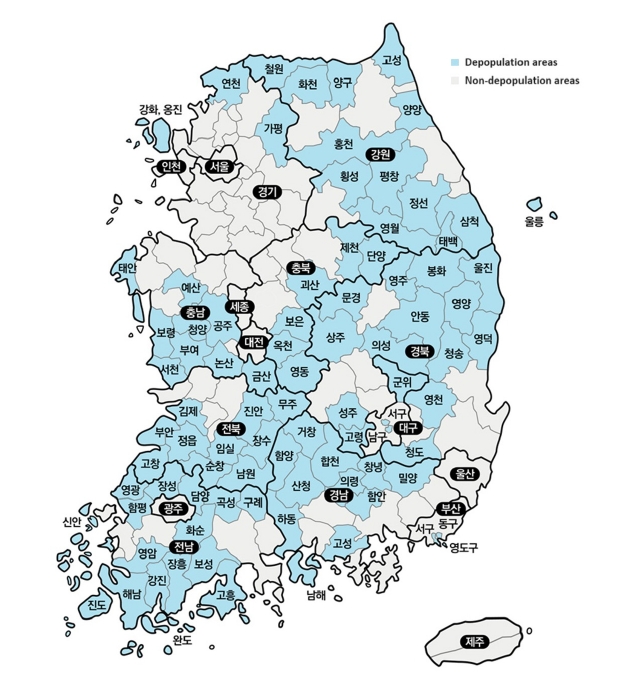
The total population of Korea began to decline in 2019; in particular, the population in rural areas has been rapidly decreasing and is aging. Therefore, the government has designated depopulation areas and is seeking ways to support them. To assess whether health disparities exist between areas with population decline and those without, this study used community health survey data to observe temporal changes in health behaviors between the two types of areas. Methods: The analysis used Community Health Survey data from 2010 to 2019, and regional classification was divided by depopulation areas designated by the Ministry of the Interior and Safety. Trends in health behavior and chronic disease prevalence between depopulation and non-depopulation areas were analyzed. All analyses were conducted using complex sample analysis procedures in SAS 9.4 software. Results: The smoking rate steadily decreased in both depopulation and non-depopulation areas, whereas the high-risk drinking rate increased slightly. The walking practice rate did not improve in depopulation areas compared to non-depopulation areas. Furthermore, nutritional labeling usage rate was consistently lower in depopulation areas than in non-depopulation areas, with the gap being the largest. The prevalence of obesity, diabetes, and hypertension showed that the gap between depopulation and non-depopulation areas is continuously increasing. Conclusions: Health behaviors in depopulation areas have not improved, and the prevalence of chronic diseases is increasing rapidly. Therefore, the demand for health care services that support healthy lifestyle practices and chronic disease management in these areas is expected to increase. -
Citations
Citations to this article as recorded by
- What health risks arise in shrinking cities? A systematic review
Gukhwa Jang, Youngmee Jeon, Youngsoo You, Hyung Rae Cho
Sustainable Cities and Society.2026; 146: 107502. CrossRef
- What health risks arise in shrinking cities? A systematic review
- 3,794 View
- 34 Download
- 1 Crossref

- [Korean]
- Association between health financial capacity of local governments and health behaviors of local residents: a cross-sectional study
- Miyong Yon
- Korean J Community Nutr 2023;28(2):95-103. Published online April 30, 2023
- DOI: https://doi.org/10.5720/kjcn.2023.28.2.95
-
Abstract
PDF
- Objectives
The budget gap in the health sector of local governments affects the supply of health services, which can cause the health gap. This study classified local governments according to their financial characteristics, such as local financial independence and health budget level. It analyzed the health behaviors and disease prevalence of local residents to examine the effect of local government financial investment on the health of local residents.
Methods
To classify types according to the financial characteristics of local governments, financial independence and the health budget data for 17 local governments were collected from the local fiscal yearbook of the Ministry of Public Administration and Security. The prevalence of chronic diseases and healthy behavior was compared using the 16,333 data of adults between the ages of 30 and 65 years among the original data of the National Health and Nutrition Examination Survey (2016–2020).
Results
Cluster analysis was used to classify local governments into five clusters according to the health financial capacity type. A comparison of the prevalence of local residents by cluster revealed a similar prevalence of hypertension, diabetes, and hypercholesterolemia. On the other hand, the obesity rate (P < 0.01), high-risk drinking rate (P < 0.01), aerobic physical activity rate (P < 0.001), and healthy eating practice rate (P < 0.001) were significantly different. In addition, an analysis of the odds ratio based on the Seoul area revealed a higher risk of health behavior of non-Seoul residents.
Conclusions
It is necessary to review the universal health promotion project budget considering the degree of regional financial vulnerability from the viewpoint of health equity to narrow the health gap among regions. -
Citations
Citations to this article as recorded by- Regional differences in health status and its associations with health behaviors and healthcare utilization among older adults in the context of the COVID-19 pandemic: A cross-sectional study using the 2019~2020 Korean Community Health Survey
Jieun Lee
Journal of Korean Gerontological Nursing.2026; 28(3): 264. CrossRef - Influence of health equity-based Healthy City infrastructure on walking practice
Hyeyun Son, Changwoo Shon
Korean Journal of Health Education and Promotion.2025; 42(5): 99. CrossRef
- Regional differences in health status and its associations with health behaviors and healthcare utilization among older adults in the context of the COVID-19 pandemic: A cross-sectional study using the 2019~2020 Korean Community Health Survey
- 2,100 View
- 30 Download
- 2 Crossref
 First
First Prev
Prev



