Skip Navigation
Skip to contents

Korean J Community Nutr : Korean Journal of Community Nutrition

OPEN ACCESS

Articles

Page Path
HOME > Korean J Community Nutr > Volume 31(1); 2026 > Article
Research Article
Understanding the drivers of continuance intention in online grocery shopping using technology continuance theory: a cross-national comparison
Binglin Liu1),2)orcid, Min A Lee3),†orcid
Korean Journal of Community Nutrition 2026;31(1):50-63.
DOI: https://doi.org/10.5720/kjcn.2026.00017
Published online: February 28, 2026

1)Lecturer, College of Cooking Science and Technology, Jiangsu College of Tourism, Yangzhou, China

2)Ph.D. Student, Department of Foods and Nutrition, Kookmin University, Seoul, Korea

3)Professor, Department of Foods and Nutrition, Kookmin University, Seoul, Korea

†Corresponding author: Min A Lee Department of Foods and Nutrition, Kookmin University, 77 Jeongneung-ro, Seongbuk-gu, Seoul 02707, Korea Tel: +82-2-910-5745 Fax: +82-2-910-5249 Email: malee@kookmin.ac.kr
• Received: January 13, 2026   • Revised: February 12, 2026   • Accepted: February 24, 2026

© 2026 The Korean Society of Community Nutrition

This is an Open-Access article distributed under the terms of the Creative Commons Attribution Non-Commercial License (https://creativecommons.org/licenses/by-nc/4.0) which permits unrestricted non-commercial use, distribution, and reproduction in any medium, provided the original work is properly cited.

  • 21 Views
  • 0 Download
prev next
  • Objectives
    This study examined the determinants of consumers’ continuance intention (CI) toward online grocery shopping (OGS) across different country markets. Drawing on technology continuance theory (TCT), this study compared key drivers of CI in a different countries market.
  • Methods
    Data were collected via online surveys from 638 OGS users in China (n = 338) and South Korea (n = 300) between November and December 2023. A TCT-based model incorporating satisfaction, attitude, perceived usefulness (PU), perceived ease of use, confirmation, and CI was tested using partial least squares structural equation modeling. Partial measurement invariance testing was conducted to ensure valid cross-national comparison.
  • Results
    In South Korea, both satisfaction and attitude significantly predicted CI, with satisfaction exerting a particularly strong effect. In China, attitude was the primary determinant of CI, whereas satisfaction had minimal impact. Across both countries, PU consistently and positively influenced satisfaction and attitude, thereby indirectly enhancing CI. Partial measurement invariance was confirmed, validating comparisons of the model across contexts.
  • Conclusion
    The findings suggest that the drivers of online grocery continuance differ by cross-national market. In Korean markets, strategies must enhance customer satisfaction (and its influence on attitude) to sustain OGS usage. In Chinese markets, fostering favorable consumer attitudes toward OGS is essential for promoting continued use. This cross-national analysis advances the theoretical understanding of continuance behavior while providing practical guidance for designing market-specific strategies to sustain online grocery engagement.
Amid the ongoing digital transformation of retail, online grocery shopping (OGS) is rapidly growing worldwide [1]. For example, the global online retail market has surpassed USD 6 trillion in annual sales, with OGS accounting for approximately USD 145 billion globally [2, 3]. However, OGS adoption still lags in many regions. In China, approximately 10% of grocery sales occur online, whereas in South Korea the figure is about 25%, despite strong digital infrastructure [4, 5]. Notably, initial adoption of OGS does not guarantee continued use or sustained business success [6]. Prior research suggests that factors such as the lack of tactile product information—particularly for fresh and perishable foods—can undermine decision-making in online grocery environments and drive some consumers back to physical stores [7, 8]. These issues underscore the need to identify what motivates consumers to continue shopping for groceries online after their initial experience. Given that groceries constitute essential components of daily diets, understanding continuance in OGS is not only a retail concern but also relevant to how consumers secure regular access to fresh and perishable foods through digital channels. In this sense, OGS functions not only as a digital retail channel, but also as a mediated food environment that shapes consumers’ access to food, especially fresh and perishable products central to daily diets.
Beyond its retail implications, the role of OGS must also be understood within the broader literature on food security and diet quality. Food security is closely associated with consistent access to nutritious foods, particularly fresh and perishable items that form the basis of healthy dietary patterns. Prior research demonstrates that food insecurity is linked to poorer diet quality, lower fruit and vegetable intake, and constrained food purchasing strategies driven by perceived risk and resource limitations [9, 10]. As digital food retail platforms expand, online grocery services increasingly function as alternative access points within the food environment, with the potential to either mitigate or exacerbate disparities in food access depending on infrastructure, affordability, and digital literacy [11, 12]. In this context, continuance intention (CI) in OGS becomes particularly salient: sustained platform use may contribute to stable and routine access to diverse food products, whereas discontinuance may reinforce reliance on geographically constrained physical outlets. Thus, examining the drivers of OGS continuance is not only important for technology adoption theory but also relevant to understanding how digital channels become embedded in everyday food provisioning systems and potentially influence dietary stability across different market contexts.
Furthermore, continuance behavior may vary significantly by market context, yet most prior studies have focused on single-country settings, overlooking cross-market differences [13-15]. In grocery retail, such contextual variation is particularly salient, as repeat use decisions are closely tied to consumers’ accumulated experience in everyday consumption. Because food acquisition is a routine and necessity-driven behavior, differences in digital food infrastructure and consumer confidence may shape how online platforms are integrated into household food provisioning practices. In China, consumers have historically been cautious about purchasing perishable groceries online due to perceived quality risks, which may discourage repeat use [16, 17]. In contrast, the South Korean market adopted OGS technology earlier, with continuance driven by factors such as technological adaptability, user experience, and service quality, alongside challenges related to system complexity and usability [18-23]. These contrasts suggest that the drivers of OGS continuance are unlikely to be universal, underscoring the value of cross-national investigation [24, 25].
In light of these differences, this study compares OGS continuance in China and South Korea to examine how post-adoption mechanisms operate across different market contexts. While the two countries differ in multiple systemic aspects, including cultural and institutional settings, they provide a meaningful contrast in terms of consumers’ experience accumulation and the routinization of OGS use. Such routinization is particularly important in the food domain, where stable purchasing channels contribute to consistent food access and potentially influence dietary patterns. Focusing on key post-adoption factors such as satisfaction and attitude, this study investigates whether their roles in shaping CI differ across contexts, thereby offering insights for sustaining long-term consumer engagement in OGS.
To guide our analysis, we adopted the technology continuance theory (TCT) as the theoretical framework. Research on technology-related behaviors has traditionally drawn on the technology acceptance model (TAM), which explains users’ initial adoption decisions based on perceived usefulness (PU) and perceived ease of use (PEOU). Although TAM has been widely validated across information systems contexts [14], its primary focus on pre-adoption beliefs limits its ability to explain post-adoption behavior and CI [24].
To address this limitation, expectation–confirmation–based models, particularly the expectation-confirmation model (ECM), were developed to explain continuance behavior by emphasizing users’ post-use evaluations [25]. ECM identifies confirmation of expectations and satisfaction as central determinants of continued use. While this perspective effectively captures short-term evaluative responses, it tends to underemphasize the role of more stable attitudinal judgments that may guide repeated and habitual usage over time [14].
Building on these two theoretical traditions, TCT, originally proposed by Liao et al. [26], integrates the cognitive belief structure of TAM with the post-adoption evaluation mechanisms of ECM. By jointly considering PU, confirmation, satisfaction, and attitude, TCT provides a more comprehensive explanation of CI that captures both transient affective responses and more enduring attitudinal evaluations.
This integrative perspective is particularly well suited to the context of OGS. Unlike many technology usage settings, OGS involves technology-mediated interaction embedded in high-frequency, low-involvement, and risk-sensitive consumption decisions, especially for perishable products. Because food purchases are recurrent and essential, post-adoption evaluations may determine whether digital platforms become stable components of consumers’ everyday food acquisition systems. In such contexts, CI is shaped not only by immediate post-use satisfaction, but also by stable attitudinal evaluations that guide habitual and routine purchasing behavior [27]. By explicitly distinguishing and jointly modeling satisfaction and attitude, TCT enables a theoretically grounded examination of the mechanisms underlying continued OGS use. However, despite the widespread application of TCT in contexts such as online payments and mobile applications [28-30], its application to online food consumption remains limited, highlighting the need for further empirical investigation.
In summary, this study aims to examine CI in OGS by clarifying the relative roles of satisfaction and attitude across different market contexts and by considering how the inherent “sensory deficit” of online grocery (i.e., the lack of tactile product experience) may influence post-adoption evaluations. The study further seeks to position OGS within the broader digital transformation of food environments by investigating whether sustained platform use is associated with stable access to diverse food products and routine food procurement channels. Through a cross-national comparison between China and South Korea, this research is designed to identify how continuance mechanisms vary across markets and to provide a theoretical basis for understanding long-term engagement in digital grocery services.
Ethics statement
This study was approved by the Institutional Review Board (IRB) of Korea National University of Transport (KNUT IRB 2023-07). All participants were required to read a description of the content and purpose of the study prior to the start of the survey and to provide an online consent form.
1. Study design
This study employed a cross-sectional survey design. The STROBE (Strengthening the Reporting of Observational studies in Epidemiology) guidelines were consulted solely as a reporting reference to ensure clarity and transparency in describing the sampling, data collection, and analysis procedures, without implying an epidemiological study design.
2. Sample collection
Data were collected through an online survey conducted between mid-November and early December 2023. In South Korea, respondents were recruited through a market research panel (embrain.com), and quota sampling based on age and gender was applied to ensure basic demographic balance. In China, respondents were recruited via an online questionnaire platform (Tencent questionnaire.com). Given the more dispersed nature of this recruitment approach, strict quota sampling was not imposed; instead, age and gender distributions similar to those of the Korean sample were targeted during data collection to enhance the comparability of cross-national analyses. The survey was conducted in Beijing, Shanghai, and Seoul. These cities are international megacities with well-developed digital infrastructure and high penetration of OGS services. They also feature diverse consumer populations, which helps to mitigate the potential influence of cultural differences and better reflects leading market conditions in the digital retail sector of each country. In both countries, eligibility criteria required respondents to have purchased groceries online at least once within the past month to ensure recent and relevant usage experience. All questionnaires were screened prior to analysis. Responses were considered invalid and excluded if they were incomplete or if response patterns indicated inattentive or inconsistent answering. After data screening, a total of 338 valid responses from China (response rate 80.29%) and 300 valid responses from South Korea (response rate 100%) were retained for subsequent analysis. A priori power analysis using G*Power (f2 = 0.15, α = 0.05, power = 0.80, three predictors) indicated a minimum required sample size of 77, confirming that the final sample (n = 638) was adequate for model testing and multigroup analysis.
3. Hypothesis development and measures
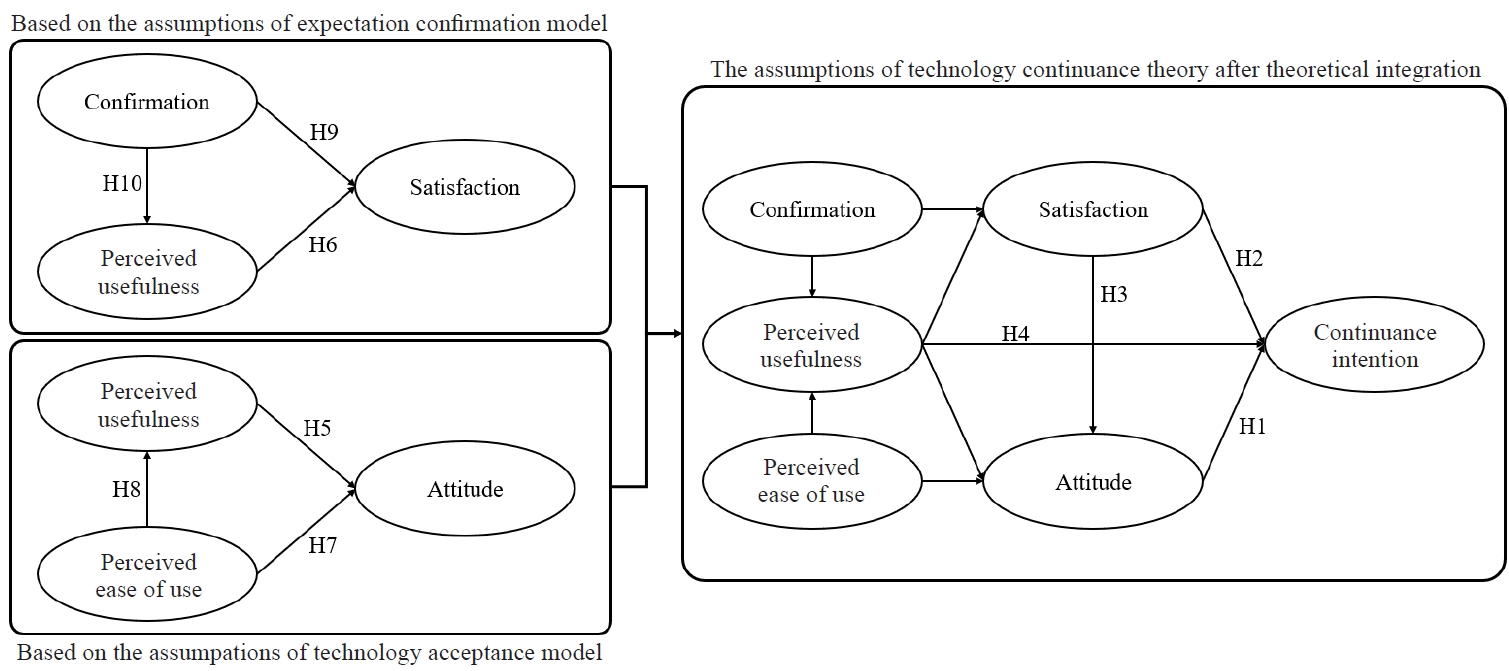
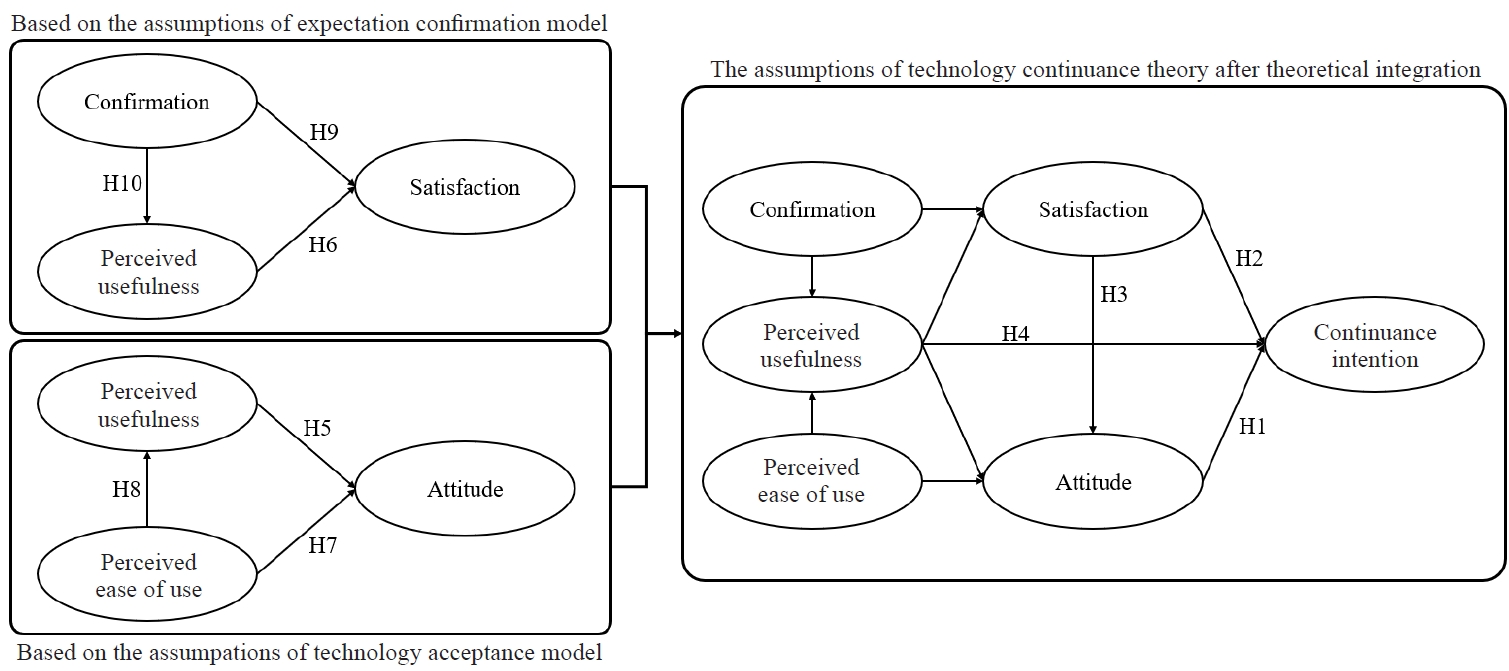
As illustrated in Fig. 1, the proposed model operationalizes TCT by integrating cognitive beliefs and post-adoption evaluations into a unified framework. Rather than relying on a single theoretical perspective, the model simultaneously incorporates belief-based evaluations (e.g., PU and PEOU) and post-use assessments (e.g., confirmation and satisfaction), enabling a comprehensive explanation of CI.
This integrative structure is particularly appropriate for OGS, where repeated, necessity-driven purchasing decisions require both immediate experiential evaluation and more stable attitudinal judgment. In such contexts, continuance behavior may not be sufficiently explained by either short-term satisfaction or pre-adoption beliefs alone.
Consistent with TCT, attitude, satisfaction, and PU are specified as direct antecedents of CI. Attitude reflects an individual’s overall evaluative orientation toward OGS and is a recognized driver of continuance [25, 31]. Satisfaction captures users’ affective responses to prior usage experiences and is critical for sustained use. Prior research has shown that satisfaction enhances both attitude and CI [26, 32-34], leading to H1–H3.
PU represents users’ cognitive evaluation of the extent to which OGS improves shopping efficiency and effectiveness. When users perceive OGS as useful in meeting their shopping needs, they are more likely to form favorable attitudes and experience higher satisfaction, thereby reinforcing continuance [35-37]. Hence, higher PU is expected to promote CI (H4) as well as enhance attitude (H5) and satisfaction (H6).
PEOU reflects the effort required to use OGS. Within the integrated framework, PEOU indirectly influences continuance by strengthening PU and shaping evaluative responses. When platforms are intuitive and convenient, users are more likely to perceive them as useful and develop favorable attitudes [38], supporting H7–H8.
Finally, confirmation reflects the degree to which actual usage experiences align with prior expectations and serves as a key post-adoption evaluation mechanism. Confirmation reinforces perceptions of system performance and strengthens both satisfaction and PU [32, 35]. Therefore, higher confirmation is expected to increase satisfaction (H9) and strengthen PU (H10).
To examine the proposed model, we designed a two-part questionnaire. The first part measured continuous OGS behavior, and the second collected demographic information. Following Liao et al. [26], the measurement items were adapted to the OGS context. Furthermore, PU and PEOU were assessed with scales from Venkatesh & Davis [39], while confirmation, satisfaction, and CI were measured using items from Bhattacherjee [32]. Attitude was evaluated with four items from Taylor & Todd [40]. All items used a five-point Likert scale. To ensure cross-cultural equivalence, the questionnaire was translated into Chinese and Korean, with back-translation and expert review procedures applied [41]. The reliability of all constructs was assessed using Cronbach’s alpha, and the results indicated satisfactory internal consistency for both the Chinese and South Korean samples, with all alpha values exceeding the recommended threshold of 0.70. The full list of measurement items used in the questionnaire is provided in the Appendix for reference.
4. Data analysis
We used IBM SPSS 25.0 (IBM Corp.) for descriptive analysis of demographics and Smart PLS 4.0 (SmartPLS GmbH) to validate the model and hypotheses. partial least squares structural equation modeling (PLS-SEM) supports theory extension and boundary testing by emphasizing explanatory power, the relative importance of structural relationships, and the modeling of complex relationships, and has been widely applied in business and management research [42]. The analysis proceeded in three steps. First, we tested common method bias and measurement invariance to ensure survey validity and cross-national comparability [43, 44]. Second, we evaluated the measurement and structural models following Hair et al. [45]. Finally, we applied partial least squares multigroup analysis to examine whether path coefficients differed significantly between China and South Korea [46].
1. Profile of respondents
Table 1 shows the demographic composition of the two samples was largely similar. In China, women were slightly more represented (52.4%), whereas in Korea the gender distribution was exactly balanced. For age, the Chinese sample showed natural variation across groups, while the Korean sample displayed equal proportions by design, as quota sampling was applied. In both countries, most respondents held a bachelor’s degree (64.9% in Korea, 62.7% in China). Regarding occupation, office workers were the largest group in both samples, with homemakers accounting for a higher proportion in Korea (14.7%) than in China (3.0%) (Table 1).
2. Common method bias
To minimize measurement bias, we applied procedural and statistical controls [45]. Procedural controls included adapting and testing questionnaire items, refining ambiguous terms, and considering respondent characteristics. Additionally, Harman’s single-factor test showed the first factor explained less than 50% of variance, indicating no significant common method bias. Following Kock’s [47] guideline, full collinearity tests yielded variance inflation factor (VIF) values ranging from 1.531 to 2.520 in the Chinese sample and from 1.366 to 2.901 in the South Korean sample, all below the 3.3 threshold. Thus, common method bias was unlikely to affect this study.
3. Measurement invariance analysis
In this study, all samples were measured using identical items and processed following the same analytical procedures, thereby establishing configural invariance. A permutation-based approach was employed to assess compositional invariance by comparing composite score correlations with the 5% quantile of the empirical distribution. The results consistently showed that, for all constructs, the original correlations exceeded the corresponding threshold values, supporting compositional invariance across the Chinese and South Korean samples. Further permutation tests of equality of means and variances did not provide support for full measurement invariance; however, partial measurement invariance was established, which is sufficient for meaningful cross-national comparison of structural path differences. Given that the primary objective of this study lies in comparative analysis rather than pooled estimation, the absence of full invariance does not undermine the validity of the subsequent analyses.
4. Measurement model analysis
Table 2 shows the assessment of measurement quality involved examining internal consistency via Cronbach’s alpha and composite reliability, both of which surpassed the 0.70 guideline. In addition, evidence of convergent validity was provided, as the extracted variance for each construct exceeded 0.50, and all indicators loaded strongly on their intended factors.
To assess discriminant validity, we applied the heterotrait–monotrait (HTMT) ratio and the Fornell–Larcker criterion. As shown in Table 3, the square roots of average variance extracted exceeded inter-construct correlations. Table 4 indicates that most HTMTs met the 0.85 and 0.90 criteria, except for satisfaction–confirmation in the Chinese sample and satisfaction–confirmation and satisfaction–attitude in the South Korean sample.
Following the recommendations of Henseler et al. [46] and Rippé et al. [48], we did not rely solely on fixed HTMT thresholds. Instead, we conducted a bootstrap-based HTMT inference test to statistically assess discriminant validity in Table 5. The confidence intervals of the HTMT values did not include the value of 1, allowing rejection of the null hypothesis of a lack of discriminant validity. Taken together, these results indicate that adequate discriminant validity was established.
5. Structural model analysis
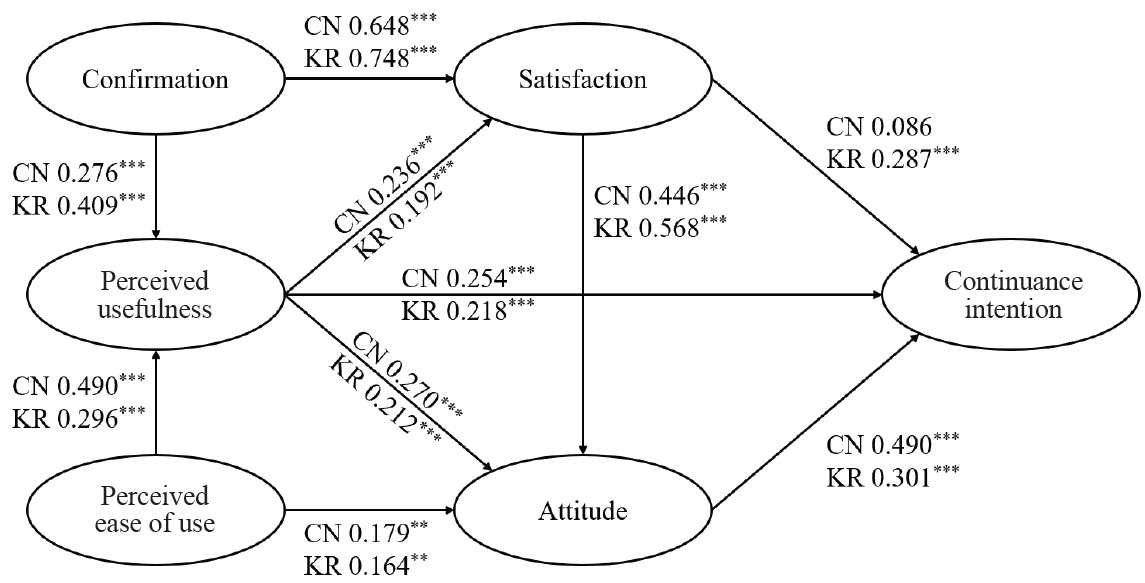
Herein, VIF for both the Chinese and South Korean samples were below 3, signifying the absence of multicollinearity. Subsequently, we used the PLS algorithm to derive the path coefficients and applied the bootstrapping method with 5,000 resampling iterations to obtain their significance. Table 6 and Fig. 2 summarize the path validation results for the Chinese and South Korean samples. In the Chinese sample, the hypothesized link between satisfaction and CI (H2) was not supported, whereas in the South Korean sample, all hypotheses (H1–H10) were validated.
Table 7 presents the results concerning the model’s predictive capability. In both the Chinese (56.6%) and South Korean (51.7%) samples, over 50% of the variance in OGS’s CI was validated. Furthermore, the results of the blindfolding procedure indicated that Q2 was greater than 0 for each group. Consequently, the model exhibited predictive relevance for the Chinese and South Korean samples. Moreover, the f2 for each group surpassed the minimum threshold of 0.02.
6. Multi-group analysis
The MGA results (Table 8) revealed significant cross-national variations between Chinese and South Korean consumers. Specifically, Chinese consumers exhibited a significantly stronger path coefficient for the relationship between PEOU and PU, suggesting they are more sensitive to functional ease of use. In contrast, South Korean consumers demonstrated significantly stronger effects in the affective and evaluative stages, the impact of Confirmation on Satisfaction and Satisfaction on CI were both notably higher than those of their Chinese counterparts. No statistically significant differences were observed for the remaining structural paths.
This study examined CI in OGS, a context characterized by frequent consumption, product perishability, and limited sensory cues in the online environment. Beyond these retail characteristics, OGS also plays an increasingly important role in household food provisioning and digital food distribution systems. Drawing on the TCT, we compared consumers in China and South Korea and found that, while the overall model exhibited strong explanatory power, notable cross-national differences emerged in the relative importance of key post-adoption mechanisms.
These differences should be interpreted in light of broader market contexts rather than attributed to any single factor. Although China and South Korea differ in multiple macro-level aspects, including cultural and institutional settings, the use of a unified theoretical framework and partial measurement invariance testing allows this study to focus on how post-adoption mechanisms such as satisfaction and attitude vary in salience across contexts. In the context of food acquisition, such mechanisms influence whether digital grocery platforms become embedded in consumers’ routine food procurement practices.
For the South Korean consumers, CI was strongly influenced by PU, satisfaction, and attitude. Shoppers who perceived OGS as useful, felt satisfied with prior experiences, and held positive attitudes were more likely to continue using it, confirming the central role of satisfaction in maintaining CI [19, 49, 50]. In the context of food provisioning, satisfaction reflects whether consumers successfully obtain fresh and diverse products within expected timeframes, which is critical for maintaining stable food access through online channels. In China, however, satisfaction from a single transaction showed little impact on continuance. Instead, enduring attitudes toward OGS proved to be the strongest predictor, suggesting that Chinese shoppers place greater weight on stable beliefs and accumulated confidence than on short-term satisfaction. This is consistent with Fishbein & Ajzen’s [51] view that intentions rely on beliefs and feelings that remain consistent over time. Such stable attitudes may facilitate the habitual incorporation of online grocery platforms into long-term household food procurement strategies.
Attitude was consistently shaped by PEOU, PU, and satisfaction across both countries. PEOU reduced cognitive effort and time costs [52], reinforcing positive attitudes. Lower cognitive and time burdens may also enable consumers to secure daily food supplies more efficiently, particularly under time or mobility constraints. Similarly, Mirhoseini et al. [53] showed that when consumers perceive OGS as less demanding, they are more willing to adopt it. Furthermore, our data confirmed that satisfaction played a substantial role; repeated positive experiences fostered more favorable overall evaluations [54]. Satisfaction was largely driven by consumers’ needs being met and expectations being confirmed [55]. Confirmation of expectations proved even more influential than usefulness [26], with a stronger effect in South Korea than in China. Because confirmation reflected the most recent experience, satisfaction tended to be transient. In contexts where satisfaction strongly drives CI, like in Korea, consumer CI may be unstable unless expectations are continuously fulfilled. From a food system perspective, such instability may affect the reliability of digital food access if performance expectations are not consistently met. PU was shaped by both PEOU and confirmation and emerged as the most important determinant of attitude and continuance. Additionally, when OGS provided benefits such as convenience, variety, and competitive prices, consumers were willing to tolerate minor usability issues, echoing Bridges & Florsheim [56]. Greater product variety available through online platforms may expand consumers’ access to diverse food categories, which has potential implications for dietary diversity and food accessibility. Notably, PEOU had a greater effect on PU in China, highlighting the importance of simplicity and intuitive design.
These findings offer several theoretical contributions. By examining OGS, a product category heavily reliant on sensory input, this study extends the scope of continuance research [57]. Despite increased attention to online shopping, the specific case of groceries has received limited focus. Our results showed that TCT is well suited to this domain. Moreover, we contribute to ongoing debates about the relationship between satisfaction and attitude [54, 58], providing evidence that satisfaction in the post-adoption stage primarily reinforces attitude. Cross-national comparisons further reveal that market context moderates TCT pathways: South Korea OGS market depends on immediate satisfaction, whereas China market relies more on long-term attitudes [34, 59]. Importantly, by situating OGS within the broader digital transformation of food systems, this study links CI to the stability of food acquisition channels. Sustained engagement with OGS may reduce spatial and temporal barriers to food access and therefore represents a behavioral prerequisite for stable digital food availability at the household level.
From a practical perspective, strategies should reflect market conditions. In South Korea, where CI is highly satisfaction-driven, firms should focus on consistently meeting expectations through reliable delivery, responsive service, and active customer engagement. Ensuring product freshness, delivery punctuality, and transparent food information is particularly critical to maintaining trust in digital food supply channels. Conversely, in China, where attitudes are more decisive, retailers should emphasize user-friendly platforms, intuitive navigation, and support services to strengthen consumer confidence. Across markets, improving PU remains essential. Investments in features such as high-quality visuals, efficient search tools, and broad product assortments are likely to enhance perceptions of value and encourage long-term engagement [60]. In the longer term, strengthening these mechanisms may contribute to more inclusive and resilient digital food environments, particularly as online grocery channels become integrated into national food distribution systems. Additionally, enhancing efficiency and usefulness may be especially critical to sustain global OGS adoption for cross-border e-commerce.
Limitations
Consideration of certain limitations is necessary when interpreting the findings. First, almost everyone can be seen as potential consumers of grocery products such as food, which are considered consumer staples. Although our sample size is much larger than the minimum threshold recommended, future research should utilize larger-scale surveys. Second, this research does not explore structures other than technological factors. It overlooks some of the impact of intrinsic motivational factors that may extend beyond technical features. Accordingly, future research should apply more theoretical structures to enhance the understanding of CI. Finally, our sample primarily includes consumers in China and South Korea. Although market maturity provides a useful contextual lens for comparison, future research should further disentangle its effects from other country-level characteristics by incorporating additional countries or longitudinal research designs. Future research should explore regions with greater cultural differences, such as comparing developed countries in Europe or America with the Asian market, to enhance our discussion.
Conclusion
Our analysis shows that PU and attitude significantly predicted CI in both South Korea and China, whereas the effect of satisfaction differed across the two contexts. Satisfaction and usefulness reflect consumers’ evaluations of service performance, while attitude captures a more enduring favorability toward OGS. Among these factors, attitude exhibited the strongest association with CI, indicating its central role in sustaining continued use. Overall, these findings provide support for the applicability of the TCT in explaining OGS behavior across different market contexts, while also highlighting context-specific variation in the role of satisfaction. From a practical perspective, retailers may benefit from strategies that strengthen positive consumer attitudes, such as improving convenience, service reliability, and platform compatibility, to support sustained engagement with OGS.

CONFLICT OF INTEREST

There are no financial or other issues that might lead to a conflict of interest.

FUNDING

None.

DATA AVAILABILITY

Due to privacy and ethical considerations, the dataset is not publicly available, as participants did not provide consent for unrestricted data sharing. However, anonymized data supporting the findings of this study are available from the corresponding author upon reasonable request for research purposes.

Fig. 1.
Research model based on technology continuance theory.
kjcn-2026-00017f1.jpg
Fig. 2.
Path coefficients by country. CN, Chinese sample; KR, South Korean sample. **P < 0.01, ***P < 0.001.
kjcn-2026-00017f2.jpg
Table 1.
Sample characteristics
Variables Chinese sample (n = 338) South Korean sample (n = 300) χ2
Gender
 Men 161 (47.6) 150 (50.0) 0.268
 Women 177 (52.4) 150 (50.0)
Age (year)
 20–29 71 (21.0) 60 (20.0) 7.919
 30–39 71 (21.0) 60 (20.0)
 40–49 86 (25.4) 60 (20.0)
 50–59 68 (20.1) 60 (20.0)
 ≥ 60 42 (12.4) 60 (20.0)
Education level
 Junior high school 17 (5.0) 1 (0.3) 13.311***
 High school 63 (18.6) 52 (17.3)
 Bachelor’s 212 (62.7) 202 (67.3)
 Master’s or above 46 (13.6) 45 (15.0)
Occupation
 Student 13 (3.8) 18 (6.0) 44.671***
 Homemaker 10 (3.0) 44 (14.7)
 Office worker 166 (49.1) 134 (44.7)
 Public official 18 (5.3) 9 (3.0)
 Self-employed 23 (6.8) 27 (9.0)
 Specialized worker 23 (6.8) 26 (8.7)
 Service industry 30 (8.9) 22 (7.3)
 Production worker 7 (2.1) 2 (0.7)
 Other 48 (14.2) 18 (6.0)

n (%).

***P < 0.001.

Table 2.
Reliability and convergent validity of measurement model
Item Chinese sample South Korean sample
Outer loading Cronbach’s α CR AVE Outer loading Cronbach’s α CR AVE
ATT
 ATT1 0.823 0.848 0.898 0.687 0.843 0.822 0.882 0.653
 ATT2 0.868 0.842
 ATT3 0.815 0.750
 ATT4 0.809 0.792
CI
 CI1 0.847 0.749 0.879 0.709 0.869 0.833 0.900 0.750
 CI2 0.836 0.823
 CI3 0.842 0.904
CON
 CON1 0.830 0.801 0.883 0.715 0.912 0.875 0.923 0.800
 CON2 0.855 0.883
 CON3 0.852 0.888
PEOU
 PEOU1 0.758 0.757 0.846 0.578 0.740 0.739 0.836 0.562
 PEOU2 0.749 0.659
 PEOU3 0.755 0.805
 PEOU4 0.778 0.787
PU
 PU1 0.755 0.790 0.864 0.615 0.728 0.774 0.856 0.602
 PU2 0.712 0.610
 PU3 0.840 0.870
 PU4 0.824 0.864
SAT
 SAT1 0.826 0.875 0.914 0.727 0.881 0.893 0.925 0.756
 SAT2 0.849 0.864
 SAT3 0.881 0.878
 SAT4 0.854 0.856

CR, composite reliability; AVE, average variance extracted; ATT, attitude; CI, continuance intention; CON, confirmation; PEOU, perceived ease of use; PU, perceived usefulness; SAT, satisfaction.

Table 3.
Fornell–Larcker criterion results
Construct ATT CI CON PEOU PU SAT
Chinese sample
 ATT 0.829
 CI 0.722 0.842
 CON 0.678 0.601 0.845
 PEOU 0.640 0.557 0.639 0.760
 PU 0.665 0.633 0.589 0.666 0.784
South Korean sample
 ATT 0.808
 CI 0.666 0.866
 CON 0.711 0.623 0.895
 PEOU 0.562 0.452 0.517 0.750
 PU 0.644 0.588 0.562 0.508 0.776
 SAT 0.782 0.656 0.856 0.511 0.612 0.870

The diagonal is the square root of AVE.

ATT, attitude; CI, continuance intention; CON, confirmation; PEOU, perceived ease of use; PU, perceived usefulness; SAT, satisfaction.

Table 4.
Heterotrait–Monotrait ratio results
Construct ATT CI CON PEOU PU SAT
Chinese sample
 ATT
 CI 0.879
 CON 0.819 0.751
 PEOU 0.795 0.715 0.821
 PU 0.810 0.798 0.735 0.852
 SAT 0.840 0.719 0.940 0.772 0.741
South Korean sample
 ATT
 CI 0.795
 CON 0.832 0.721
 PEOU 0.716 0.568 0.644
 PU 0.788 0.714 0.671 0.674
 SAT 0.907 0.754 0.966 0.630 0.725

ATT, attitude; CI, continuance intention; CON, confirmation; PEOU, perceived ease of use; PU, perceived usefulness; SAT, satisfaction.

Table 5.
HTMT inference based on bootstrapped confidence intervals
Ratio Lower limit Upper limit H1
Chinese sample
SAT ↔ CON 0.940 0.887 0.991 Accepted
South Korean sample
SAT ↔ ATT 0.907 0.856 0.959 Accepted
SAT ↔ CON 0.966 0.931 0.998 Accepted

H0, HTMT ≥ 1; H1, HTMT < 1. If H0 holds indicates a lack of discriminant validity.

ATT, attitude; CON, confirmation; SAT, satisfaction.

Table 6.
Hypothesis testing of structural model
Hypothesis Chinese sample South Korean sample
β t-value f2 Remark β t-value f2 Remark
H1 ATT → CI 0.490 7.773*** 0.220 S 0.301 3.727*** 0.065 S
H2 SAT → CI 0.086 1.464 0.008 NS 0.287 3.524*** 0.063 S
H3 SAT → ATT 0.446 9.233*** 0.278 S 0.568 12.781*** 0.565 S
H4 PU → CI 0.254 4.853*** 0.077 S 0.218 3.721*** 0.055 S
H5 PU → ATT 0.270 3.947*** 0.094 S 0.212 4.629*** 0.079 S
H6 PU → SAT 0.236 5.462*** 0.105 S 0.192 4.967*** 0.104 S
H7 PEOU → ATT 0.179 2.763** 0.040 S 0.164 3.370** 0.056 S
H8 PEOU → PU 0.490 8.799*** 0.277 S 0.296 4.228*** 0.104 S
H9 CON → SAT 0.648 17.174*** 0.797 S 0.748 23.207*** 1.578 S
H10 CON → PU 0.276 4.474*** 0.088 S 0.409 6.258*** 0.197 S

ATT, attitude; CI, continuance intention; CON, confirmation; PEOU, perceived ease of use; PU, perceived usefulness; SAT, satisfaction; S, significant; NS, not significant.

**P < 0.01.

***P < 0.001.

Table 7.
Predictive ability of structural model
Construct Chinese sample South Korean sample
R2 Q2 R2 Q2
ATT 0.619 0.524 0.673 0.550
CI 0.566 0.400 0.517 0.402
PU 0.488 0.479 0.380 0.367
SAT 0.656 0.637 0.758 0.737

ATT, attitude; CI, continuance intention; PU, perceived usefulness; SAT, satisfaction.

Table 8.
Path differences of structural model
Hypothesis Path coefficients-diff (CN−KR) P-value of difference
H1 ATT → CI 0.189 0.063
H2 SAT → CI −0.201 0.046
H3 SAT → ATT −0.122 0.062
H4 PU → CI 0.036 0.643
H5 PU → ATT 0.058 0.481
H6 PU → SAT 0.044 0.449
H7 PEOU → ATT 0.016 0.842
H8 PEOU → PU 0.193 0.024
H9 CON → SAT −0.100 0.047
H10 CON → PU −0.133 0.140

CN, Chinese sample; KR, South Korean sample; ATT, attitude; CI, continuance intention; CON, confirmation; PEOU, perceived ease of use; PU, perceived usefulness; SAT, satisfaction.

  • 1. Yu J. Dramatic changes in global consumer shopping habits in the context of the 2020 COVID-19 [Internet]. KANTAR; 2021 [cited 2025 Sep 18]. Available from: https://www.kantar.com/zh-cn/inspiration/fmcg/kantar-reveals-worlds-2020-pandemic-shopping-habits
  • 2. Kumar N. 41 New online shopping statistics 2026 (global insights) [Internet]. Demandsage; 2026 [cited 2026 Jan 2]. Available from: https://www.demandsage.com/online-shopping-statistics/
  • 3. Arora D, Kumar J, Nandi R. China online grocery market size, share and forecast trends - growth analysis and outlook report (2026-2035) [Internet]. Claight; 2025 [cited 2025 Dec 11]. Available from: https://www.expertmarketresearch.com/reports/china-online-grocery-market
  • 4. Ma Y. Penetration rate of fresh food e-commerce in China from 2014 to 2024 [Internet]. Statista; 2025 [cited 2025 Dec 20]. Available from: https://www.statista.com/statistics/1194968/china-online-penetration-rate-of-fresh-ecommerce
  • 5. Seok H. Still low online penetration despite rapid growth: online food market growth remains high [Internet]. Korea Logistics News; 2022 [cited 2025 Sep 18]. Available from: https://www.klnews.co.kr/news/articleView.html?idxno=304588
  • 6. Yuan C, Moon H, Wang S, Yu X, Kim KH. Study on the influencing of B2B parasocial relationship on repeat purchase intention in the online purchasing environment: an empirical study of B2B E-commerce platform. Ind Market Manag 2021; 92: 101-110. Article
  • 7. Citrin AV, Stem D, Spangenberg ER, Clark MJ. Consumer need for tactile input: an internet retailing challenge. J Bus Res 2023; 56(11): 915-922. Link
  • 8. Kang C, Moon J, Kim T, Choe Y. Why consumers go to online grocery: comparing vegetables with grains. Proceedings of the 49th Annual Hawaii International Conference on System Sciences, HICSS 2016; 2016 Jan 5-8; Koloa, Hawaii. p. 3604-3613. Article
  • 9. Drisdelle C, Kestens Y, Hamelin AM, Mercille G. Disparities in access to healthy diets: how food security and food shopping behaviors relate to fruit and vegetable intake. J Acad Nutr Diet 2020; 120(11): 1847-1858. ArticlePubMed
  • 10. Avelino DC, Duffy VB, Puglisi M, Ray S, Lituma-Solis B, Nosal BM, et al. Can ordering groceries online support diet quality in adults who live in low food access and low-income environments? Nutrients 2023; 15(4): 862.ArticlePubMedPMC
  • 11. Fernandez MA, Raine KD. Digital food retail: public health opportunities. Nutrients 2021; 13(11): 3789.ArticlePubMedPMC
  • 12. Bennett R, Keeble M, Zorbas C, Sacks G, Driessen C, Grigsby-Duffy L, et al. The potential influence of the digital food retail environment on health: a systematic scoping review of the literature. Obes Rev 2024; 25(3): e13671.ArticlePubMed
  • 13. Hoehle H, Zhang X, Venkatesh V. An espoused cultural perspective to understand continued intention to use mobile applications: a four-country study of mobile social media application usability. Eur J Inf Syst 2015; 24(3): 337-359. ArticlePDF
  • 14. Kumar A, Kashyap AK. Understanding the factors influencing repurchase intention in online shopping: a meta-analytic review. Vision J Bus Perspect. 2022 https://doi.org/10.1177/09722629221107957. Article
  • 15. Lee H, Xu Y, Li A. Technology visibility and consumer adoption of virtual fitting rooms (VFRs): a cross-cultural comparison of Chinese and Korean consumers. J Fash Mark Manag 2020; 24(2): 175-194. Article
  • 16. Wang O, Somogyi S. Consumer adoption of online food shopping in China. Br Food J 2018; 120(12): 2868-2884. Article
  • 17. Cui L, He S, Deng H, Wang X. Sustaining customer loyalty of fresh food e-tailers: an empirical study in China. Asia Pac J Mark Logist 2023; 35(3): 669-686. Article
  • 18. Kim H, Kim M. Analysis of online food purchase behavior and factors determining online purchases by adult consumers. J Korean Soc Food Sci Nutr 2019; 48(1): 97-108. Article
  • 19. Lee SH, Kwak MK, Cha SS. Consumers’ choice for fresh food at online shopping in the time of Covid19. J Distrib Sci 2020; 18(9): 45-53. Article
  • 20. Cha SS, Lee SH. The effects of user experience factors on satisfaction and repurchase intention at online food market. J Ind Distrib Bus 2021; 12(4): 7-13. Article
  • 21. Kang JW, Namkung Y. Measuring the service quality of fresh food delivery platforms: development and validation of the “Food PlatQual” scale. Sustainability 2022; 14(10): 5940.Article
  • 22. Choi S. A study on the types of online food non-purchasing consumers. Culi Sci Hos Res 2023; 29(1): 110-120. Article
  • 23. Park SC, Kim JU. Impacts of e-grocery consumers’ shadow work on mobile shopping avoidance and switching behavior. Inf Syst Rev 2021; 23(4): 165-182. Article
  • 24. Prabowo H, Hindarwati EN, Yuniarty . Online grocery shopping adoption: a systematic literature review. Proceedings of 2020 International Conference on Information Management and Technology (ICIMTech); 2020 Aug 13-14; Bandung, Indonesia. p. 40-45. Article
  • 25. Yan M, Filieri R, Gorton M. Continuance intention of online technologies: a systematic literature review. Int J Inf Manag 2021; 58: 102315.Article
  • 26. Liao C, Palvia P, Chen JL. Information technology adoption behavior life cycle: toward a technology continuance theory (TCT). Int J Inf Manag 2009; 29(4): 309-320. Article
  • 27. Oliver RL. Measurement and evaluation of satisfaction processes in retail settings. J Retail 1981; 57(3): 25-48. Link
  • 28. Rahi S, Abd Ghani M. Examining internet banking user’s continuance intention through the lens of technology continuance theory and task technology fit model. Digit Policy Regul Gov 2021; 23(5): 456-474. Article
  • 29. Foroughi B, Sitthisirinan S, Iranmanesh M, Nikbin D, Ghobakhloo M. Determinants of travel apps continuance usage intention: extension of technology continuance theory. Curr Issue Tour 2024; 27(4): 619-635. Article
  • 30. Jain NK, Kaul D, Sanyal P. What drives customers towards mobile shopping? An integrative technology continuance theory perspective. Asia Pac J Mark Logist 2022; 34(5): 922-943. Article
  • 31. Song HG, Jo H. Understanding the continuance intention of omnichannel: combining TAM and TPB. Sustainability 2023; 15(4): 3039.Article
  • 32. Bhattacherjee A. Understanding information systems continuance: an expectation-confirmation model. MIS Quarterly 2001; 25(3): 351-370. Article
  • 33. Dai HM, Teo T, Rappa NA, Huang F. Explaining Chinese university students’ continuance learning intention in the MOOC setting: a modified expectation confirmation model perspective. Comput Educ 2020; 150: 103850.Article
  • 34. Khayer A, Bao Y. The continuance usage intention of Alipay: integrating context-awareness and technology continuance theory (TCT). Bottom Line 2019; 32(3): 211-229. Article
  • 35. Hossain MA, Quaddus M. Expectation-confirmation theory in information system research: a review and analysis. In: Dwivedi Y, Wade M, Schneberger S, editors. Information systems theory. Springer; 2012. p. 441-469. Article
  • 36. Nguyen GD, Ha MT. The role of user adaptation and trust in understanding continuance intention towards mobile shopping: an extended expectation-confirmation model. Cogent Bus Manag 2021; 8(1): 1980248.Article
  • 37. Tsai H, Lee YP, Ruangkanjanases A. Understanding the effects of antecedents on continuance intention to gather food safety information on websites. Front Psychol 2020; 11: 579322.ArticlePubMedPMC
  • 38. Foroughi B, Iranmanesh M, Hyun SS. Understanding the determinants of mobile banking continuance usage intention. J Enterp Inf Manag 2019; 32(6): 1015-1033. Article
  • 39. Venkatesh V, Davis FD. A model of the antecedents of perceived ease of use: development and test. Decis Sci 1996; 27: 451-481. Article
  • 40. Taylor S, Todd P. Assessing IT usage: the role of prior experience. MIS Quarterly 1995; 19(4): 561-570. ArticlePDF
  • 41. Brislin RW. Back-translation for cross-cultural research. J Cross Cult Psychol 1970; 1(3): 185-216. ArticlePMCLink
  • 42. Guenther P, Guenther M, Ringle CM, Zaefarian G, Cartwright S. Improving PLS-SEM use for business marketing research. Ind Mark Manag 2023; 111: 127-142. Article
  • 43. Cheah JH, Amaro S, Roldán JL. Multigroup analysis of more than two groups in PLS-SEM: a review, illustration, and recommendations. J Bus Res 2023; 156: 113539.Article
  • 44. Podsakoff PM, MacKenzie SB, Lee JY, Podsakoff NP. Common method biases in behavioral research: a critical review of the literature and recommended remedies. J Appl Psychol 2003; 88(5): 879-903. ArticlePubMedPMC
  • 45. Hair JF, Risher JJ, Sarstedt M, Ringle CM. When to use and how to report the results of PLS-SEM. Eur Bus Rev 2019; 31(1): 2-24. ArticlePMC
  • 46. Henseler J, Ringle CM, Sarstedt M. Testing measurement invariance of composites using partial least squares. Int Mark Rev 2016; 33(3): 405-431. Article
  • 47. Kock N. Common method bias in PLS-SEM: a full collinearity assessment approach. Int J e-Collaboration 2015; 11(4): 1-10. Article
  • 48. Rippé CB, Smith B, Weisfeld-Spolter S. The connection of attachment and self-gifting for the disconnection of loneliness across cultures. Int J Consum Stud 2022; 46: 1451-1467. ArticleLink
  • 49. Cheng P, OuYang Z, Liu Y. Understanding bike sharing use over time by employing extended technology continuance theory. Transp Res Part A Policy Pract 2019; 124: 433-443. Article
  • 50. Foroughi B, Iranmanesh M, Kuppusamy M, Ganesan Y, Ghobakhloo M, Senali MG. Determinants of continuance intention to use gamification applications for task management: an extension of technology continuance theory. Electron Libr 2023; 41(2/3): 286-307. Article
  • 51. Fishbein M, Ajzen I. Belief, attitude, intention, and behavior: an introduction to theory and research. Philos Rhetor 1977; 10(2): 130-132. Link
  • 52. Thong JYL, Hong SJ, Tam KY. The effects of post-adoption beliefs on the expectation-confirmation model for information technology continuance. Int J Hum Comput Stud 2006; 64(9): 799-810. Article
  • 53. Mirhoseini M, Pagé SA, Léger PM, Sénécal S. What deters online grocery shopping? Investigating the effect of arithmetic complexity and product type on user satisfaction. J Theor Appl Electron Commer Res 2021; 16(4): 828-845. Article
  • 54. Abdul-Muhmin AG. Repeat purchase intentions in online shopping: the role of satisfaction, attitude, and online retailers’ performance. J Int Consum Mark 2010; 23(1): 5-20. Article
  • 55. Chiu W, Oh G, Cho H. An integrated model of consumers’ decision-making process in social commerce: a cross-cultural study of the United States and China. Asia Pac J Mark Logist 2023; 35(7): 1682-1698. Article
  • 56. Bridges E, Florsheim R. Hedonic and utilitarian shopping goals: the online experience. J Bus Res 2008; 61(4): 309-314. Article
  • 57. Huang Y, Oppewal H. Why consumers hesitate to shop online: an experimental choice analysis of grocery shopping and the role of delivery fees. Int J Retail Distrib Manag 2006; 34(4-5): 334-353. Article
  • 58. Hellier PK, Geursen GM, Carr RA, Rickard JA. Customer repurchase intention: a general structural equation model. Eur J Mark 2003; 37(11-12): 1762-1800. Article
  • 59. Abdul-Halim NA, Vafaei-Zadeh A, Hanifah H, Teoh AP, Nawaser K. Understanding the determinants of e-wallet continuance usage intention in Malaysia. Qual Quant 2022; 56(5): 3413-3439. ArticlePubMedPMCPDF
  • 60. Sreeram A, Kesharwani A, Desai S. Factors affecting satisfaction and loyalty in online grocery shopping: an integrated model. J Indian Bus Res 2017; 9(2): 107-132. Article
Appendix
Construct and indicators
Attitude
 OGS would be a good idea
 OGS would be a wise idea
 I like the idea of using OGS
Satisfaction
 My overall experience with OGS was: very satisfied
 My overall experience with OGS was: very pleased
 My overall experience with OGS was: very contented
 My overall experience with OGS was: absolutely delighted
Continuance intention
 I intend to continue using OGS rather than discontinue its use
 My intentions are to continue using OGS than use any alternative means
 If I could, I would like to continue using OGS as much as possible
Usefulness
 Using the OGS improves my performance in my shopping
 Using the OGS improves my productivity in my shopping
 Using the OGS enhances my effectiveness in my shopping
 I find the OGS to be useful in my shopping
Ease of use
 My interaction with the OGS is clear and understandable
 Interaction with the OGS does not require a lot of my mental effort
 I find it easy to get the OGS to do what I want it to do
 I find the OGS to be easy to use
Confirmation
 My experience with using OGS was better than what I expected.
 The service level provide by OGS was better than what I expected.
 Overall, most of my expectations from using OGS were confirmed

OGS, online grocery shopping.

Figure & Data

REFERENCES

    Citations

    Citations to this article as recorded by  

      • Cite
        CITE
        export Copy Download
        Close
        Download Citation
        Download a citation file in RIS format that can be imported by all major citation management software, including EndNote, ProCite, RefWorks, and Reference Manager.

        Format:
        • RIS — For EndNote, ProCite, RefWorks, and most other reference management software
        • BibTeX — For JabRef, BibDesk, and other BibTeX-specific software
        Include:
        • Citation for the content below
        Understanding the drivers of continuance intention in online grocery shopping using technology continuance theory: a cross-national comparison
        Korean J Community Nutr. 2026;31(1):50-63.   Published online February 28, 2026
        Close
      • XML DownloadXML Download
      Figure
      • 0
      • 1
      We recommend
      Related articles
      Understanding the drivers of continuance intention in online grocery shopping using technology continuance theory: a cross-national comparison
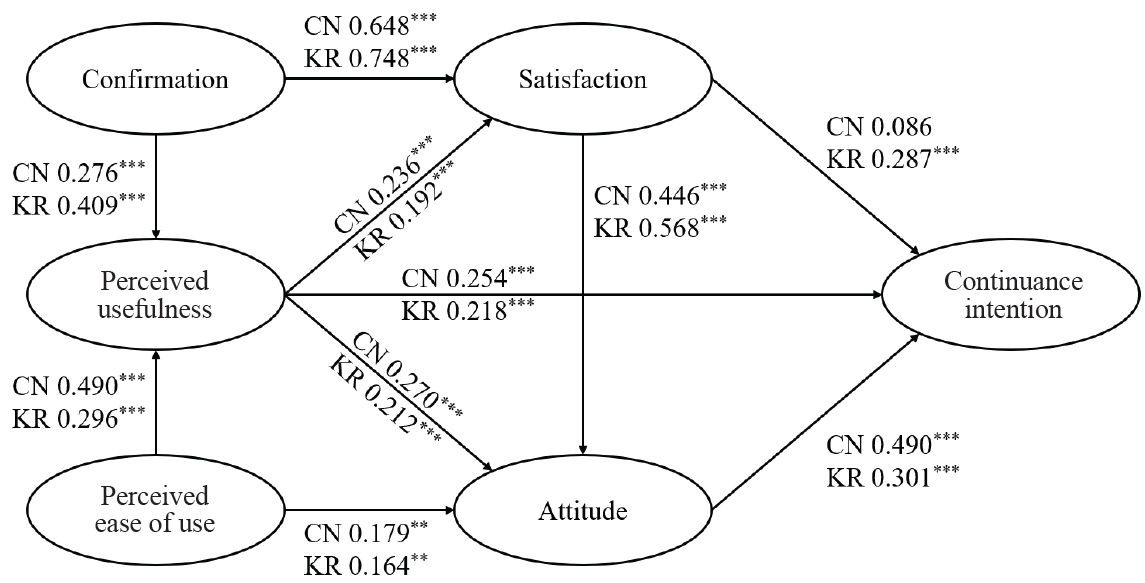
      Image Image
      Fig. 1. Research model based on technology continuance theory.
      Fig. 2. Path coefficients by country. CN, Chinese sample; KR, South Korean sample. **P < 0.01, ***P < 0.001.
      Understanding the drivers of continuance intention in online grocery shopping using technology continuance theory: a cross-national comparison
      Variables Chinese sample (n = 338) South Korean sample (n = 300) χ2
      Gender
       Men 161 (47.6) 150 (50.0) 0.268
       Women 177 (52.4) 150 (50.0)
      Age (year)
       20–29 71 (21.0) 60 (20.0) 7.919
       30–39 71 (21.0) 60 (20.0)
       40–49 86 (25.4) 60 (20.0)
       50–59 68 (20.1) 60 (20.0)
       ≥ 60 42 (12.4) 60 (20.0)
      Education level
       Junior high school 17 (5.0) 1 (0.3) 13.311***
       High school 63 (18.6) 52 (17.3)
       Bachelor’s 212 (62.7) 202 (67.3)
       Master’s or above 46 (13.6) 45 (15.0)
      Occupation
       Student 13 (3.8) 18 (6.0) 44.671***
       Homemaker 10 (3.0) 44 (14.7)
       Office worker 166 (49.1) 134 (44.7)
       Public official 18 (5.3) 9 (3.0)
       Self-employed 23 (6.8) 27 (9.0)
       Specialized worker 23 (6.8) 26 (8.7)
       Service industry 30 (8.9) 22 (7.3)
       Production worker 7 (2.1) 2 (0.7)
       Other 48 (14.2) 18 (6.0)
      Item Chinese sample South Korean sample
      Outer loading Cronbach’s α CR AVE Outer loading Cronbach’s α CR AVE
      ATT
       ATT1 0.823 0.848 0.898 0.687 0.843 0.822 0.882 0.653
       ATT2 0.868 0.842
       ATT3 0.815 0.750
       ATT4 0.809 0.792
      CI
       CI1 0.847 0.749 0.879 0.709 0.869 0.833 0.900 0.750
       CI2 0.836 0.823
       CI3 0.842 0.904
      CON
       CON1 0.830 0.801 0.883 0.715 0.912 0.875 0.923 0.800
       CON2 0.855 0.883
       CON3 0.852 0.888
      PEOU
       PEOU1 0.758 0.757 0.846 0.578 0.740 0.739 0.836 0.562
       PEOU2 0.749 0.659
       PEOU3 0.755 0.805
       PEOU4 0.778 0.787
      PU
       PU1 0.755 0.790 0.864 0.615 0.728 0.774 0.856 0.602
       PU2 0.712 0.610
       PU3 0.840 0.870
       PU4 0.824 0.864
      SAT
       SAT1 0.826 0.875 0.914 0.727 0.881 0.893 0.925 0.756
       SAT2 0.849 0.864
       SAT3 0.881 0.878
       SAT4 0.854 0.856
      Construct ATT CI CON PEOU PU SAT
      Chinese sample
       ATT 0.829
       CI 0.722 0.842
       CON 0.678 0.601 0.845
       PEOU 0.640 0.557 0.639 0.760
       PU 0.665 0.633 0.589 0.666 0.784
      South Korean sample
       ATT 0.808
       CI 0.666 0.866
       CON 0.711 0.623 0.895
       PEOU 0.562 0.452 0.517 0.750
       PU 0.644 0.588 0.562 0.508 0.776
       SAT 0.782 0.656 0.856 0.511 0.612 0.870
      Construct ATT CI CON PEOU PU SAT
      Chinese sample
       ATT
       CI 0.879
       CON 0.819 0.751
       PEOU 0.795 0.715 0.821
       PU 0.810 0.798 0.735 0.852
       SAT 0.840 0.719 0.940 0.772 0.741
      South Korean sample
       ATT
       CI 0.795
       CON 0.832 0.721
       PEOU 0.716 0.568 0.644
       PU 0.788 0.714 0.671 0.674
       SAT 0.907 0.754 0.966 0.630 0.725
      Ratio Lower limit Upper limit H1
      Chinese sample
      SAT ↔ CON 0.940 0.887 0.991 Accepted
      South Korean sample
      SAT ↔ ATT 0.907 0.856 0.959 Accepted
      SAT ↔ CON 0.966 0.931 0.998 Accepted
      Hypothesis Chinese sample South Korean sample
      β t-value f2 Remark β t-value f2 Remark
      H1 ATT → CI 0.490 7.773*** 0.220 S 0.301 3.727*** 0.065 S
      H2 SAT → CI 0.086 1.464 0.008 NS 0.287 3.524*** 0.063 S
      H3 SAT → ATT 0.446 9.233*** 0.278 S 0.568 12.781*** 0.565 S
      H4 PU → CI 0.254 4.853*** 0.077 S 0.218 3.721*** 0.055 S
      H5 PU → ATT 0.270 3.947*** 0.094 S 0.212 4.629*** 0.079 S
      H6 PU → SAT 0.236 5.462*** 0.105 S 0.192 4.967*** 0.104 S
      H7 PEOU → ATT 0.179 2.763** 0.040 S 0.164 3.370** 0.056 S
      H8 PEOU → PU 0.490 8.799*** 0.277 S 0.296 4.228*** 0.104 S
      H9 CON → SAT 0.648 17.174*** 0.797 S 0.748 23.207*** 1.578 S
      H10 CON → PU 0.276 4.474*** 0.088 S 0.409 6.258*** 0.197 S
      Construct Chinese sample South Korean sample
      R2 Q2 R2 Q2
      ATT 0.619 0.524 0.673 0.550
      CI 0.566 0.400 0.517 0.402
      PU 0.488 0.479 0.380 0.367
      SAT 0.656 0.637 0.758 0.737
      Hypothesis Path coefficients-diff (CN−KR) P-value of difference
      H1 ATT → CI 0.189 0.063
      H2 SAT → CI −0.201 0.046
      H3 SAT → ATT −0.122 0.062
      H4 PU → CI 0.036 0.643
      H5 PU → ATT 0.058 0.481
      H6 PU → SAT 0.044 0.449
      H7 PEOU → ATT 0.016 0.842
      H8 PEOU → PU 0.193 0.024
      H9 CON → SAT −0.100 0.047
      H10 CON → PU −0.133 0.140
      Hypothesis Path coefficients-diff (CN−KR) P-value of difference
      H1 ATT → CI 0.189 0.063
      H2 SAT → CI −0.201 0.046
      H3 SAT → ATT −0.122 0.062
      H4 PU → CI 0.036 0.643
      H5 PU → ATT 0.058 0.481
      H6 PU → SAT 0.044 0.449
      H7 PEOU → ATT 0.016 0.842
      H8 PEOU → PU 0.193 0.024
      H9 CON → SAT −0.100 0.047
      H10 CON → PU −0.133 0.140
      Table 1. Sample characteristics

      n (%).

      P < 0.001.

      Table 2. Reliability and convergent validity of measurement model

      CR, composite reliability; AVE, average variance extracted; ATT, attitude; CI, continuance intention; CON, confirmation; PEOU, perceived ease of use; PU, perceived usefulness; SAT, satisfaction.

      Table 3. Fornell–Larcker criterion results

      The diagonal is the square root of AVE.

      ATT, attitude; CI, continuance intention; CON, confirmation; PEOU, perceived ease of use; PU, perceived usefulness; SAT, satisfaction.

      Table 4. Heterotrait–Monotrait ratio results

      ATT, attitude; CI, continuance intention; CON, confirmation; PEOU, perceived ease of use; PU, perceived usefulness; SAT, satisfaction.

      Table 5. HTMT inference based on bootstrapped confidence intervals

      H0, HTMT ≥ 1; H1, HTMT < 1. If H0 holds indicates a lack of discriminant validity.

      ATT, attitude; CON, confirmation; SAT, satisfaction.

      Table 6. Hypothesis testing of structural model

      ATT, attitude; CI, continuance intention; CON, confirmation; PEOU, perceived ease of use; PU, perceived usefulness; SAT, satisfaction; S, significant; NS, not significant.

      P < 0.01.

      P < 0.001.

      Table 7. Predictive ability of structural model

      ATT, attitude; CI, continuance intention; PU, perceived usefulness; SAT, satisfaction.

      Table 8. Path differences of structural model

      CN, Chinese sample; KR, South Korean sample; ATT, attitude; CI, continuance intention; CON, confirmation; PEOU, perceived ease of use; PU, perceived usefulness; SAT, satisfaction.

      OGS, online grocery shopping.


      Korean J Community Nutr : Korean Journal of Community Nutrition
      Close layer
      TOP