
 KSCN
KSCN
Previous issues
- Page Path
- HOME > Browse Articles > Previous issues
- Volume 31(2); April 2026
-


Reviews
- [English]
- The transition of nutritional status in infants, young children, and school-aged children in Korea and future-oriented nutritional strategies: a narrative review
- Yoonna Lee
- Korean J Community Nutr 2026;31(2):115-126. Published online April 30, 2026
- DOI: https://doi.org/10.5720/kjcn.2026.00115
-
 Abstract
 PDF
PDF - Objectives
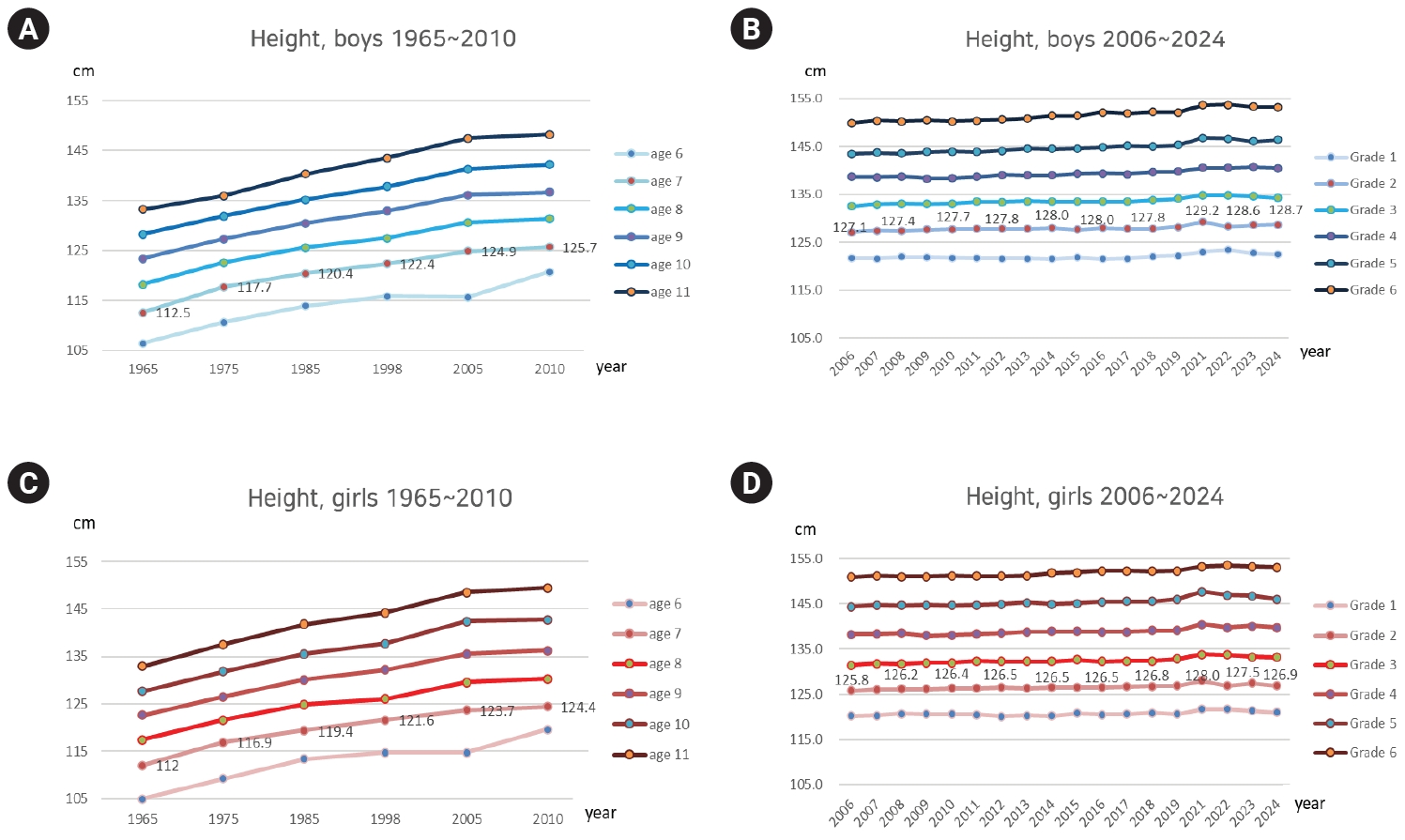
This study examined the secular trends in anthropometric changes and the nutritional transition among Korean infants and school-aged children, while evaluating the efficacy and constraints of existing state-led nutritional policies. Ultimately, it proposes a “systems-centered” nutrition strategy, aligned with the United Nations Children’s Fund (UNICEF) Nutrition Strategy 2020–2030, to ensure health equity for future generations.
Methods
We reexamined comprehensive national health statistics, including school health examination data (1965–2024) and the Korea National Health and Nutrition Examination Survey (1998–2023). Additionally, Dietary Screening Test results from 126,768 young children (2021–2024) were reviewed. These quantitative findings were synthesized through a narrative review of South Korean pediatric nutrition policies and UNICEF’s global strategic frameworks.
Results
While Korean children have historically experienced rapid secular growth, this has decelerated in the 2000s. Conversely, the prevalence of obesity has surged along with stagnant underweight rates. Dietary problems such as insufficient vegetable intake and frequent consumption of sweet snacks were also found, accelerating the “triple burden” of malnutrition. Policies such as school lunches, NutriPlus program, and Center for Children’s Foodservice Management have demonstrated great success in reducing nutritional risks and improving dietary habits. However, existing fragmented programs face limitations in comprehensively addressing regional disparities or blind spots and in providing tailored nutritional management.
Conclusion
A paradigm shift is imperative to fundamentally resolve these multidimensional nutritional crises. Moving beyond fragmented programs, we need to adopt a “systems- centered” approach integrating health, education, and welfare ecosystems. Key policy recommendations include establishing a continuous life-cycle health database, introducing artificial intelligence and FoodTech-driven precision nutrition coaching, and fostering a healthy food environment through public-private partnerships within a community integrated care network.
- 770 View
- 31 Download

- [English]
- Life-course personalized nutrition strategy for adolescents and young adults in Korea based on a behavioral science approach and community-based model: a narrative review
- Jung-Hyun Kim
- Korean J Community Nutr 2026;31(2):127-139. Published online April 30, 2026
- DOI: https://doi.org/10.5720/kjcn.2026.00129
-
Abstract
PDF
- Objectives
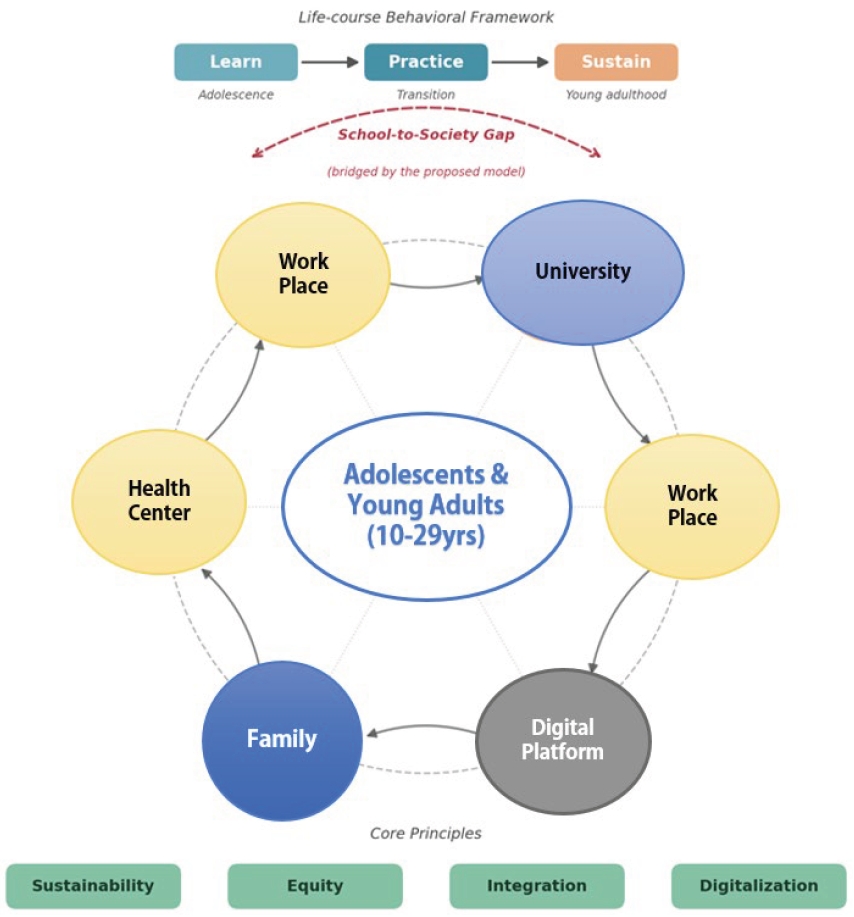
This review examines the nutritional challenges among Korean adolescents and young adults from life-course and behavioral science perspectives and proposes an integrated, community-based nutrition strategy for this critical transitional period.
Methods
A narrative review was conducted following the Scale for the Quality Assessment of Narrative Review Articles guidelines. Literature published between January 2015 and June 2025 was retrieved from PubMed, Google Scholar, and Research Information Sharing Service using keywords related to adolescent and young adult nutrition, life course approaches, behavioral nutrition, and personalized nutrition. Policy documents from the World Health Organization, Food and Agriculture Organization of the United Nations, United Nations Nutrition, and Korean government agencies were also included. A total of 40 references (32 peer-reviewed articles and 8 policy reports) were analyzed.
Results
Korean adolescents and young adults exhibited high rates of skipping breakfast (> 38.3%), obesity, and excessive sodium and sugar intakes, with disparities driven by socioecological determinants. The Developmental Origins of Health and Disease framework highlights adolescence as the “second window of plasticity” for reshaping long-term health trajectories. Two behavioral frameworks were synthesized: the Formation–Maintenance Model, distinguishing adolescent (Learn–Practice) and young adult (Sustain) stages, and the socioecological nutrition model, addressing multi-level influences on dietary behavior. A structural discontinuity in public nutrition support, termed the “School-to-Society Nutrition Gap,” was identified. Community-based, participatory, and digitally integrated interventions showed strong potential for sustaining behavioral change.
Conclusion
A personalized life-course nutrition strategy based on a Learn-Practice-Sustain framework was proposed. A Community-Linked Circular Nutrition Model was presented to bridge the gap between school-based and community-level nutrition systems, emphasizing nutrition equity and digital engagement as key drivers of sustainable health outcomes.
- 735 View
- 15 Download
Research Articles
- [English]
- Development of a simplified NOVA-based scoring tool for assessing ultra-processed food consumption among Korean young adults: a cross-sectional study
- Jinhyun Kim, Eunjin Jang, Sarang Jeong, Sukyoung Jung, Jee Young Kim, Jung Eun Lee, Dahye Han, Eunseo Lee, Junhyeok Jang, Sohyun Park
- Korean J Community Nutr 2026;31(2):140-152. Published online April 30, 2026
- DOI: https://doi.org/10.5720/kjcn.2026.00059
-
Abstract
PDF
 Supplementary Material
 - Objectives
This study aimed to develop a NOVA-based scoring approach for evaluating ultra- processed food (UPF) intake among Korean adults and to examine its performance. Previous studies have reported that young adults have the highest levels of UPF consumption. Accordingly, this study focused on adults aged 19–40 years and developed scoring components reflecting dietary patterns specific to Korean eating habits.
Methods
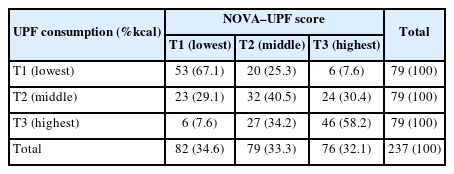
Using 24-hour dietary recall data from adults aged 19–40 years in the Korea National Health and Nutrition Examination Survey (2021–2023), foods were classified according to the Korean-adapted NOVA system. The top 10 food groups accounting for ≥ 80% of cumulative UPF-derived energy were selected to construct the scoring components. The tool was operationalized using food frequency questionnaire (FFQ) data from the Gangwon cohort study (2022–2024). Intake frequencies were converted into scores ranging from 0 (“rarely or never”) to 5 (“≥ 1 time/day”), and summed to generate the NOVA–UPF score (range: 0–50).
Results
Among 237 young adults (aged 20–49 years), the mean NOVA–UPF score was 22.9 ± 8.3. A positive association was observed between the NOVA–UPF score and FFQbased UPF energy intake (Spearman’s ρ = 0.629, P < 0.001). Cross-classification showed that 51.9% were classified into the same tertile and 94.9% into the same or adjacent tertiles, with a weighted kappa coefficient of 0.279.
Conclusion
This NOVA-based scoring approach may serve as a preliminary tool for assessing UPF intake in Korean young adults. Further refinement and rigorous validation using quantitative dietary assessment methods and more diverse populations are required before broader application.
- 949 View
- 44 Download
- [English]
- Association between nutrient intake and frailty status in Korean older adults: a cross-sectional study using the 9th (2022–2023) Korea National Health and Nutrition Examination Survey
- Hyejin Yu, Sang-Jin Chung
- Korean J Community Nutr 2026;31(2):153-164. Published online April 30, 2026
- DOI: https://doi.org/10.5720/kjcn.2026.00038
-
Abstract
PDF
- Objectives
This study evaluated the intake status of key macronutrients and micronutrients (calcium, magnesium, iron, and vitamin D) among Korean older adults and investigated their associations with frailty and its individual components.
Methods
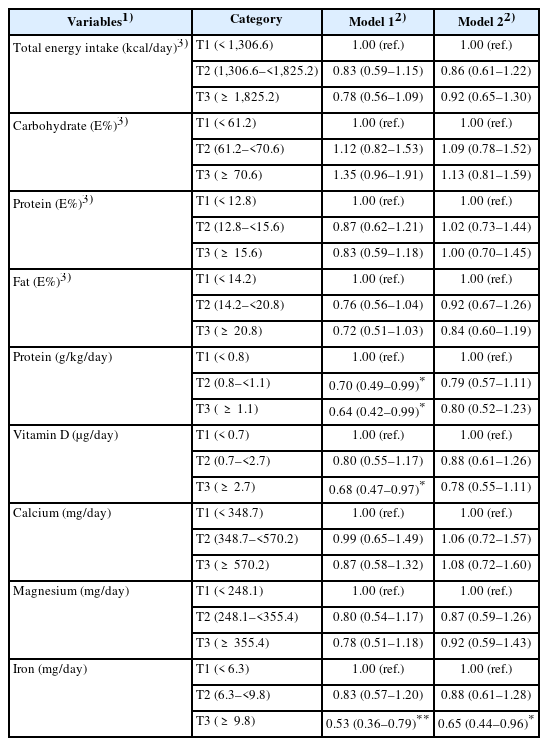
Data from 1,246 participants (aged ≥ 65 years) in the 9th Korea National Health and Nutrition Examination Survey (2022–2023) were analyzed. Participants were classified into Robust, Pre-frail, and Frail groups based on a modified version of the Fried frailty phenotype (unintentional weight loss, exhaustion/fatigue, muscle weakness, slow gait speed, and low physical activity). Nutrient intake levels were categorized into tertiles. Multivariable logistic regression was used to estimate odds ratios (ORs) for frailty. Model 1 was adjusted for age, sex, and total energy intake. Model 2 included additional adjustments for socioeconomic factors (household composition, household income) and function-related factors (aerobic physical activity, chewing difficulty, and disease status).
Results
Total energy intake differed significantly across frailty groups in both Model 1 (P = 0.011) and Model 2 (P = 0.043). In the fully adjusted model, participants in the highest tertile of iron intake (T3) had 35% lower odds of frailty compared to those in the lowest tertile (T1) (OR = 0.65; 95% confidence interval [CI], 0.44–0.96). Iron intake maintained the strongest independent association with reduced odds of muscle weakness (T3 vs. T1: OR = 0.45; 95% CI, 0.28–0.71). Furthermore, higher protein intake per kilogram of body weight (T3) was significantly associated with lower odds of slow gait speed (OR = 0.53; 95% CI, 0.33–0.87) in the minimally adjusted model. Vitamin D, calcium, and magnesium were not significantly associated with overall frailty after full adjustment.
Conclusion
Insufficient intake of protein and iron is associated with increased odds of frailty and its functional components in Korean older adults. These findings underscore the critical need for evidence-based nutritional interventions and policy development to prevent and manage frailty at the population level.
- 638 View
- 22 Download
- [Korean]
- A comparative study on nutritional status and diet-related subjective perceptions according to free meal service utilization among older adults living alone in Korea: a cross-sectional study
- Minju Jeong, Dayeon Shin
- Korean J Community Nutr 2026;31(2):165-177. Published online April 30, 2026
- DOI: https://doi.org/10.5720/kjcn.2025.00339

-
Abstract
PDF
- Objectives
To assess whether the use of free meal services is associated with diet quality among older adults living alone in Incheon, Korea, by comparing the Nutrition Quotient for the Elderly (NQ-E), index of nutritional quality (INQ), and mean adequacy ratio (MAR).
Methods
A cross-sectional survey was conducted from March 5 to April 24, 2025 using one-to-one interviews and partially self-administered questionnaires. After excluding cases with missing responses or energy intake of < 500 kcal/day, 119 participants were analyzed (56 men and 63 women). A single 24-hour recall was used to calculate INQ and MAR. NQ-E was evaluated using total and subdomain scores. Group comparisons and sex-stratified multiple linear regression analyses were performed.
Results
Diet-quality indicators were higher among service users than among non-users. INQ for thiamin and riboflavin was significantly higher in men than in women. Meanwhile, INQ for zinc, vitamin A, riboflavin, and folate was higher in women than in men. In both sexes, MAR was higher among users than among non-users (men: 0.8 ± 0.2 vs. 0.6 ± 0.2; women: 0.7 ± 0.2 vs. 0.5 ± 0.2; P < 0.001 for all). Differences in NQ-E total scores were small. Among women, the practice subdomain score was higher in users than in non-users (66.0 ± 16.4 vs. 55.2 ± 15.5; P = 0.016), and the proportion in upper grades was greater (P = 0.030). Regression analysis showed that service use was negatively associated with NQ-E in men (P = 0.007) and positively associated with MAR in women (P = 0.010).
Conclusion
Use of free meal services was associated with improved diet quality, as reflected by MAR and INQ for specific nutrients, and with higher NQ-E practice scores observed in women than in men. Policies should prioritize food-insecure groups and support sustained participation.
- 751 View
- 38 Download
- [Korean]
- A needs assessment for the development of a digital-based self-nutrition management education program for older adults in Korea: a cross-sectional study
- Hae-Song Yoo, Jin-Myung Lee, Min-Sun Jeon
- Korean J Community Nutr 2026;31(2):178-191. Published online April 30, 2026
- DOI: https://doi.org/10.5720/kjcn.2026.00010
-
Abstract
PDF
- Objectives
This study aimed to investigate the current status of nutrition management and digital utilization, the demand for e-learning nutrition education, and the factors influencing e-learning nutrition education among older adults.
Methods
A total of 500 older adults aged 65–84 years, registered as panelists with a professional survey agency, participated in an online survey. Chi-square and independent samples t-tests were used to examine gender differences. Correlations between participants’ general characteristics and the major variables were analyzed. Based on the results, a moderated regression analysis was conducted to identify how the general characteristics significantly associated with the intention to use e-learning nutrition education functioned as moderators.
Results
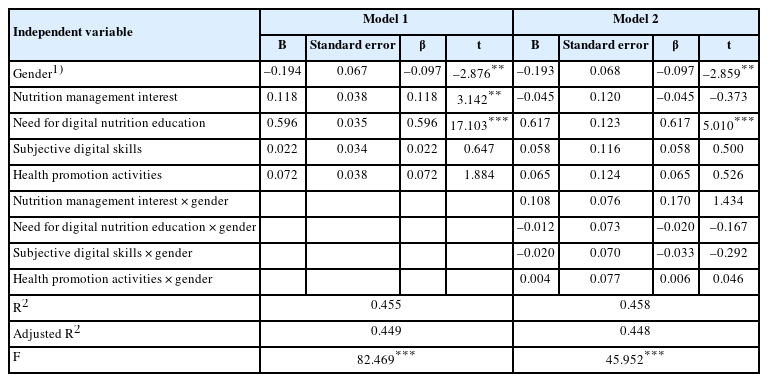
Significant gender differences were observed in nutrition education experience, interest and practice of nutrition management, barriers, and digital device utilization (all P < 0.05). Exploratory factor analysis identified four sub-factors for education needs: ‘Self-directed well-being practice education’, ‘Dietary therapy for major chronic diseases’, ‘Nutrition strategy for longevity and anti-aging’, and ‘Enhancing nutrition literacy education’. In Model 1, the need for digital education, interest in nutrition management, and gender were significantly associated with usage intention (all P < 0.05), whereas health-promoting behavior showed marginal significance (P = 0.06). Although the Model 2 interaction was significant, the change in explanatory power was negligible (Delta R2 = 0.003), and all interaction terms were non-significant (P > 0.05), indicating that the relationships are not moderated by gender.
Conclusion
Although older adults exhibited high interest in nutrition management, their experience with nutrition education was limited. Significant gender differences in educational needs and health-promoting behaviors highlight the importance of tailored strategies. Enhancing digital accessibility and providing gender-specific, competency-based content are essential to effectively translate interest into behavioral change. This study underscores the importance of integrating gender-specific approaches, individual digital competencies, and inducement of health-promoting behaviors when developing e-learning nutrition education programs for older adults.
- 642 View
- 27 Download
- [Korean]
- Foodservice management and nutrition education status and needs for individuals with developmental disabilities in welfare facilities in Seoul and Gyeonggi, Korea: a cross-sectional study
- Mi-ra Lee, Youngmi Lee, Yun Hee Chang, Yujin Lee
- Korean J Community Nutr 2026;31(2):192-204. Published online April 30, 2026
- DOI: https://doi.org/10.5720/kjcn.2026.00087
-
Abstract
PDF
- Objectives
This study aimed to examine the current status of foodservice management and nutrition education practices, and the needs for individuals with developmental disabilities in welfare centers in Seoul and Gyeonggi, South Korea, and to compare the differences according to dietitians’ level of understanding of developmental disabilities.
Methods
A cross-sectional survey was conducted among dietitians working at 65 welfare centers, and data from 45 centers were analyzed. The questionnaire assessed general characteristics, foodservice operations, nutrition education practices, perceived needs, and the understanding of developmental disabilities. Participants were classified into high- (n = 17) and low-understanding (n = 28) groups based on their self-rated understanding of developmental disabilities. Data were analyzed using IBM SPSS Statistics 29.0 (IBM Corp.).
Results
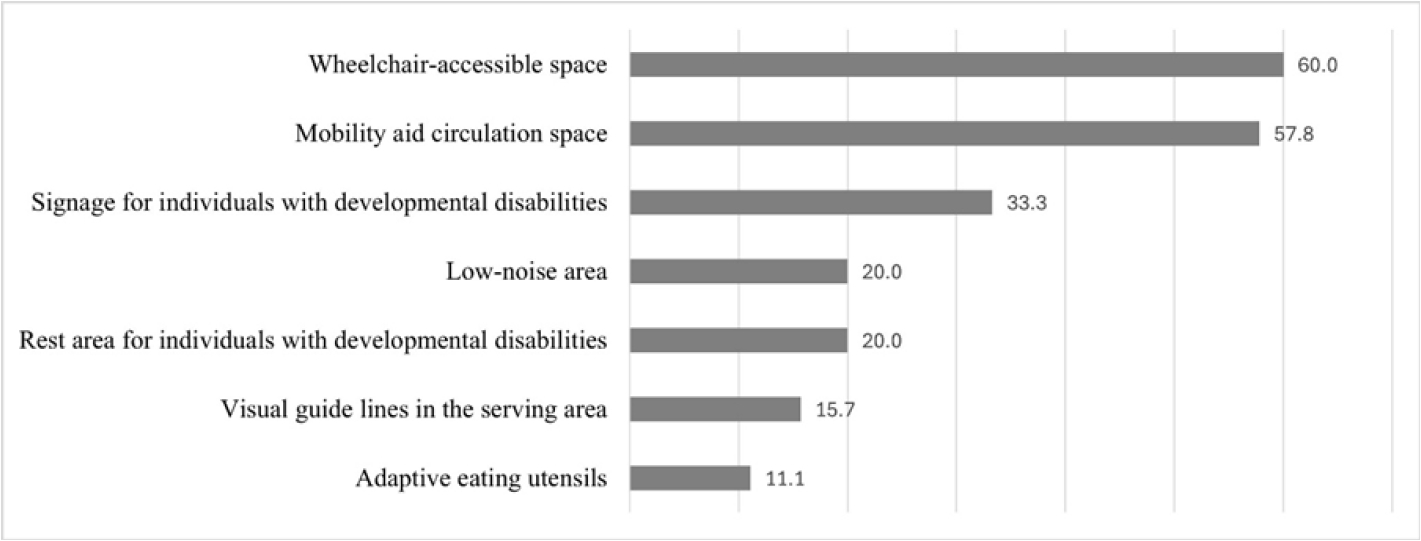
All centers provided one daily meal (lunch), with one cook serving an average of 116 individuals. Only 11.1% of centers implemented nutrition education, primarily limited due to insufficient time and low expectations regarding the effectiveness of nutrition education. Overall, no significant differences were observed between the two groups in most aspects of foodservice management and nutrition education practices, although some specific items showed significant differences. The high-understanding group reported a significantly greater perceived need for nutrition education and placed higher importance on rapport-building and situational response skills. These findings suggest that structural constraints, including staffing, budget, and limited resources, may play a greater role than individual- level understanding in shaping foodservice and nutrition education practices.
Conclusion
Welfare centers showed limited capacity to provide tailored foodservice and systematic nutrition education for adults with developmental disabilities. Strengthening staffing standards, improving foodservice environments, and developing standardized educational materials that consider communication levels are necessary. Moreover, expanding professional training opportunities for dietitians and establishing institutional support systems are essential to enhance sustainable nutrition education practices.
- 423 View
- 19 Download
- [Korean]
- Differences in lunch nutrient intake and nutritional adequacy among Korean older adults by meal site: a cross-sectional analysis of the 2018–2021 Korea National Health and Nutrition Examination Survey data
- Daeun Choi, Sunhee Seo
- Korean J Community Nutr 2026;31(2):205-213. Published online April 30, 2026
- DOI: https://doi.org/10.5720/kjcn.2026.00045
-
Abstract
PDF
- Objectives
This study aimed to examine whether the dietary quality of congregate lunches differs according to meal location among older adults and to identify meal settings that may represent gaps in nutritional oversight. Specifically, this study compared lunchtime nutrient intake and adequacy among older adults eating at workplaces, welfare centers, and religious institutions.
Methods
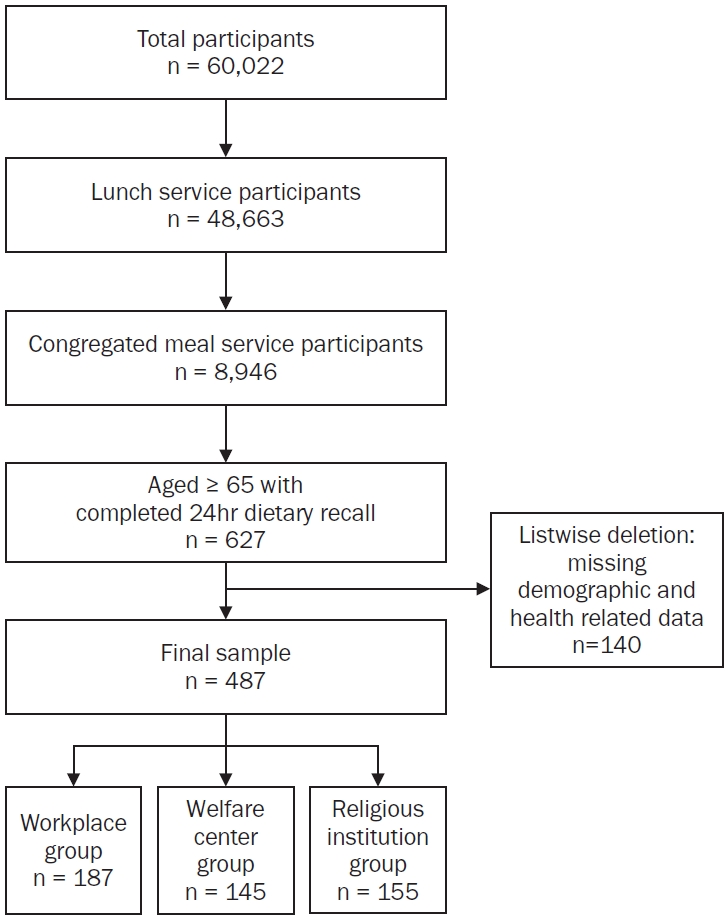
Data were obtained from the 2018–2021 Korea National Health and Nutrition Examination Survey. The participants included 487 adults aged ≥ 65 years who reported consuming lunch at institutional meal sites, including workplaces (n = 187), welfare centers (n = 145), and religious institutions (n = 155). Nutrient intakes, nutrient adequacy ratio (NARs), and the mean adequacy ratio were compared using complex-sample general linear models with Bonferroni post-hoc tests, adjusting for sex, age, and total energy intake.
Results
Socioeconomic characteristics were broadly comparable across groups, but nutrient intake and dietary quality differed according to meal location. In food-group analyses, meat intake was lowest among participants eating at religious institutions, and dairy intake also differed significantly across settings. In nutrient adequacy analyses, NAR for carbohydrate, thiamin, and niacin differed significantly by meal location. However, except for carbohydrate, most nutrient-specific NAR remained below 1.0 across all groups, indicating insufficient adequacy relative to one-third of the recommended intake from lunch alone.
Conclusion
The dietary quality of congregate lunches among older adults differed according to meal location. Although nutrient inadequacy was common across settings, older adults eating at religious institutions showed relatively lower adequacy for some nutrients, particularly thiamin and niacin. These findings suggest that nutritional support should be strengthened across congregate meal services, with particular attention to less structured community-based settings such as religious institutions.
- 501 View
- 18 Download
 First
First Prev
Prev



