
 KSCN
KSCN
Current issue
- Page Path
- HOME > Browse Articles > Current issue
- Volume 31(3); June 2026
-


Review
- [English]
- Life-course nutrition strategies for Korean middle-aged adults across biological transitions, nutritional burdens, and a community-linked precision nutrition model: a narrative review
- Yoo Kyoung Park
- Korean J Community Nutr 2026;31(3):215-228. Published online June 30, 2026
- DOI: https://doi.org/10.5720/kjcn.2026.00206
-
 Abstract
 PDF
PDF - Objectives
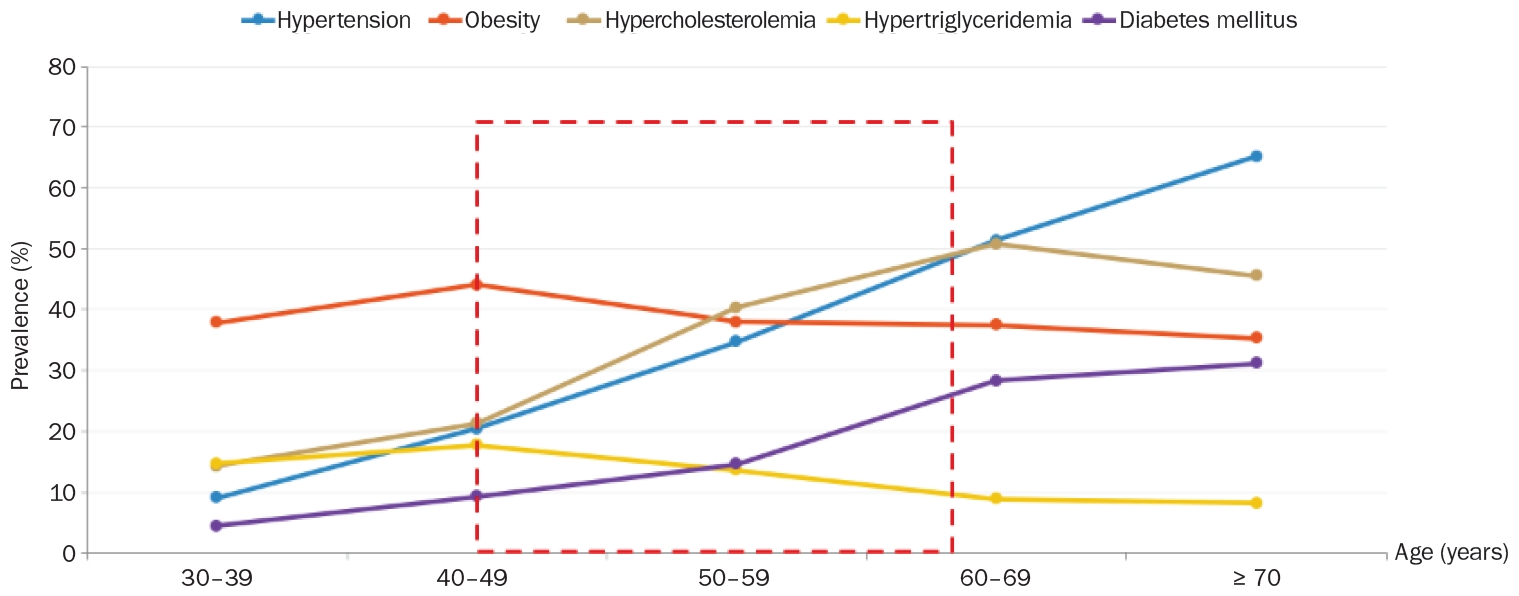
To describe the nutritional challenges faced by Korean middle‑aged adults (40–64 years) from a life‑course and biological transition perspective and to propose systems‑based precision nutrition strategies for this critical stage of the lifespan.
Methods
In this narrative review, PubMed, Medline, and Web of Science were searched for articles published between January 2010 and November 2025 using terms such as “middle aged nutrition,” “healthy aging,” “life course nutrition,” “sarcopenia,” “precision nutrition,” and “chronic diseases.” Policy documents and major national cohort and intervention studies were also reviewed.
Results
Middle-aged adults in Korea have a high prevalence of chronic disease beginning in their 40s, showing “the triple burden of malnutrition:” obesity, insufficient micronutrients, and sarcopenia onset, along with excessive sodium and sugar consumption combined with socioeconomic factors like living alone. Nutrient and dietary approaches, such as high protein (1.2–1.5 g/kg/d), leucine, dairy products and fruits, anti-inflammatory foods intake, Dietary Approaches to Stop Hypertension (DASH) or Mediterranean diets plus lifestyle modification at public health centers (Korean Diabetes Prevention Study) for cardiometabolic risks, Mediterranean-DASH Intervention for Neurodegenerative Delay diet for cognition maintenance, could greatly impact health trajectories.
Conclusion
Korean middle‑aged adults experience a triple burden of malnutrition on top of nonlinear biological aging shifts, which together accelerate cardiometabolic, musculoskeletal, and cognitive risks. Implementing targeted dietary strategies within a systems‑based, community-linked precision nutrition model is essential to reshape health trajectories and promote healthy longevity in this population.
- 792 View
- 22 Download

Research Articles
- [English]
- Current status of sodium provision and reduction management in South Korean school meals: a descriptive study
- Sooyoun Kwon, Youngmi Lee, Meeyoung Kim
- Korean J Community Nutr 2026;31(3):229-243. Published online June 30, 2026
- DOI: https://doi.org/10.5720/kjcn.2026.00101
-
Abstract
PDF
- Objectives
This study investigated the current status of sodium provision and reduction management in South Korean school meals.
Methods
Using a proportional stratified random sampling by school level (kindergarten and elementary, middle, and high school), location (urban, rural, and island/remote area), and region (17 metropolitan and provincial Offices of Education), 1,068 schools (about 10% of all schools) were selected from 430 kindergartens and 5,883 elementary, 2,501 middle, and 2,268 high schools using the school meal system of the National Education Information System. An online survey was conducted with nutrition teachers and dietitians at the selected schools from September to November 2021 (n = 608; response rate: 57%).
Results
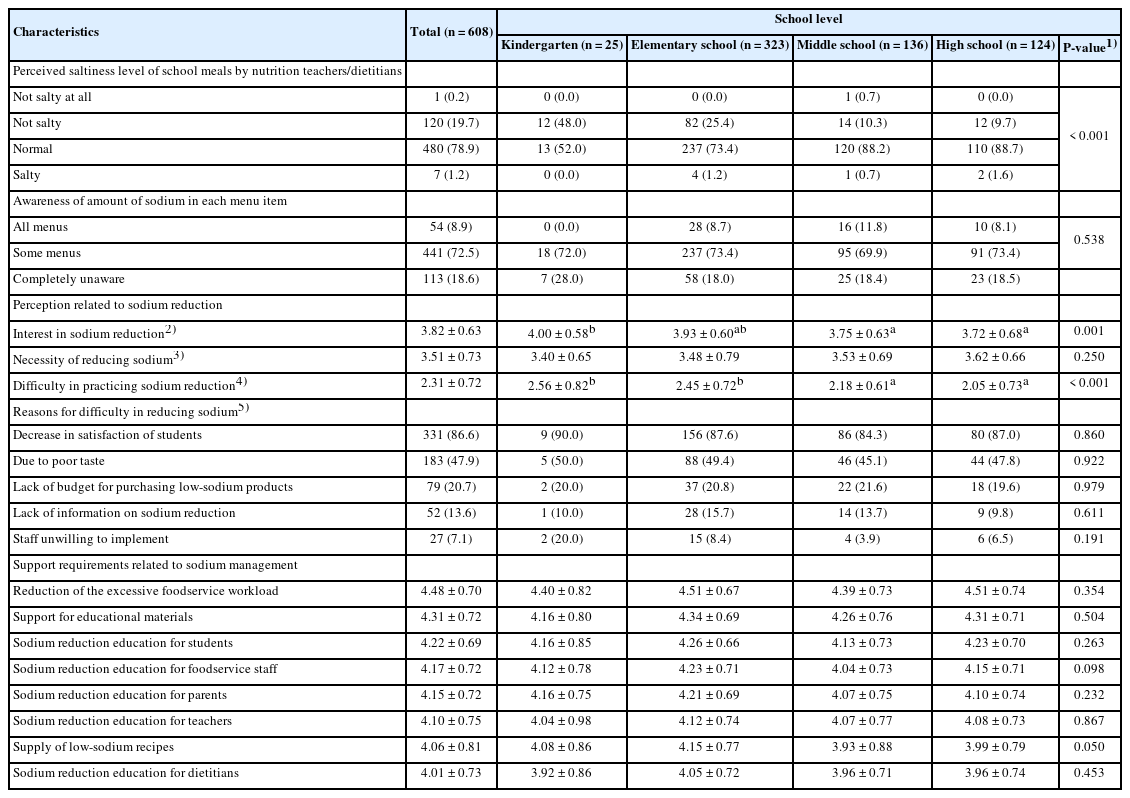
About 26.6% of schools had not established sodium provision standards. More than half of the respondents (59.9%) had never used low-sodium products; this percentage increased with school level. The reasons given included “insufficient information” (46.7%) and “high prices” (41.5%). The level of consideration for sodium management was highest at the cooking stage (3.89/5.00 points) and lowest at purchasing stage (3.20 points). Cooking-related consideration was significantly higher in kindergartens and elementary schools than in middle and high schools, while purchasing-related consideration was significantly higher in elementary than in middle schools. To reduce sodium, the most commonly reported requirement was “reduction of the excessive foodservice workload” (4.48/5.00 points), followed by “support for educational materials” (4.31 points).
Conclusion
Reducing sodium intake in school meals may require establishing clear sodium standards, increasing the availability of low-sodium products, easing the excessive workload, and enhancing educational support. To support these efforts, more comprehensive and consistently implemented policy approaches may be needed to reduce sodium in schools.
- 497 View
- 24 Download
- [English]
- Changing patterns and related factors of kimchi consumption among Korean adults: a nationwide cross-sectional analysis of the Korea National Health and Nutrition Examination Survey, 2010–2024
- Hui-Yang Zhao, Hyunji Ham, Sumin Kim, Chang Hyeon Lee, Kyungho Ha, Sangah Shin
- Korean J Community Nutr 2026;31(3):244-263. Published online June 30, 2026
- DOI: https://doi.org/10.5720/kjcn.2026.00108
-
Abstract
PDF
- Objectives
This study was conducted to analyze long-term trends in kimchi consumption and patterns among Korean adults using data from the Korea National Health and Nutrition Examination Survey (KNHANES) from 2010 to 2024, and to identify sociodemographic, dietary, and health-related factors associated with recent kimchi consumption.
Methods
Data from the 5th (2010) through 9th (2024) KNHANES were utilized. Trend analysis included 103,267 participants, while factor analysis focused on 14,244 adults aged ≥ 30 years (2022–2024). Changes in consumption form (side dish versus ingredient) and locations were examined. Multiple logistic regression was used to calculate odds ratios (ORs) for meeting the recommended intake (40 g/day).
Results
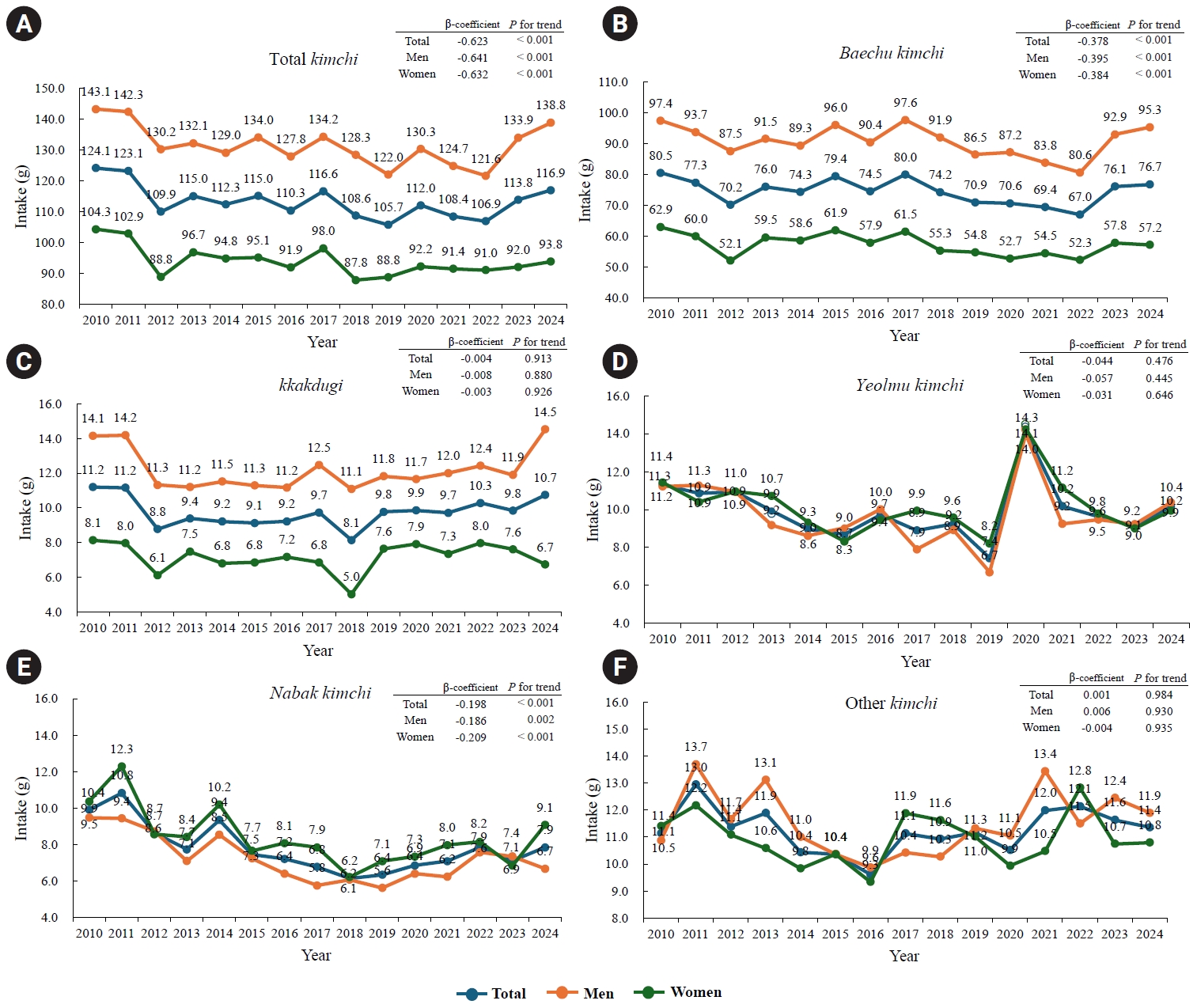
Over the past 15 years, kimchi consumption among Korean adults has significantly decreased regardless of gender (men: β = –1.53, women: β = –1.31, P for trend < 0.05). The proportion of individuals reporting no kimchi intake on the 24-hour recall day increased from 11.7% in 2010 to 22.7% in 2024. Among young adults (20–39 years), a qualitative shift occurred as consumption transitioned from side dishes to dish ingredients. At-home consumption decreased for all age groups under 60 years. Conversely, eating-out consumption increased for most groups, except for those aged 20–39 years, while school/ workplace consumption increased only in the 0–9 years age group. Analysis of the factors associated with meeting the recommended intake revealed that men, older adults, rural residents, married individuals, alcohol consumers, and smokers were more likely to meet the recommendation. Conversely, frequent solo dining or skipping meals were significantly associated with a lower likelihood of meeting the recommendation.
Conclusion
This study confirms a structural shift in the Korean diet. Future strategies for preserving traditional food culture and establishing nutritional policies must be tailored to reflect modern dietary changes, such as an increase in single-person households and the spread of a solo-dining culture.
- 1,301 View
- 24 Download
- [Korean]
- Effect of a community-based nutrition intervention incorporating social cognitive theory constructs and transtheoretical model-based counseling among community-dwelling elderly in Korea: a quasi-experimental study
- Hyewon Shin, Seungmin Lee
- Korean J Community Nutr 2026;31(3):264-275. Published online June 30, 2026
- DOI: https://doi.org/10.5720/kjcn.2026.00073
-
Abstract
PDF
- Objectives
This study evaluated the effects of a 7-week nutrition intervention based on the personal and environmental constructs of social cognitive theory (SCT) and the transtheoretical model (TTM) on dietary behavior-related factors, dietary behavior outcomes, and stages of dietary behavior change among community-dwelling older adults.
Methods
A quasi-experimental nonequivalent control group pretest–posttest design was conducted from May to December 2024 at seven senior facilities in Seoul and Gyeonggi, Korea. Older adults aged ≥ 65 years were assigned by facility to either an intervention group (n = 66; four facilities) or a control group (n = 65; three facilities). The intervention group completed a 7-week program consisting of baseline assessment, five weekly group education sessions, individualized nutrition counseling, and post-intervention assessment. The control group received one general nutrition education session. Outcomes included dietary knowledge, outcome expectations, value expectations, self-efficacy, environmental factors (food accessibility and household food availability and social support), dietary behavior outcomes assessed using the Nutrition Quotient for the Elderly (NQ-E), and stage of change. Program effects were analyzed using ANCOVA adjusted for age, family composition, education, baseline dietary knowledge, and value expectations.
Results
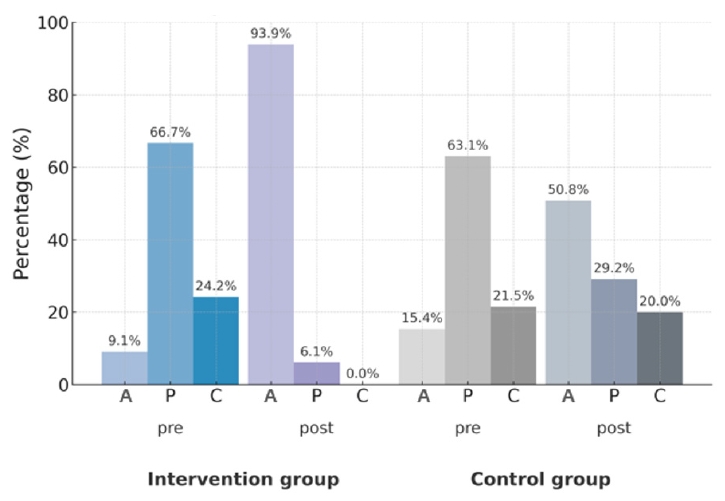
Compared with the control group, the intervention group demonstrated significantly greater improvements in dietary knowledge (P < 0.001), outcome expectations (P = 0.018), self-efficacy (P < 0.001), environmental factors (P < 0.001), and NQ-E total score (P = 0.011). No significant between-group difference was observed for value expectations. The proportion of participants in the action stage increased from 9.1% to 93.9% in the intervention group, and post-intervention stage distribution differed significantly between groups (P < 0.001). Program satisfaction was high (4.69 ± 0.41).
Conclusion
A 7-week nutrition intervention incorporating SCT-based personal and environmental constructs and TTM-based stage-matched counseling improved dietary behavior-related factors, dietary behavior outcomes, and stage distribution among community-dwelling older adults.
- 393 View
- 20 Download
- [Korean]
- Awareness, importance and performance of sustainable diets among university students in Daegu and Gyeongbuk, Korea: a cross-sectional study
- Yun-Gyeong Cho, Eun-Kyung Shin, Yeon-Kyung Lee
- Korean J Community Nutr 2026;31(3):276-286. Published online June 30, 2026
- DOI: https://doi.org/10.5720/kjcn.2026.00080
-
Abstract
PDF
- Objectives
The need for a sustainable diet is being emphasized as dietary changes are linked to climate change, biodiversity loss, and worsening food security. The purpose of this study was to investigate university students’ awareness, knowledge, behaviors, perceived importance, and performance of sustainable diets, and to compare these variables between students who had taken a food and nutrition course and those who had not.
Methods
A total of 300 university students in the Daegu Gyeongbuk region, Korea, participated in an online survey conducted in 2024, and 292 valid (male, 139; female, 153) responses were analyzed. The survey assessed awareness, knowledge, behaviors, perceived importance, and performance of sustainable diets. These were compared between participants (134) and non-participants (158) in the food and nutrition course.
Results
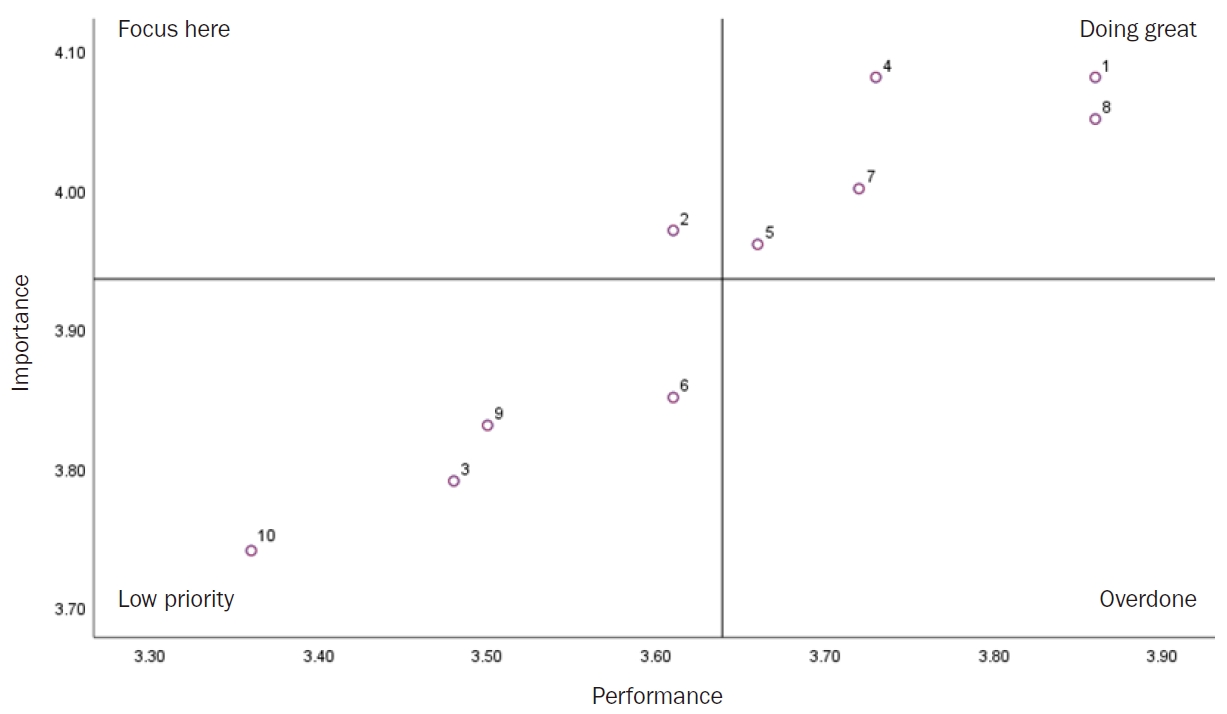
Our results showed that 54.5% of students were aware of sustainable diets, and 58.7% expressed an intention to participate in sustainable diet education in the future. The total knowledge and behavior scores on sustainable diets were 7.09/10 and 3.67/5, respectively, and the scores of the course-taking group were significantly higher than those of the non-course-taking group. The actual level of performance of sustainable diets (3.63/5) was relatively low compared to their perceived importance (3.93/5). Students who took the course demonstrated significantly higher importance (society) and performance (environment, health, and society) scores than those who did not. No significant differences were detected between the two groups regarding the importance of the environmental and health aspects of sustainable diets.
Conclusion
Students taking the food and nutrition course demonstrated high levels of awareness, knowledge, behavior, perceived importance, and performance regarding sustainable diets. These findings highlight the need for systematic educational strategies in higher education to promote sustainable dietary competencies among university students.
- 401 View
- 14 Download
Research Note
- [Korean]
- Sugar intake from processed foods among Koreans and levy on excessive sugar use: a cross-sectional study
- Sung Ok Kwon, Cho-il Kim
- Korean J Community Nutr 2026;31(3):287-296. Published online June 30, 2026
- DOI: https://doi.org/10.5720/kjcn.2026.00199
-
Abstract
PDF
- Objectives
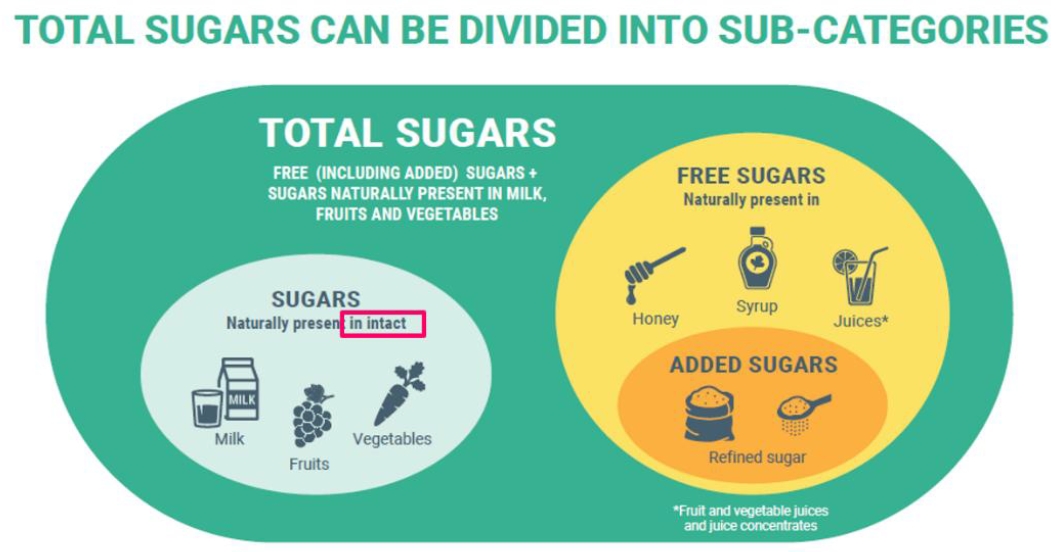
Although reduced mean sugar intakes have been reported recently, proportion changes in the Korean population with a sugar intake higher than the World Health Organization (WHO) sugar intake recommendation (WSIR) remain unknown. Therefore, in this study, we analyzed the sugar intake of Koreans to identify trends and prioritize target groups for relevant policy interventions.
Methods
We used dietary intake data from the 8th and 9th Korea National Health and Nutrition Examination Surveys (KNHANES VIII and IX) to derive sugar intake from processed foods (SIPF) in the Korean population. We classified, aggregated and calculated sugar intake from individual foods at the tertiary-level food codes, and assessed SIPF adequacy based on whether it met the WSIR of less than 10% of the total energy intake.
Results
The proportion of the Korean population with an SIPF exceeding the WSIR was 22.7% and 22.4% in KNHANES VIII and IX, respectively. Nevertheless, more than one-third of children, adolescents, and young adults (34.6%–39.1%) showed SIPF higher than the WSIR with the highest proportion of 41.4% registered among school-age girls in KNHANES IX.
Conclusion
While the mean sugar intake of Koreans has decreased slightly since 2019, the proportion of people with SIPF exceeding WSIR is on the rise in school-age children, adolescents, and young adults, implying the necessity of proactive policy responses. As the Korean government discusses fiscal policy design and implementation to moderate the sugar intake of the population in order to promote public health and prevent chronic diseases, it should bear in mind the point emphasized in the WHO guideline as follows: “Changes in health-related outcomes as a result of a fiscal policy are likely to occur in the long term and should therefore be evaluated over a longer term than outcomes such as purchasing and consumption of foods and beverages.” -
Citations
Citations to this article as recorded by
- Estimating added sugars intake among South Koreans: results from the 2023 Korea National Health and Nutrition Examination Survey
Youngmin Nam, Linxi Huang, Cho-il Kim, Jihyun Yoon
Clinical Nutrition Research.2026; 15(3): 139. CrossRef
- Estimating added sugars intake among South Koreans: results from the 2023 Korea National Health and Nutrition Examination Survey
- 523 View
- 28 Download
- 1 Crossref
 First
First Prev
Prev



